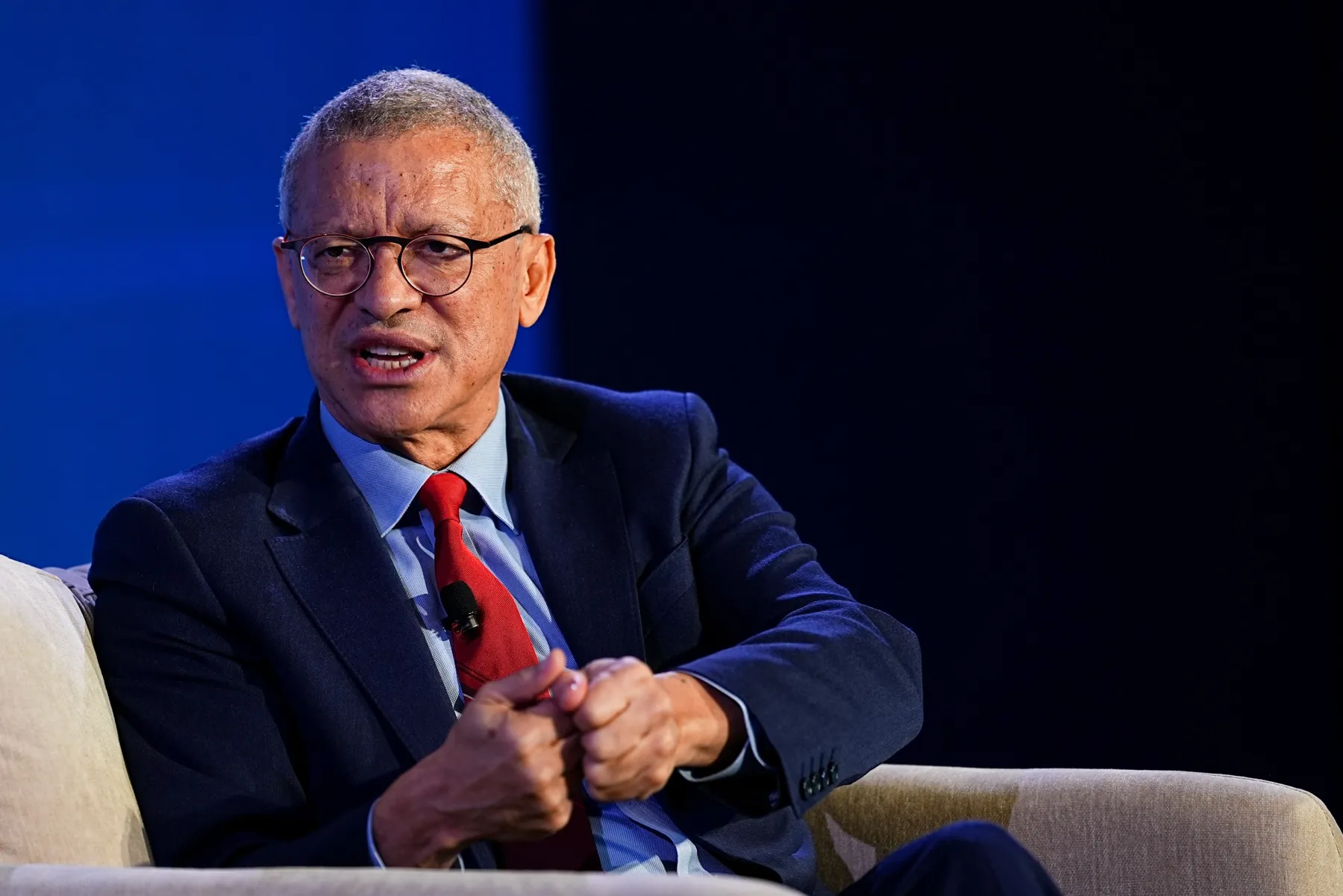
Otunba Lukman Taiwo Bakare, a public affairs analyst, has urged stronger investment in power, agriculture and export-oriented industries as he outlines priorities for Nigeria’s economic future and a possible second term for President Tinubu.
President Bola Ahmed Tinubu’s administration has demonstrated considerable political will in undertaking some of Nigeria’s most difficult economic reforms.
However, while bold policy decisions have been taken, the real test of leadership lies in effective implementation, measurable outcomes and the ability to translate economic reforms into improved living conditions for ordinary Nigerians.
This is the central argument of an open letter by Otunba Lukman Taiwo Bakare, who commends the President for initiating major economic reforms but raises concerns about their implementation, particularly in the areas of fuel subsidy removal, foreign exchange liberalisation, electricity, agriculture and national productivity.
According to Bakare, Nigeria does not necessarily lack sound economic policy ideas; rather, the country continues to struggle with execution, strategic investment and the development of productive sectors capable of generating sustainable national wealth.
He believes that the administration must urgently reconsider its economic priorities and establish a stronger foundation for long-term growth.
Fuel subsidy removal: A necessary reform, but poorly implemented
Bakare describes the removal of the petrol subsidy, announced by President Tinubu on May 29, 2023, as one of the most important economic decisions taken in Nigeria’s recent history.
He argues that the fuel subsidy had become a product of prolonged economic mismanagement and that maintaining it was no longer sustainable.
However, he maintains that the government’s greatest mistake was failing to implement adequate measures to cushion the economic consequences of the decision.
Recalling a social media survey he conducted around the time of the announcement, Bakare claims that approximately 75 per cent of respondents supported subsidy removal. He argues that public acceptance of the reform presented the government with an opportunity to introduce practical interventions that would protect households, businesses and the wider economy.
Rather than distribute cash assistance, he had recommended investing the proposed N500 billion intervention in Compressed Natural Gas (CNG) buses for states across the federation.
His proposal included the provision of at least 200 CNG-powered buses per state, alongside CNG trucks to facilitate the transportation of agricultural produce and reduce logistics costs.
He believes such an intervention would have helped minimise the impact of rising transportation costs on food prices.
Bakare also argues that the government should have prioritised the protection of crude oil pipelines through structured engagement with traditional rulers and community leaders in oil-producing regions.
He proposes that a committee led by a respected Niger Delta personality should have been established to negotiate with stakeholders and strengthen security around oil infrastructure, with the objective of increasing national crude oil production to 2.5 million barrels per day.
He further advocates a more proactive presidential engagement with oil-producing states, drawing comparisons with the approach adopted during the administration of former President Umaru Musa Yar’Adua.
For Bakare, the lesson is clear: subsidy removal should have been accompanied by deliberate investments in transportation, domestic energy production and agricultural logistics.
Foreign exchange reforms: Stability must translate into productivity
On foreign exchange liberalisation, Bakare also supports the government’s decision to abandon the previous system of subsidised foreign exchange.
He argues that maintaining an artificial exchange rate created opportunities for arbitrage, encouraged rent-seeking and diverted public resources that could otherwise have supported infrastructure development.
However, he contends that exchange rate liberalisation should have been accompanied by a more aggressive strategy to strengthen the Naira through increased domestic production and foreign exchange earnings.
In his view, currency stability cannot be sustained by monetary policy alone. It must be supported by a strong productive economy capable of generating foreign exchange through exports.
He therefore calls for targeted investments in agriculture, mining and electricity, particularly to support manufacturing and other export-oriented industries.
Bakare stresses that Nigeria must prioritise foreign exchange earnings from the export of goods and services rather than rely excessively on foreign portfolio investments.
He urges President Tinubu to strengthen his economic management team with professionals who understand the practical requirements of building a productive economy.
Power Sector: The foundation of Nigeria’s economic ambition
Bakare identifies electricity as one of the most critical determinants of whether Nigeria can achieve its ambition of becoming a $1 trillion economy by 2030.
Indeed, he believes the country has the potential to target an economy worth between $1.7 trillion and $2 trillion by that year, provided there is sufficient commitment to infrastructure development and economic transformation.
However, he insists that such ambitions cannot become reality without reliable and affordable electricity.
He questions the administration’s performance in expanding electricity generation, transmission and distribution capacity, arguing that Nigerians should be able to assess the government’s progress through measurable increases in available megawatts.
He also criticises the introduction of electricity tariff bands, particularly the Band A and Band B classifications, arguing that the government should focus more on ensuring reliable electricity supply than creating divisions among consumers.
Bakare recalls President Tinubu’s campaign commitment to addressing Nigeria’s electricity challenges within four years, noting that although he considered the timeline ambitious, he had expected significant improvements.
He proposes that Nigeria should have studied Egypt’s electricity expansion experience, particularly its reported collaboration with Siemens, and adapted relevant aspects of that model to the Nigerian environment.
He also argues that the federal government should build on the Siemens power agreement initiated under the previous administration.
According to him, Nigeria should have targeted an additional 1,000 megawatts of electricity annually, which would have delivered approximately 3,000 additional megawatts over three and a half years.
He acknowledges the constitutional changes allowing states to participate more actively in electricity generation and distribution but insists that the federal government must demonstrate meaningful progress in its own areas of responsibility.
His recommendation is for the establishment of a competent national energy committee empowered to mobilise substantial investment, accelerate electricity development and establish a sustainable framework for private-sector participation.
Agriculture: Nigeria’s untapped economic goldmine
Perhaps the strongest part of Bakare’s argument concerns agriculture, which he describes as one of Nigeria’s greatest opportunities for economic diversification, employment generation and foreign exchange earnings.
He questions the country’s continued dependence on crude oil, arguing that Nigeria has the agricultural resources and productive capacity to generate substantial revenue from global food and agricultural commodity markets.
He also raises concerns about the scale of Nigeria’s annual budget relative to its population and development requirements, arguing that the country’s fiscal capacity will remain limited unless it invests more aggressively in productive sectors.
Bakare particularly advocates strategic investment in selected agricultural commodities, with the objective of capturing a significant share of international export markets.
He identifies cocoa, maize, cassava and potatoes as commodities with considerable commercial potential.
Using global market estimates cited in his letter, he highlights the following opportunities:
Cocoa: With a projected global market of $17.2 billion, he argues that capturing 20 per cent could generate approximately $3.4 billion in export revenue.
Maize: He cites a global market estimated at $154.93 billion and argues that a 20 per cent market share would represent more than $30 billion.
Cassava: Citing a global market of $126.56 billion, he estimates that a 20 per cent share could generate approximately $25 billion.
Potatoes: He references a global market estimated at $122 billion, suggesting that Nigeria could generate substantial export earnings through increased production, particularly in suitable agricultural regions such as Plateau State.
These projections, he argues, demonstrate the scale of opportunities available to Nigeria if agricultural production, processing, financing and export infrastructure receive adequate attention.
He also highlights the country’s declining competitiveness in cocoa production, particularly in traditional producing states such as Ondo, Ekiti and Osun.
According to Bakare, inadequate access to financing, insufficient government support and neglect of farming communities have weakened Nigeria’s position in a commodity where it once enjoyed considerable prominence.
He further identifies the dairy industry as another largely untapped opportunity, pointing to the enormous global demand for milk and related products.
He calls for more serious investment in modern livestock production, including organised cattle ranching and dairy processing.
For Bakare, agriculture must move beyond subsistence production and become a major pillar of Nigeria’s export economy.
Productivity, Not Taxation, Is Path to National Wealth
Beyond the individual sectors, Bakare’s letter advances a broader economic philosophy: Nigeria cannot tax its way into prosperity without first expanding its productive capacity.
He argues that taxation alone cannot create national wealth. Instead, the government must prioritise investment, entrepreneurship, industrial development and the creation of businesses capable of generating employment, exports and sustainable revenue.
He urges President Tinubu to bring more experienced entrepreneurs, industrialists and productive-sector professionals into government, rather than relying excessively on political appointments without sufficient practical economic expertise.
He also expresses reservations about the strength of the President’s economic advisory team, recommending three Nigerian economists whose perspectives he believes could contribute to more realistic economic policymaking.
They are Dr Paul Alaje, Professor Ike-Muonso and Dr Muda Yusuf.
Bakare describes them as professionals who understand the realities of the Nigerian economy and could provide valuable guidance on the country’s economic direction.
The way forward: Leadership must deliver measurable results
Ultimately, Bakare’s message to President Tinubu is a call for a shift from policy announcements to measurable economic outcomes.
He acknowledges the political courage required to undertake difficult reforms but argues that the success of those reforms must be judged by their impact on electricity supply, food affordability, employment, industrial productivity, export earnings and the purchasing power of Nigerians.
His recommendations centre on five major priorities: improving oil production and domestic energy supply, strengthening the Naira through export-led growth, expanding electricity infrastructure, investing aggressively in agriculture and building a government driven by productivity and entrepreneurial expertise.
As Nigeria continues to confront economic pressures and rising expectations, the central question is whether the country can translate its abundant natural and human resources into sustainable prosperity.
For Bakare, the answer lies in a fundamental change of approach: investing in production, empowering entrepreneurs and building the economic foundations required for future generations.
His concluding appeal to the President is that Nigeria must look beyond taxation, political calculations and economic statistics, and focus on building a genuinely productive nation.
“Tax will not make Nigeria rich, but productivity will make us a wealthy nation.”
That, he argues, should be the guiding principle of Nigeria’s economic transformation.
Otunba Lukman Taiwo Bakare is a public affairs analyst.