×
Tech

Payment providers must look beyond transactions, fintech executives say

Payment providers must look beyond transactions

Payment providers must help businesses manage cash flow, understand customers and reduce fraud as accepting digital payments becomes only the first step in adopting technology, fintech executives told Moonshot by TechCabal 2026.

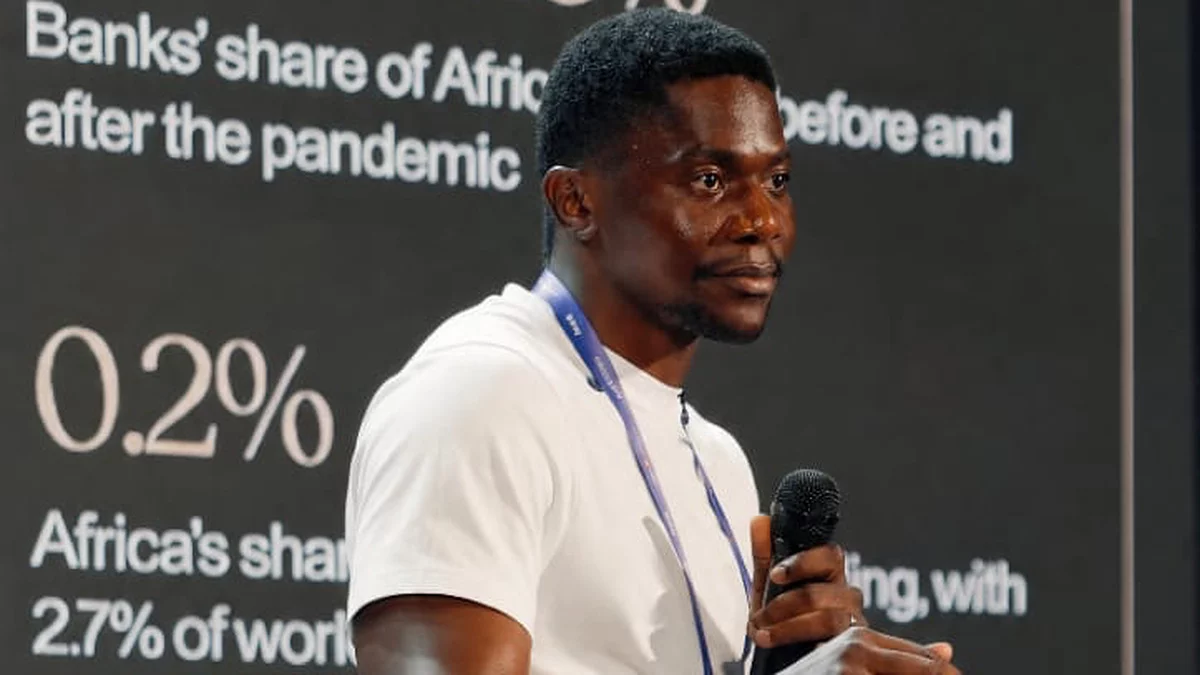
 Speaking at a panel titled “The Business Behind the Transaction”, executives from Mastercard, Remita and OPay said merchants needed services that connected payments to their wider operations, alongside reliable support and staff training.

“Let’s understand the customer, let’s solve for the customer problem rather than providing a generic product push across the different businesses,” said Shabir Ahmed, Mastercard’s Senior Vice President for Customer Solutions in Central Africa. 

Ahmed identified connectivity, data-driven intelligence and trust as priorities for providers seeking to help businesses operate more effectively. His comments proved that the usefulness of payment technology depends on what businesses can do with it beyond collecting money.

For Remita, that means extending services into financial management, invoicing and statutory compliance, said Abimbola Onyluka, the company’s divisional head for corporate and consumer business.

Businesses need tools that connect their financial information to banks, lenders and regulators, she said. A payment record becomes more useful when it can support borrowing, reporting and decisions about how to manage the business.

But expanding the range of services also requires providers to maintain the reliability of their core payments operations. Onyluka stressed the need for dependable support and the quick resolution of downtime, as payment failures can interrupt sales and affect customer service.

Isimeme Ayobami Owobo, OPay’s director for key account merchants, said businesses that grew faster integrated technology into their operations and trained employees to use it effectively.

Installing a payment terminal was only part of that process, he argued. Merchants also needed to make fuller use of the tools available to them, including QR-code payments that could help speed up transactions.

The discussion highlighted a challenge for payment providers seeking a larger role in merchants’ businesses. Processing a transaction gives them a point of contact with the customer, but turning that relationship into a broader service requires an understanding of how each business operates.

The executives’ argument was that payment acceptance alone offers a limited measure of digital adoption. The greater value comes when businesses can use the information generated by transactions to manage cash, serve customers and plan growth.

§

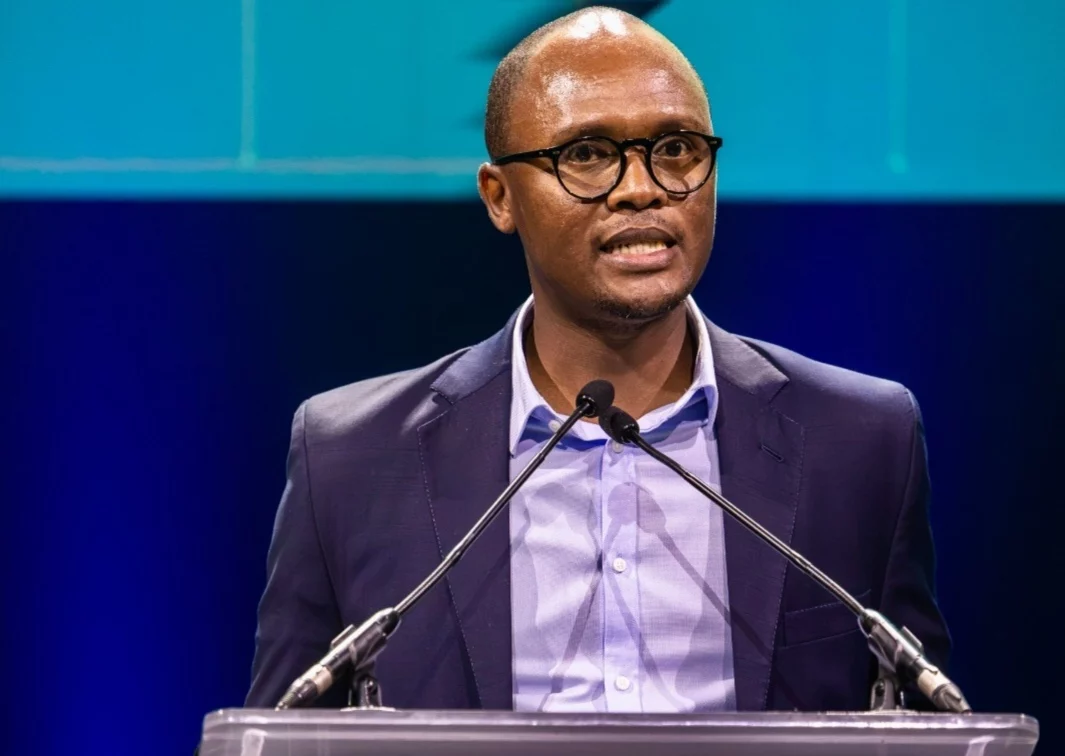
Juicyway, a cross-border payments company, is building a platform connecting African assets with global investors, its founder and chief executive, Ife Johnson, said, arguing that faster payments alone cannot solve the continent’s financing problem.

Speaking at Moonshot by TechCabal in Lagos, Johnson outlined plans for the ‘People’s Exchange’, which would use tokenisation, creating blockchain-based records of assets and securities, to help businesses raise money across markets. Johnson said Juicyway has received approval in principle from Nigeria’s Securities and Exchange Commission (SEC) to build the exchange.

“We’ve produced category winners without producing enough shared infrastructure for entire categories to grow,” he said. “Africa needs more shared infrastructure and fewer isolated winners.”

Juicyway deals with this every day. Software can send a payment instruction in seconds, but the money to complete that payment still has to be sitting in the right currency, in the right country.

“For roughly 95% of the transactions that we have to carry out, we have to perform settlements,” Johnson said. The exchange’s first focus would be financing that liquidity, he said, with later uses in mortgages, trade receivables, energy, commodities and stakes in private companies.

His argument is that the same shortage runs through the wider economy, as businesses hold receivables, projects need investment and households need long-term loans, but the capital to fund them is split across dozens of small markets.

Africa’s unmet demand for trade finance was between $74 billion and $92 billion in 2024, according to the African Development Bank’s 2025 trade finance report. African companies raised about $220 billion in equity on local stock markets between 2000 and 2024, just 1% of the equity raised worldwide, according to the OECD’s Africa Capital Markets Report 2025.

Johnson proposed tokenising investments to structure them, record who owns them and sell them across borders, with stablecoins moving and settling the money. “I don’t think Africa needs 29 exchanges,” he said. “I think it needs one market that connects them all.”

The aim is to let African businesses reach investors beyond their home markets. Making that work will take more than a shared technology platform: investors will need confidence in the underlying assets, in their ownership rights, and in how they get repaid or sell their stakes.

Johnson framed the exchange as a long-term project, citing his son. “I want his generation to inherit markets that finance the ambitions, rather than ambitions constrained by the absence of markets,” he said.

§

African creators can build a global audience from their first post, but getting that audience to pay them, reliably and across borders, is still hard. Payment infrastructure that works every time would fix it, the founders of Selar, Mainstack and Raenest said on a panel at Moonshot by TechCabal.

The panel focused on everyday creators, far from the top tier with millions of followers, and most of them earn little. The Nigerian Creator Economy Report 2025 found that 56.45% of Nigerian creators earn less than $100 a month from their work.

Ayobami Oyaleke, founder and CEO of Mainstack, which he described as a “commerce platform and financial back office for creators” operating in about 150 countries, said an audience is revenue waiting to be collected. “As much as you have the audience, there’s a revenue path for you,” he said.

The trouble is that most creators don’t know how to turn a following into income, or they hit a wall when they try to collect it. “Tools only give you the pipe,” Oyaleke said. “You’re still the one running the volume.” Mainstack’s approach is to treat every creator as global from the start so that a first $100 from a buyer abroad doesn’t get lost to payment failures.

Douglas Kendyson founded Selar in 2016 after fielding requests at Paystack from people who wanted to sell digital products online but faced ₦150,000 quotes for a website and unreliable payments. A decade later, Selar is bootstrapped and profitable and says it has paid out more than ₦18 billion ($12.9 million) to nearly 400,000 creators.

Kendyson was clear about what a platform should leave to creators: Selar does not find customers for them, which he called “a very tasking thing.” Its affiliate network, which lets marketers sell a creator’s product for a commission, now brings in more revenue than its subscriptions, he said.

Sodruldeen Mustapha, co-founder and CTO of Raenest, which helps African freelancers get paid from abroad, said the payment feature that matters most is control. Creators already export their talent, he argued, and their earnings should follow: collected from a client anywhere, in any currency, and under the creator’s control once they land.

The three founders agreed on the core problem. A creator in Lagos can have followers in Europe and the United States from day one, but the money struggles to make the same trip.

Kendyson, when asked what the next generation of creators needs, reached for nothing new. A decade in, he said, a new payment gateway seems to appear every week, “yet payments are still very fractured for a lot of us.” The infrastructure that fixes it, he said, “doesn’t even have to be particularly unique. It just has to work.”

Web hosting by Somee.com