×
Tech

The plumbing behind the apps: Why Africa’s next fintech leap belongs to national switches

Switch Al-Maghrib on building domestic payment plumbing

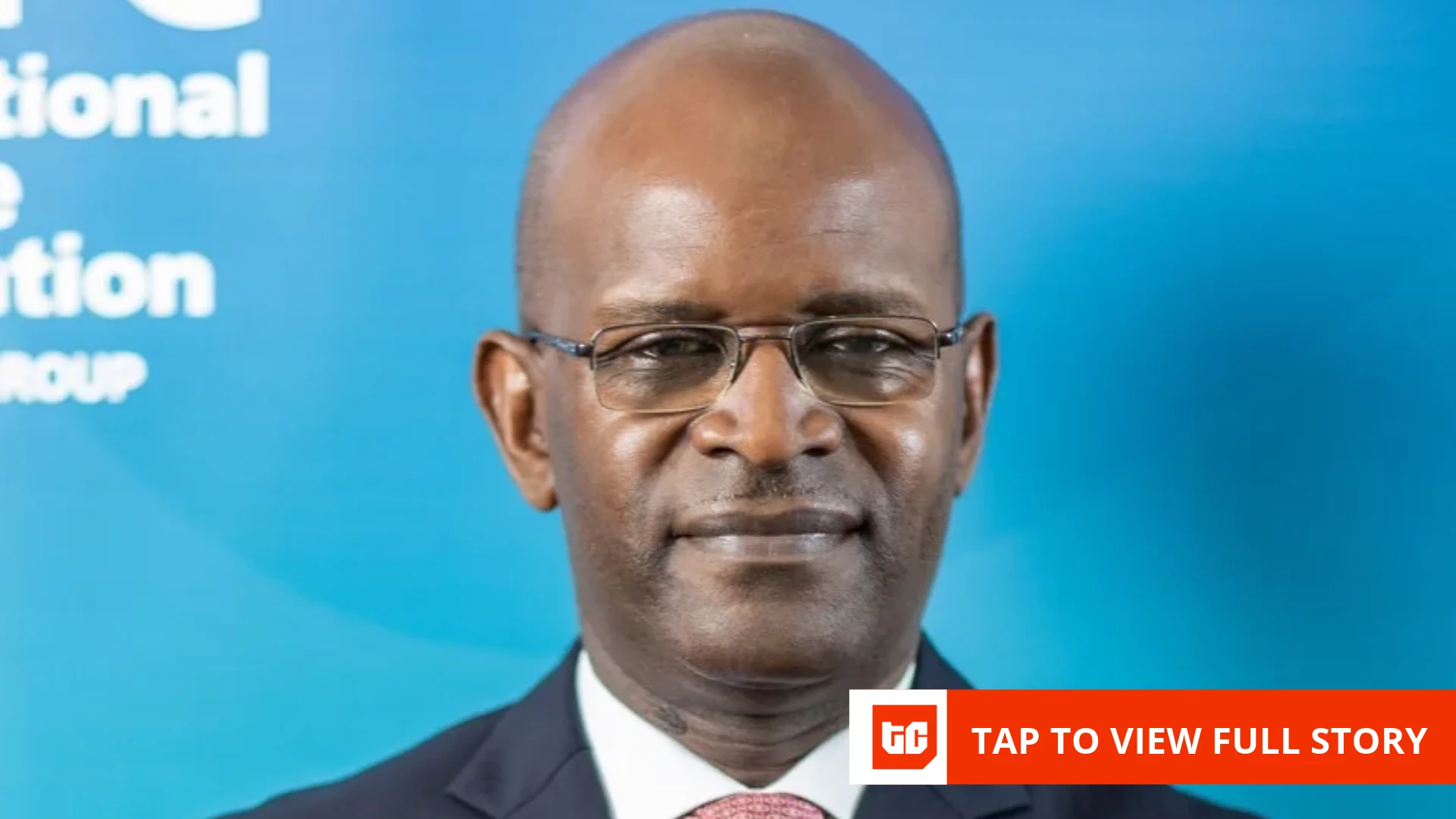
While venture capital chased consumer apps, the real battle for Africa’s digital economy moved behind the scenes. In an in-depth conversation, the Managing Director of Morocco’s Switch Al-Maghrib, Hanae Ben Driss, argues that national fragmentation is a prerequisite for sovereignty, explains why wallets trump cards for cross-border scale, and reveals plans for an association of African national switches.

Across the African continent, venture capital decks and tech keynotes have long championed the front-end revolution: sleek mobile banking interfaces, consumer lending apps, and digital storefronts. 

Yet behind this veneer of consumer convenience lies a persistent, frustrating structural reality. A traveller flying from Lagos to Luanda finds their international payment cards repeatedly declined when paying for basic transit visas; transferring funds between two neighbouring North and West African jurisdictions remains an expensive, multi-day ordeal involving intermediary offshore clearing banks; and domestic retail commerce remains stubbornly tethered to physical banknotes.

For the architects of the continent’s underlying financial plumbing, the obsession with consumer-facing software has obscured the foundational work required to move money.

Few operators understand this friction better than the leadership of Switch Al-Maghrib, Morocco’s national payment switch. 

Operating quietly within the engine room of North African finance for nearly three decades, the institution sits at the nexus of commercial banks, non-bank financial institutions, and the central bank. 

“Our position at Switch Al-Maghrib is interesting because we usually work behind the scenes,” Hanae Ben Driss, the Managing Director of Switch Al-Maghrib, Morocco’s national payment switch, explains. “We are part of the less visible but very important components of the value chain. We are infrastructure providers, and we are not client-facing or involved in business-to-consumer activities. However, our work is essential to making the entire ecosystem function.”

With nearly three decades in the industry, the Switch Al-Maghrib chief offers an unconventional perspective on what development institutions routinely lament as Africa’s payment “fragmentation”: the existence of separate national payment rails is not a policy failure but the vital first step towards continental sovereignty.

Speaking on the sidelines of continental industry deliberations, Hanae Ben Driss offered a fundamental reframing of the debate: what global observers dismiss as inefficient market fragmentation is, in reality, the necessary first chapter of African financial sovereignty.
The logo of Switch Al Maghrib (SWAM), Morocco’s national payment switch. Image source: Switch Al Maghrib

The case for domestic sovereignty

In development circles and policy conferences, Africa’s distinct national switches and regulatory silos are frequently viewed as obstacles to the African Continental Free Trade Area (AfCFTA). Switch Al-Maghrib’s leadership challenges that framing directly.

“You used the word fragmentation, but I may change your perspective on that,” she says. “Fragmentation can actually be the first step towards building things locally, which we subsequently need to make interoperable. If you do not have local infrastructure in the first place, there is nothing to make it interoperable.”

The argument for local infrastructure is rooted in political and financial self-determination. Without national ownership of core switches, countries remain exposed to external shocks and the strategic whims of offshore multinational schemes.

“Every country needs to have sovereign control over its critical infrastructure,” she insists. “These are the foundations upon which we are building the digital economy and payment systems. We should not simply be dependent on an international actor whose objectives may not necessarily align with national priorities. For me, sovereignty is not negotiable.”

Crucially, sovereignty does not require every African state to code every system from scratch or manufacture proprietary hardware. “Sovereignty does not necessarily mean that every country must independently develop every component of its infrastructure,” she notes. “What matters is that each country retains control over the evolution and management of its systems.”

She is equally clear that Africa cannot simply carbon-copy the European Union’s model of top-down integration. 

“Africa is not Europe or the United States. We do not have the same political framework for achieving that kind of integration,” she notes. “We can take a different approach. We can build these infrastructures country by country and subsequently agree on how to connect them. That is another way of building an interconnected system.”

Morocco pioneered this model more than two decades ago. Long before the current fintech boom, Moroccan commercial banks joined forces to build a unified domestic interbank switch, which Ben Driss said went live around 2005.

“One of the earliest initiatives was to ensure that domestic transactions could be processed locally,” she recalls. “What this means is that when a domestic transaction takes place, where both the cardholder and the merchant are located in Morocco, the transaction no longer needs to go through international schemes outside Morocco. Even when the payment card carries the logo of an international brand, the domestic transaction can be processed locally. That was an important first step towards achieving greater sovereignty.”

An association of African national switches

While domestic sovereignty has taken root in markets like Morocco, Nigeria, Ghana, Rwanda, and Angola, cross-border interoperability remains painfully slow. Multilateral platforms like the Pan-African Payment and Settlement System (PAPSS) and PAPSSCARD have established a high-level regulatory framework, but Switch Al-Maghrib believes technical operators must now take the initiative.

To accelerate that reality, Switch Al-Maghrib said it is working to forge direct operational ties with its peers across the continent, with an eye toward creating a formal continental coalition.

“We are already in contact with our counterparts in different African countries, particularly national switches,” she reveals. “We have relationships with the national switches in Nigeria, Ghana, Rwanda and other markets across the continent. We are progressively building relationships with these institutions, and there is a shared vision of establishing an association of African national switches.”

The aim of the association is practical, not bureaucratic: to establish technical interoperability between domestic rails without waiting decades for political treaties to harmonise.

“The objective is to create a framework through which we can collaborate and focus on connecting payment infrastructures,” she says. “This does not necessarily mean establishing a continental political or regulatory framework similar to the European Union. Rather, it means creating an effective mechanism for connecting our payment systems.”

Having a unified institutional voice has also become urgent as global technology races ahead. With the rise of artificial intelligence and agentic commerce—where autonomous software agents execute transactions on users’ behalf—isolated African markets risk becoming irrelevant if they remain fragmented.

“Even Europe is struggling to establish sufficient technological independence to compete with the United States and China, which are driving developments in artificial intelligence,” she warns. 

“For Africa, therefore, it is important that we come together… Otherwise, it will become increasingly difficult to develop viable solutions at the national level, let alone across the continent.”

Why wallets beat cards for cross-border scale

When exploring how to connect national switches, the disparity between card networks and mobile wallets becomes immediately apparent.

Traditional payment cards remain constrained by the rigid rules, clearing hubs, and interchange fees of multinational networks like Visa and Mastercard. 

“Even if we decide tomorrow to connect our international clearing national switch, we cannot simply make every Visa or Mastercard cross-border payment across continents remain so difficult despite decades of conferences and commitments, the boss of Switch Al-Maghrib and strategies.”

Digital mobile wallets, however, present a far more agile route for intra-African commerce.

“Wallets present a different opportunity,” she explains. “If we decide to connect the Nigerian wallet ecosystem with the Moroccan wallet ecosystem, we have greater autonomy to establish that connection because we are not necessarily dealing with an international card scheme. That gives us an opportunity to develop our own interconnected payment arrangements.”

By linking digital wallets directly across national borders, African switches can enable instant, account-to-account payments that bypass international clearing rails altogether.

“Technology is only 20% of the equation”

When asked why cross-border payments across continents remain so difficult despite decades of conferences and commitments, the boss of Switch Al-Maghrib dismisses the idea of a technical barrier.

“I would definitely not say it is technological,” she asserts. “Technology represents only about 20 per cent of the equation in initiatives of this nature.”

Nor does she view political resistance as the primary bottleneck. Instead, the real challenge lies in the complex, resource-intensive work of regulatory execution while managing domestic structural hurdles.

“Every country has its own domestic priorities and challenges,” she explains. “Whether you are talking about Morocco, Nigeria or Angola, the situation is similar. The measurement of financial inclusion and cash is still very dominant. Countries are dealing with these domestic challenges while also trying to find the time and resources to establish cross-border connections.”

Rather than waiting for central banks to design technical frameworks, she argues that switch operators must be proactive.

“Regulators are not necessarily technology experts, and that is understandable,” she says. “When you are dealing with technological infrastructure, regulation alone is not sufficient. I believe we should not simply wait for regulators to take the initiative… we, as infrastructure providers, manage the technological systems and should take the initiative to make proposals to regulators. We have the flexibility and agility to move faster.”

Beyond vanity bank accounts

This pragmatic approach extends to how financial inclusion is measured. While policymakers frequently point to the number of newly opened bank accounts as evidence of progress, she argues that account metrics are superficial.

“For me, financial inclusion goes beyond the number of bank accounts,” she says. “It is about having access to a digital financial record through which institutions can access your risk profile when you need a loan. Whether that record comes from a traditional bank account, a payment account, or a digital wallet does not necessarily matter.”

True inclusion, she argues, is about economic resilience and poverty alleviation. “I strongly believe that financial inclusion helps combat poverty. When people have a financial track record, they can access loans and credit under more favourable conditions. 

“Can we establish whether you have savings? Do you regularly pay your bills? Do you have a consistent financial record? These are the indicators that help an institution determine whether you are reliable enough to access credit. The objective of financial inclusion is to make people’s lives better and make them less vulnerable.”

The biggest barrier to creating that digital record remains the dominance of cash in the informal economy, where traders routinely demand physical notes over digital transfers.

She points out that this reluctance is deeply tied to fiscal trust and the social contract: “It is also connected to taxation. If I accept a digital transfer, I become visible within the financial system. My revenues can be tracked, and I may have to declare my income and pay taxes. But what am I getting in return for paying those taxes? Am I receiving quality education, healthcare and other public services? These issues are interconnected. We cannot look at payments in isolation.”

Because cash provides immediate certainty and fee-free liquidity, digital alternatives must offer compelling benefits in safety and merchant convenience to compete.

“We cannot simply expect merchants to change their behaviour,” she notes. “It is our responsibility, as payment infrastructure providers, to innovate and make digital payments more attractive.”

To build that trust, Switch Al-Maghrib said it has integrated artificial intelligence directly into its national routing engine to provide real-time, ecosystem-wide fraud scoring, democratising high-end cyber defence for every connected institution.

“One of the advantages of having this capability at the national switch level is that we can share the cost across the ecosystem,” she explains. 

“Rather than every individual institution having to develop the same capabilities independently, we can provide a centralised service. For every transaction passing through the switch, whether it originates from a bank or a mobile money institution, we can assess the risk in real time. This allows us to strengthen the security of the entire payment ecosystem.”

For Africa’s payment landscape, the message from Driss is clear: integration will not descend from a single continental decree, nor will it be solved by front-end apps alone. It will be achieved by sovereign domestic switches that build local resilience, take ownership of their rails, and forge direct, pragmatic alliances across borders.

“One of the beautiful things about Africa is that we are a community,” she reflects. “When I talk about national switches in Nigeria, Angola, Ghana and Rwanda, I am talking about institutions that share similar challenges. We are essentially dealing with the same problems… There is a lot we can learn from one another through benchmarking and sharing experiences.”
§

After two decades of false starts, the International Finance Corporation has selected 15 agritech companies across the continent, backing them with equity while deploying portfolio guarantees to link them directly to the balance sheets of nearly 200 commercial banks.

For the past two decades, the quest to modernise African agriculture through technology has been littered with failed pilots, undercapitalised startups, and commercial lenders unwilling to venture beyond urban corporate headquarters. Yet, with the continent importing an estimated $90 billion in staple food commodities annually—a reliance that directly fuels currency depreciation and sticky inflation—the pressure to industrialise domestic food production has shifted from a development ambition into a macroeconomic imperative.

Speaking on the sidelines of the Africa Financial Industry Summit (AFIS) in Luanda, Aliou Maiga, Director of the Financial Institutions Group for Africa at the International Finance Corporation (IFC), revealed that the private-sector lending arm of the World Bank Group is rolling out a continental framework designed to solve agricultural finance once and for all.

The strategy marks a departure from the venture-capital model that previously pushed agritech startups to take on balance-sheet lending risk. Instead, the IFC is positioning agritech companies as digital origination and field-management engines, while channelling commercial bank liquidity into rural smallholder value chains backed by IFC risk-sharing guarantees.

“We have been looking for solutions in this space for about 20 years,” Maiga explained to TechCabal on Wednesday. “We explored the possibilities back then, but the technology was not sufficiently developed. We tried again about 10 years ago, but the conditions still weren't right. This time, we have identified 15 agritech companies across Africa, with coverage spanning much of the continent.”

Under this tripartite model, the IFC provides direct equity investment to these 15 vetted agritech firms to help them complete product development and achieve commercial scale. Rather than forcing these startups to raise expensive debt to lend directly to farmers—a practice that has strained balance sheets across the African tech ecosystem—the IFC connects them directly to its continental network of nearly 200 commercial banks and institutional lenders.

TC DATA LAB / AGRITECH FINANCE

IFC is changing how agricultural technology companies connect African farmers to finance. Explore how the model shifts lending away from startup balance sheets and towards commercial banks, supported by equity investment and risk-sharing guarantees.

15Agritech companies identified by IFC

~200Institutions in IFC’s wider lending network

20Years of attempts to develop a scalable solution

01 / THE FINANCING SHIFT

The startup no longer has to be the bank

In one earlier approach, agritech startups borrowed capital and lent directly to farmers. IFC’s proposed framework separates the technology provider from the lender. Switch between the models.

EARLIER MODEL / STARTUP-LED LENDING

External fundingDebt or investment capital raised by the startup

↓Startup secures funding

Agritech startup Sources farmers, manages operations and carries direct lending exposure

↓Startup finances farmers

Smallholder farmersReceive financing and agricultural services

THE PRESSURE POINT Lending risk and the need to raise loan capital can strain a startup’s balance sheet and limit its scale.

This is a simplified illustration of startup-led agricultural lending, not a claim that every earlier agritech or IFC programme used exactly this structure.

IFC MODEL / SEPARATED ROLES

IFC Equity for selected agritechs + portfolio risk-sharing guarantees for participating lenders

↓Equity support

15 agritech firms Farmer origination, risk data and field operations

↓Risk-sharing support

Commercial banks Lend from their own balance sheets

THE CONNECTION Agritechs identify and support farmers; participating banks make and fund lending decisions. IFC guarantees share specified risks.

↓Bank credit + field-level support

Smallholder farmers Access to potential financing, agricultural advice and community-based field agents

Important: IFC’s nearly 200 financial institutions form a wider potential lending network. The number of banks participating in this specific agritech programme has not been disclosed.

02 / THE FOUR PARTICIPANTS

Everyone has a different job

Select a participant to see who provides the capital, who originates farmers, who carries lending exposure and who receives support.

EQUITY + RISK SHARING

IFC: making the model investable

IFC provides direct equity investment to selected agritech companies, helping them develop products and expand their operations.

Separately, portfolio guarantees can cover an agreed portion of eligible lender losses. They do not necessarily eliminate the bank’s risk or guarantee every loan.

TECHNOLOGY + FIELD OPERATIONS

Agritech: finding and supporting farmers

The 15 selected companies are intended to identify farmers, gather agricultural data, help assess risks and coordinate last-mile services through local agents.

Instead of financing the entire loan portfolio themselves, they can focus on technology and operational delivery.

CREDIT + BALANCE SHEET

Commercial banks: providing the loans

Participating banks provide credit directly from their balance sheets, using information and origination support supplied by agritech partners.

The bank remains a lender exposed to credit risk. IFC’s guarantee may absorb a defined share of eligible losses under the agreed terms.

THE END BENEFICIARY

Farmers: receiving capital and guidance

Smallholders may gain access to formal credit alongside practical support delivered through local agents and connected devices.

IFC says yields have increased by as much as 50% in some cases. That is an upper-end example, not an average or a forecast for participating farmers.

03 / FOLLOW THE FARMER

How a smallholder could access bank financing

Follow a hypothetical farmer through the model, from first contact with a field agent to agricultural support. Tap any step or use the next and back controls.

STEP 01 / 05

A field agent reaches the farmer

A community-based agent visits a smallholder and uses a connected device to gather information about the farm and its needs.

Why it matters: rural farmers may lack reliable connectivity, digital literacy or direct access to conventional banking channels.

STEP 02 / 05

The agritech builds a risk picture

Agricultural data, field observations and farmer information help the agritech assess production conditions and support credit origination.

The aim is to make rural lending decisions better informed, not to guarantee that every farmer will qualify for credit.

STEP 03 / 05

A commercial bank considers the loan

A participating bank can use the origination information to evaluate the farmer and, if approved, provide financing from its own balance sheet.

The critical shift: the agritech does not need to raise and deploy all the loan capital itself.

STEP 04 / 05

IFC shares eligible lending risk

The portfolio guarantee is an arrangement between IFC and a participating lender. It can absorb an agreed share of qualifying credit losses.

This is a financing safeguard, not necessarily a separate payment to the farmer or a step that happens after each loan is approved.

Guarantee coverage, pricing, eligibility and loss-sharing percentages have not been disclosed in the story.

STEP 05 / 05

The farmer receives continuing support

Field agents can help farmers interpret soil conditions, respond to weather changes, schedule fertiliser use and monitor crop health.

The intended outcome is higher productivity and more sustainable agricultural lending relationships. Results depend on implementation and local conditions.

IFC cites yield increases of up to 50% in some cases, but has not supplied a programme-wide average in this account.

THE BIG SHIFT

The IFC model separates three functions that were previously concentrated in some agritech startups: technology and farmer origination, credit funding, and risk sharing. Whether this translates into scalable agricultural lending will depend on bank participation, farmer outcomes and the actual terms of the guarantees.

What is a portfolio guarantee?

A portfolio guarantee is a risk-sharing arrangement covering a defined group of eligible loans. If qualifying borrowers default, the guarantor may absorb an agreed portion of the resulting losses.

For a bank, this can make lending to unfamiliar or underserved sectors more manageable. The bank still needs to assess borrowers, administer loans and comply with the guarantee agreement.

What we don’t know: The story does not disclose the guarantee percentage, investment size, number of participating banks, total credit to be deployed or expected number of farmers reached.

How to read this interactive

Source: TechCabal interview with Aliou Maiga, Director of IFC’s Financial Institutions Group for Africa, at AFIS in Luanda.

15 agritech firms: The number IFC says it has identified for its new framework.

Nearly 200 institutions: IFC’s broader commercial bank and institutional lending network, not confirmed programme participants.

Earlier approach: A generalised illustration of startup-led agricultural lending.

Farmer journey: A hypothetical sequence based on the operating model described in the interview. It is not a documented individual loan.

Risk allocation: Actual guarantee terms and lender obligations may differ between agreements.

The agritech firms originate the farmers, assess agricultural risk, and manage the last-mile operational relationships. The commercial banks then disburse credit directly from their balance sheets, with IFC portfolio guarantees absorbing downside risk until lenders build their own underwriting confidence in the agricultural sector.

The macroeconomic motivation behind this capital engineering is urgent. African countries currently spend roughly $90 billion each year to import basic food staples such as rice, wheat, and sugar—commodities that could readily be cultivated on their own soil.

“Africa imports approximately $90 billion worth of food commodities, including rice, wheat and sugar. Yet, much of what we import could potentially be produced locally,” Maiga said. “The idea behind our work is to help Africa address its food security challenges, create jobs and increase productivity. Producing more food locally also reduces dependence on imports and can help moderate inflation because locally produced food is often cheaper. Ultimately, this has implications for interest rates as well, because inflation is one of the factors that influences interest rates.”

By dampening food inflation, which carries the largest weight in consumer price baskets across Sub-Saharan Africa, domestic agricultural productivity directly eases the monetary pressure that has forced central banks to maintain punishingly high benchmark interest rates.

Achieving this productivity, however, requires confronting the physical realities of the African smallholder. Unlike manufacturing or financial services, which have rapidly automated, African farming remains dominated by dispersed, rural smallholders who suffer from severe information deficits and low technical capability.

Maiga dismissed the notion that software alone can bridge this divide. In agriculture, pure-play digital platforms fail because rural producers cannot be served exclusively through smartphone applications. Instead, the IFC’s portfolio companies rely on a hybrid model that blends mobile technology with physical community agent networks.

“Our approach is to combine technology with agents on the ground, usually recruited from the communities where farmers operate,” Maiga observed. “These agents are physically present and equipped with devices that enable them to identify and address farmers’ day-to-day challenges. Through this approach, we can improve agricultural productivity and yields. In some cases, yields have increased by as much as 50%.”

These field agents use connected handheld devices to conduct soil diagnostics, track weather disruptions, schedule fertiliser application, and monitor crop health, translating agronomic data into actionable guidance for farmers.

Beyond technology and commercial bank balance sheets, Maiga emphasised that the agritech sector cannot scale without regulatory alignment from national and regional governments.

The IFC is actively integrating its agritech framework into broader state initiatives, including a flagship agricultural programme launched with the Nigerian government, as well as formal agreements being negotiated with sub-national administrations across key markets.

These sovereign agreements are designed to establish specific production targets, guarantee access to infrastructure, and remove regulatory bottlenecks across the entire value chain.

Once these state commitments are secured, the IFC coordinates with farmer cooperatives, agritech platforms, and commercial lenders to disburse funds and systematically measure the impact on yields.

For Africa’s agritech sector, which has struggled through successive funding winters and tech downturns, the shift in institutional backing signals a strategic maturation.

By pairing field-level technology with the balance sheets of mainstream commercial banks, the IFC is attempting to convert smallholder agriculture from an uninsurable charity case into an investable, productive commercial engine.

§

Speaking on the sidelines of the African Financial Industry Summit 2026 in Luanda, Fintan Byrne, chief executive officer of digital banking platform CR2 (now part of Morocco’s HPS Group), argues that African banks are eroding market share, that consumer expectations are shifting toward instant, cross-border services, and that front-end strategy is proving dangerously inadequate to determine the next decade of continental finance. GODFREY GEORGE reports.

For the past decade, commercial banks across Africa have treated the launch of a smartphone application as the definitive proof of digital transformation. Yet, as agile fintechs erode market share and consumer expectations shift toward instant, cross-border services, that front-end strategy is proving dangerously inadequate.

Inside the meeting rooms of the Africa Financial Industry Summit (AFIS) in Luanda, industry veterans are delivering a blunter assessment: rolling out standalone digital applications without overhauling underlying infrastructure is merely papering over legacy cracks.

“Simply launching a mobile application does not solve any problems on its own,” says Fintan Byrne, chief executive officer of CR2. “Innovation for the sake of innovation, or simply introducing another application, does not necessarily deliver value. It requires a comprehensive programme built around the question of what value we are trying to create, what problem we are trying to solve, and what friction we are trying to reduce.”

Byrne, an Irish banking software executive with nearly three decades of experience across the global payments landscape—from retail banking and merchant acquiring to senior roles at card schemes like Mastercard—now leads CR2 under the umbrella of Morocco-headquartered multinational HPS Group.

Between CR2 and HPS, the combined business brings together six decades of payments engineering and serves nearly 60 commercial lenders globally. 

In Africa, that footprint includes tier-one institutions such as Absa, Standard Chartered Bank, Standard Bank, and Access Bank, as well as five commercial lenders in Egypt, including Commercial International Bank (CIB), and several institutions across East Africa and Ethiopia.

For Byrne, the dilemma facing African banking chiefs is twofold: legacy lenders must defend their traditional branch and ATM distribution footprints while simultaneously investing in complex digital capabilities to fend off both domestic banking rivals and digital-first fintech insurgents.

The friction test and the platform trap

To separate genuine transformation from digital vanity projects, Byrne subjects every technological deployment to what he calls the “friction test.”

“I always ask my team and the CEOs I engage with to consider what I call the friction test,” Byrne explains. 

“Will the solution make something cheaper? Will it save someone money? Will it be easier to use? Will it save time? We need to go through these questions to understand whether the investment we are making will deliver significant benefits.”

The structural mistake many African lenders make, according to Byrne, is purchasing isolated, point-to-point software solutions for individual banking functions.

One vendor is hired for customer onboarding, another for loan origination, a third for mobile interfaces, and a fourth for agency banking. The result is an expensive, fragmented IT estate that slows down innovation and frustrates customers.

CR2’s counter-strategy focuses on platformisation: deploying a unified underlying architecture in which capabilities can be incrementally switched on, without embarking on protracted core-banking overhauls.

“One of the challenges facing banks is that they invest in multiple individual solutions without necessarily connecting them effectively,” Byrne says. 

“We encourage banks to invest in a platform and then unlock the capabilities they need from that platform. If a bank wants to develop a specific customer journey for onboarding or loan origination, it should be able to unlock that capability through the platform without having to invest in an entirely new platform or undertake another integration.”

Where banks have executed this shift, the balance-sheet impact has been tangible. In North Africa, Byrne points to Egypt’s CIB, which utilised channel segmentation to route routine transactions away from expensive branch networks to self-service digital and assisted channels, thereby reducing its operational cost-to-income ratio and accelerating customer acquisition.

AI in the build and run phases

While enterprise software forms the backbone of digital banking, the conversation at AFIS 2026 has been dominated by artificial intelligence. Yet, in markets where roughly 85% of economic activity occurs in the informal economy, the practical application of frontier technology is often met with scepticism.

When asked how an AI-first banking posture benefits an informal market woman selling fish in Luanda or Lagos, Byrne splits the technology’s lifecycle into two distinct dimensions: the “build phase” and the “run phase”.

In the build phase, banks must engineer their technical architecture to be machine-readable from day one, using modern application programming interfaces (APIs) and data pipelines that accommodate emerging paradigms such as agentic commerce—in which autonomous software agents make purchasing and financial decisions on behalf of consumers.

The run phase, however, is where immediate commercial value is unlocked, particularly in credit underwriting and fraud prevention.

“How can AI make businesses more efficient in their day-to-day operations?” Byrne asks. “Credit scoring and behavioural scoring are critical areas. You mention the market woman selling fish: how can we better understand her business cash flow and operations? Perhaps we can use that information to provide her with instant credit to support her enterprise. We could also understand the seasonal nature of her trade and take that into account when assessing her financial needs.”

By substituting classical, immovable collateral—such as real estate titles—with transaction analytics and cash-flow data captured through mobile wallets and agency banking networks, lenders can finally underwrite the continent’s vast unbanked and underbanked merchant base.

Crucially, Byrne argues that this same intelligence must be turned outward to defend institutions against escalating financial crime. Rather than simply flagging suspicious transactions post-mortem, machine learning models are being deployed at the infrastructure level to identify behavioural anomalies and predict fraudulent transactions before settlement occurs.

Stablecoins, CBDCs, and orchestration

Beyond credit and fraud, African banking institutions are navigating an evolving monetary landscape marked by central bank digital currencies (CBDCs), stablecoins, and tokenised assets.

Rather than viewing digital currencies as an immediate existential threat to commercial banking, Byrne argues that lenders must treat them as both stores of value and payment mechanisms. More importantly, institutions should not assume that the rise of digital money requires tearing down legacy rails.

To explain the coexistence of new and old payment rails, Byrne uses an automotive parallel.

“When electric cars were introduced, we did not build entirely new roads for them,” Byrne observes. “We continued using the existing roads. However, we needed additional infrastructure, such as charging stations. The same principle applies to digital money. We can leverage existing payment infrastructure, but additional capabilities and investments will be necessary.”

This reality elevates the strategic importance of payment orchestration—the technical plumbing that allows disparate payment rails, card schemes, mobile money wallets, and digital tokens to interoperate smoothly.

As stablecoins gain traction for cross-border trade settlements in currency-starved markets, commercial banks will need robust orchestration platforms to manage on-ramps and off-ramps, ensuring that customers can convert fluidly between sovereign fiat, digital currencies, and bank deposits within a single secure environment.

Trust and security

Throughout the discussions in Luanda, the undercurrent of every technological transition—whether AI, agentic purchasing, or stablecoin rails—remains institutional security.

Without regulatory certainty and ironclad cybersecurity, Byrne cautions that digital initiatives risk catastrophic reputational failure, noting that banking operates under fundamentally different social and regulatory contracts than speculative tech sectors.

“The entire business of banking is built on trust,” Byrne notes. “Therefore, any new evolution or innovation must be introduced with that consideration in mind. Security may not be the most exciting subject, but it is fundamental. Trust is very difficult to build but incredibly easy to lose.”

Pointing to high-profile controversies and enforcement actions that have rocked the broader crypto and exchange sector in recent years, Byrne stresses that traditional banking cannot afford the lax compliance postures often associated with decentralised finance. If a regulated commercial bank were to lose billions of dollars in customer deposits, the systemic contagion and institutional fallout would be existential.

The road ahead

Looking towards the next five years, Byrne envisions a structural consolidation in how African banks engage with technology providers.

The era of bespoke, disconnected software experimentation is winding down, giving way to enterprise partnerships focused on scalability, platform resilience, and hyper-personalisation.

As digital adoption matures, the competitive battlefield for African lenders will centre on treating customers not as broad demographic categories, but as distinct micro-segments.

“We are moving towards what we traditionally describe as a segment of one,” Byrne says. “If a bank has a high-net-worth customer, how does it ensure that the customer receives the right service, experience, and capabilities for their particular needs? The same applies to mass-affluent customers, the mass market, students, and people who are just beginning their financial journeys.”

For Byrne, the message to African banking leadership gathered in Luanda is unmistakable: the institutions that survive the next decade of disruption will not be those that launch the sleekest standalone mobile applications, but those that invest in the unglamorous, heavy-duty platform plumbing required to orchestrate payments, automate intelligence, and safeguard institutional trust.

Web hosting by Somee.com