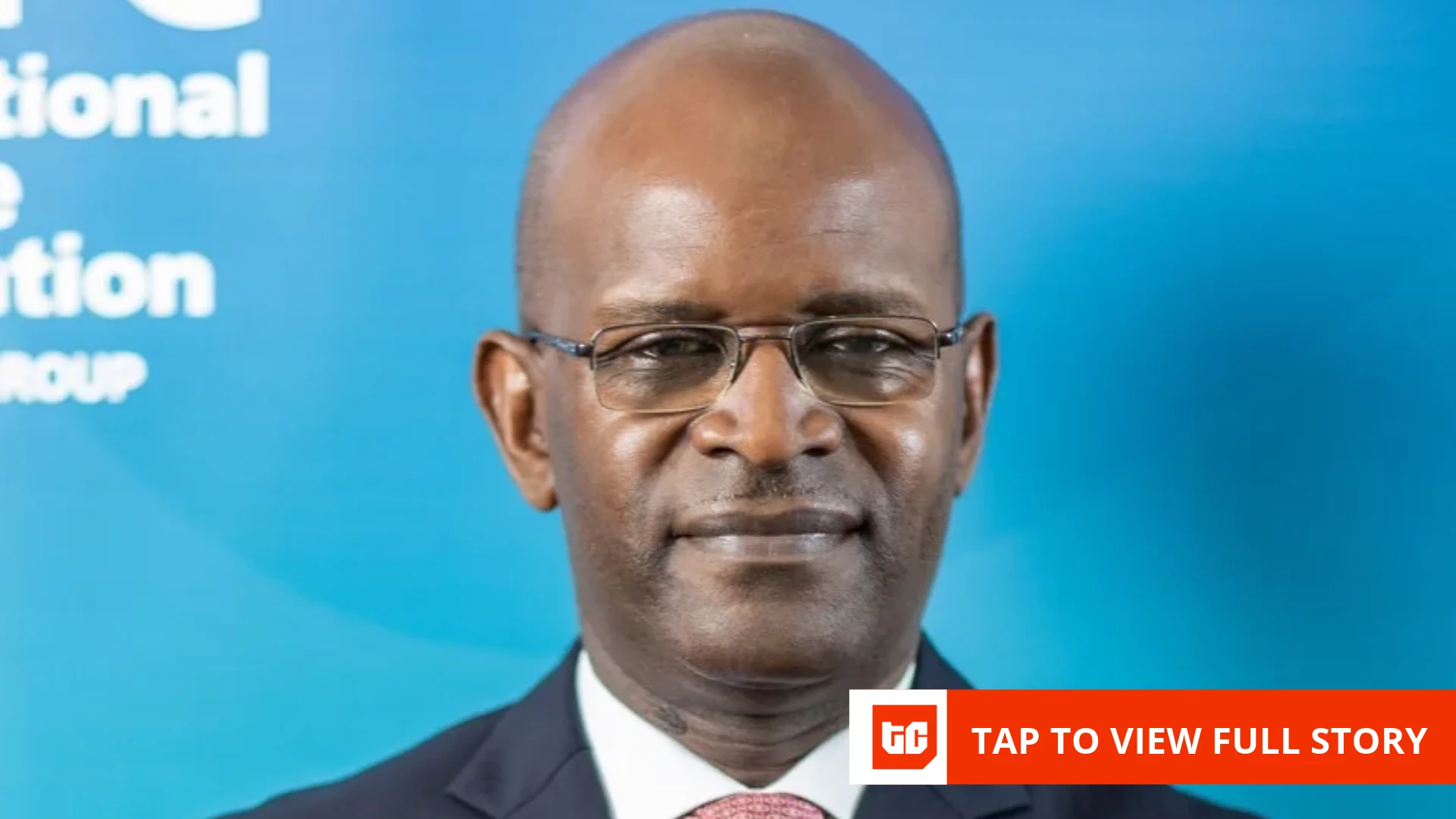
While venture capital chased consumer apps, the real battle for Africa’s digital economy moved behind the scenes. In an in-depth conversation, the Managing Director of Morocco’s Switch Al-Maghrib, Hanae Ben Driss, argues that national fragmentation is a prerequisite for sovereignty, explains why wallets trump cards for cross-border scale, and reveals plans for an association of African national switches.
Across the African continent, venture capital decks and tech keynotes have long championed the front-end revolution: sleek mobile banking interfaces, consumer lending apps, and digital storefronts.
Yet behind this veneer of consumer convenience lies a persistent, frustrating structural reality. A traveller flying from Lagos to Luanda finds their international payment cards repeatedly declined when paying for basic transit visas; transferring funds between two neighbouring North and West African jurisdictions remains an expensive, multi-day ordeal involving intermediary offshore clearing banks; and domestic retail commerce remains stubbornly tethered to physical banknotes.
For the architects of the continent’s underlying financial plumbing, the obsession with consumer-facing software has obscured the foundational work required to move money.
Few operators understand this friction better than the leadership of Switch Al-Maghrib, Morocco’s national payment switch.
Operating quietly within the engine room of North African finance for nearly three decades, the institution sits at the nexus of commercial banks, non-bank financial institutions, and the central bank.
“Our position at Switch Al-Maghrib is interesting because we usually work behind the scenes,” Hanae Ben Driss, the Managing Director of Switch Al-Maghrib, Morocco’s national payment switch, explains. “We are part of the less visible but very important components of the value chain. We are infrastructure providers, and we are not client-facing or involved in business-to-consumer activities. However, our work is essential to making the entire ecosystem function.”
With nearly three decades in the industry, the Switch Al-Maghrib chief offers an unconventional perspective on what development institutions routinely lament as Africa’s payment “fragmentation”: the existence of separate national payment rails is not a policy failure but the vital first step towards continental sovereignty.
Speaking on the sidelines of continental industry deliberations, Hanae Ben Driss offered a fundamental reframing of the debate: what global observers dismiss as inefficient market fragmentation is, in reality, the necessary first chapter of African financial sovereignty.
The case for domestic sovereignty
In development circles and policy conferences, Africa’s distinct national switches and regulatory silos are frequently viewed as obstacles to the African Continental Free Trade Area (AfCFTA). Switch Al-Maghrib’s leadership challenges that framing directly.
“You used the word fragmentation, but I may change your perspective on that,” she says. “Fragmentation can actually be the first step towards building things locally, which we subsequently need to make interoperable. If you do not have local infrastructure in the first place, there is nothing to make it interoperable.”
The argument for local infrastructure is rooted in political and financial self-determination. Without national ownership of core switches, countries remain exposed to external shocks and the strategic whims of offshore multinational schemes.
“Every country needs to have sovereign control over its critical infrastructure,” she insists. “These are the foundations upon which we are building the digital economy and payment systems. We should not simply be dependent on an international actor whose objectives may not necessarily align with national priorities. For me, sovereignty is not negotiable.”
Crucially, sovereignty does not require every African state to code every system from scratch or manufacture proprietary hardware. “Sovereignty does not necessarily mean that every country must independently develop every component of its infrastructure,” she notes. “What matters is that each country retains control over the evolution and management of its systems.”
She is equally clear that Africa cannot simply carbon-copy the European Union’s model of top-down integration.
“Africa is not Europe or the United States. We do not have the same political framework for achieving that kind of integration,” she notes. “We can take a different approach. We can build these infrastructures country by country and subsequently agree on how to connect them. That is another way of building an interconnected system.”
Morocco pioneered this model more than two decades ago. Long before the current fintech boom, Moroccan commercial banks joined forces to build a unified domestic interbank switch, which Ben Driss said went live around 2005.
“One of the earliest initiatives was to ensure that domestic transactions could be processed locally,” she recalls. “What this means is that when a domestic transaction takes place, where both the cardholder and the merchant are located in Morocco, the transaction no longer needs to go through international schemes outside Morocco. Even when the payment card carries the logo of an international brand, the domestic transaction can be processed locally. That was an important first step towards achieving greater sovereignty.”
An association of African national switches
While domestic sovereignty has taken root in markets like Morocco, Nigeria, Ghana, Rwanda, and Angola, cross-border interoperability remains painfully slow. Multilateral platforms like the Pan-African Payment and Settlement System (PAPSS) and PAPSSCARD have established a high-level regulatory framework, but Switch Al-Maghrib believes technical operators must now take the initiative.
To accelerate that reality, Switch Al-Maghrib said it is working to forge direct operational ties with its peers across the continent, with an eye toward creating a formal continental coalition.
“We are already in contact with our counterparts in different African countries, particularly national switches,” she reveals. “We have relationships with the national switches in Nigeria, Ghana, Rwanda and other markets across the continent. We are progressively building relationships with these institutions, and there is a shared vision of establishing an association of African national switches.”
The aim of the association is practical, not bureaucratic: to establish technical interoperability between domestic rails without waiting decades for political treaties to harmonise.
“The objective is to create a framework through which we can collaborate and focus on connecting payment infrastructures,” she says. “This does not necessarily mean establishing a continental political or regulatory framework similar to the European Union. Rather, it means creating an effective mechanism for connecting our payment systems.”
Having a unified institutional voice has also become urgent as global technology races ahead. With the rise of artificial intelligence and agentic commerce—where autonomous software agents execute transactions on users’ behalf—isolated African markets risk becoming irrelevant if they remain fragmented.
“Even Europe is struggling to establish sufficient technological independence to compete with the United States and China, which are driving developments in artificial intelligence,” she warns.
“For Africa, therefore, it is important that we come together… Otherwise, it will become increasingly difficult to develop viable solutions at the national level, let alone across the continent.”
Why wallets beat cards for cross-border scale
When exploring how to connect national switches, the disparity between card networks and mobile wallets becomes immediately apparent.
Traditional payment cards remain constrained by the rigid rules, clearing hubs, and interchange fees of multinational networks like Visa and Mastercard.
“Even if we decide tomorrow to connect our international clearing national switch, we cannot simply make every Visa or Mastercard cross-border payment across continents remain so difficult despite decades of conferences and commitments, the boss of Switch Al-Maghrib and strategies.”
Digital mobile wallets, however, present a far more agile route for intra-African commerce.
“Wallets present a different opportunity,” she explains. “If we decide to connect the Nigerian wallet ecosystem with the Moroccan wallet ecosystem, we have greater autonomy to establish that connection because we are not necessarily dealing with an international card scheme. That gives us an opportunity to develop our own interconnected payment arrangements.”
By linking digital wallets directly across national borders, African switches can enable instant, account-to-account payments that bypass international clearing rails altogether.
“Technology is only 20% of the equation”
When asked why cross-border payments across continents remain so difficult despite decades of conferences and commitments, the boss of Switch Al-Maghrib dismisses the idea of a technical barrier.
“I would definitely not say it is technological,” she asserts. “Technology represents only about 20 per cent of the equation in initiatives of this nature.”
Nor does she view political resistance as the primary bottleneck. Instead, the real challenge lies in the complex, resource-intensive work of regulatory execution while managing domestic structural hurdles.
“Every country has its own domestic priorities and challenges,” she explains. “Whether you are talking about Morocco, Nigeria or Angola, the situation is similar. The measurement of financial inclusion and cash is still very dominant. Countries are dealing with these domestic challenges while also trying to find the time and resources to establish cross-border connections.”
Rather than waiting for central banks to design technical frameworks, she argues that switch operators must be proactive.
“Regulators are not necessarily technology experts, and that is understandable,” she says. “When you are dealing with technological infrastructure, regulation alone is not sufficient. I believe we should not simply wait for regulators to take the initiative… we, as infrastructure providers, manage the technological systems and should take the initiative to make proposals to regulators. We have the flexibility and agility to move faster.”
Beyond vanity bank accounts
This pragmatic approach extends to how financial inclusion is measured. While policymakers frequently point to the number of newly opened bank accounts as evidence of progress, she argues that account metrics are superficial.
“For me, financial inclusion goes beyond the number of bank accounts,” she says. “It is about having access to a digital financial record through which institutions can access your risk profile when you need a loan. Whether that record comes from a traditional bank account, a payment account, or a digital wallet does not necessarily matter.”
True inclusion, she argues, is about economic resilience and poverty alleviation. “I strongly believe that financial inclusion helps combat poverty. When people have a financial track record, they can access loans and credit under more favourable conditions.
“Can we establish whether you have savings? Do you regularly pay your bills? Do you have a consistent financial record? These are the indicators that help an institution determine whether you are reliable enough to access credit. The objective of financial inclusion is to make people’s lives better and make them less vulnerable.”
The biggest barrier to creating that digital record remains the dominance of cash in the informal economy, where traders routinely demand physical notes over digital transfers.
She points out that this reluctance is deeply tied to fiscal trust and the social contract: “It is also connected to taxation. If I accept a digital transfer, I become visible within the financial system. My revenues can be tracked, and I may have to declare my income and pay taxes. But what am I getting in return for paying those taxes? Am I receiving quality education, healthcare and other public services? These issues are interconnected. We cannot look at payments in isolation.”
Because cash provides immediate certainty and fee-free liquidity, digital alternatives must offer compelling benefits in safety and merchant convenience to compete.
“We cannot simply expect merchants to change their behaviour,” she notes. “It is our responsibility, as payment infrastructure providers, to innovate and make digital payments more attractive.”
To build that trust, Switch Al-Maghrib said it has integrated artificial intelligence directly into its national routing engine to provide real-time, ecosystem-wide fraud scoring, democratising high-end cyber defence for every connected institution.
“One of the advantages of having this capability at the national switch level is that we can share the cost across the ecosystem,” she explains.
“Rather than every individual institution having to develop the same capabilities independently, we can provide a centralised service. For every transaction passing through the switch, whether it originates from a bank or a mobile money institution, we can assess the risk in real time. This allows us to strengthen the security of the entire payment ecosystem.”
For Africa’s payment landscape, the message from Driss is clear: integration will not descend from a single continental decree, nor will it be solved by front-end apps alone. It will be achieved by sovereign domestic switches that build local resilience, take ownership of their rails, and forge direct, pragmatic alliances across borders.
“One of the beautiful things about Africa is that we are a community,” she reflects. “When I talk about national switches in Nigeria, Angola, Ghana and Rwanda, I am talking about institutions that share similar challenges. We are essentially dealing with the same problems… There is a lot we can learn from one another through benchmarking and sharing experiences.”