Isaac Sesi once became so busy winning that he forgot about a deal. There were awards to collect, flights to catch, and people saying wonderful things about him. Then an adviser from Uganda called and asked exactly what he thought he was doing.
“Don’t snatch defeat from the jaws of victory,” the adviser told him.
It is a useful place to begin when we meet in Nairobi on July 26. Some founders tend to attend interviews to shout about their victories. But Sesi is willing to discuss the part where the applause went to his head.
He is the founder and CEO of Sesi Technologies, a Ghanaian agritech company building tools to help farmers reduce post-harvest losses, improve soil health, and increase productivity. Its
There is an explanatory quality to his conversational voice. He takes a problem apart, gives an example, and walks you through his reasoning.
He grew up farming with his parents. At Kwame Nkrumah University of Science and Technology, a project to measure grain moisture brought agriculture and engineering together. But farmers taught him that a clever invention is not enough. A man could agree that a device would save him money and still have no money to buy it.
So, he had to learn to listen and revise his ambitions. The young founder who imagined billion-dollar valuations now talks about useful work, family, and enjoying his life.
But he remains a demanding boss to himself. Asked whom he still wants to impress, he answers, “myself.”
This interview has been edited for length and clarity.
You grew up as the son of a farmer but trained as an engineer. At what point did you stop seeing those as two different worlds?
Growing up, I farmed with my parents, but I was also interested in electronics and technology. I liked taking things apart and putting them back together, and getting a beating from my dad for destroying his radio. At the time, I couldn’t connect those interests.
By high school, I knew I wanted to improve people’s lives through technology. I had come to see it as a way to bring about positive change, and I carried that thought into university.
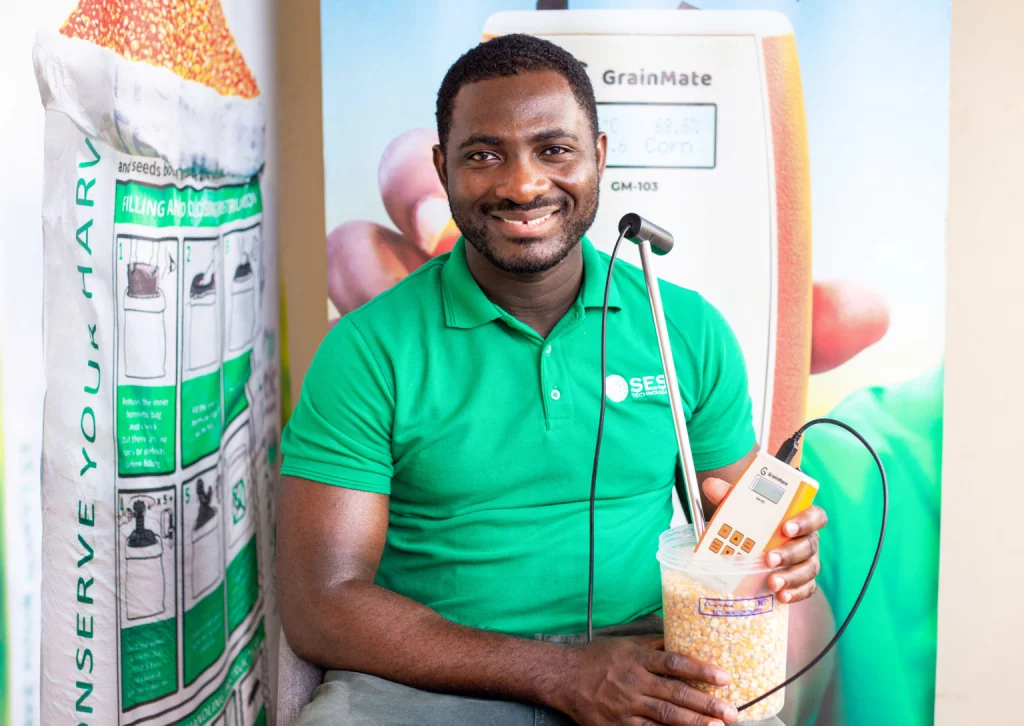
While there, I was invited to join a project in the agricultural engineering department because of my skills in electronics and building things. The team was developing ways to help farmers measure the moisture content of their grains more effectively.
That was when the connection became clear. I had skills in technology, a passion for solving problems, and a farming background that helped me relate to the people we were building for. If I could bring those together and create something people were willing to pay for, there could be a business behind it.
It felt like something I could commit five, ten, or fifteen years of my life to and remain passionate about. University was where I began to put all of that together.
If I asked your parents what they hoped you’d become when you were ten years old, would entrepreneurship have made the list?
Probably not. They always saw me as the smart kid, but my parents didn’t have much formal education, and I don’t think they would have considered entrepreneurship a viable career path. They would probably have said a doctor, an engineer or a lawyer, like many African parents.
But I like to think they’re proud of me and what I’ve been able to do. Sometimes my dad calls to tell me that a friend saw me on television. You can tell he feels proud. So, although this might not have been what they imagined, I like to think they’re happy with how I’ve turned out.
You’ve spent years building tools that farmers may never notice unless they fail. Do you enjoy creating things that work quietly rather than attract attention?
I don’t particularly like a lot of attention. My satisfaction comes from building something people find useful.
Many of the people who use our products directly are agribusinesses rather than smallholder farmers. But the impact reaches the farmer. That farmer may never know I exist or even know about the product, yet still benefit from it.
For me, there’s enough satisfaction in seeing people use a solution and get value from it. This was something I conceived in my head, created with my hands, and built a business model around so we could deliver it, earn revenue and pay our employees.
All of that together is enough for me. I don’t need the fame or publicity, although it helps.
What’s the hardest lesson farming has taught you about human nature?
That you can’t rely on logic alone to sell something.
One challenge with deploying agricultural technology is that, however useful a solution might be, if a farmer cannot afford it, they cannot afford it.
You can explain that they’re losing 30% of their produce and that your solution could help recover those losses. You might say: “Instead of buying a normal bag for $1, buy this hermetic bag for $5, and you could earn $50 more.”
Logically, that sounds reasonable. But if the farmer doesn’t have the $5, no amount of logic changes that.
In the beginning, we thought that once we made a convincing argument, farmers would buy from us. Learning otherwise was painful. We spent time and money building something smallholder farmers might never be able to afford. We realised that the business model and how we took the product to market were even more important than we had understood.
But you can’t simply say, “They can’t afford it, so we’re done.” You have to find another way for them to benefit.
The farmer doesn’t necessarily care about the technology. They care about having more money in their pocket, keeping their grain from going bad and getting more from their land. If we can deliver those outcomes, whether or not the farmer pays directly for the technology, then we’ve done our work.
Every entrepreneur has one habit they wish they could get rid of. What’s yours?
I can be quite indecisive.
I work in a space where the answers to everyday problems aren’t obvious. There’s a lot of thinking, brainstorming and guessing, which can be mentally draining. Sometimes I would rather do something with a definite answer than work through uncertainty, even when decisions are waiting to be made.
I wish I were better at navigating that uncertainty and making decisions.
You might invest in an area that isn’t working and know you need to pull the plug. But then you think about the three people you hired who might lose their jobs, or the hundred farmers using the service whom you’ll no longer be able to support.
You worry about the disruption. But sometimes you have to accept that you tried something and it didn’t work. You need to make a decision. I don’t always do that well, and I wish I could change it.
You’ve spoken at major events, met influential people and won international awards. What’s the one conversation, away from the spotlight, that changed you the most?
We had an adviser from Uganda who spoke to me at a time when it felt as though we were winning everything we applied for. Those were exciting days, but the recognition wasn’t really translating into business results. How much were we selling? What partnerships were we developing? What progress were we making?
He could see beyond the outward wins and was concerned about the business. I had become a little complacent, caught up in the excitement of travelling and winning things as a young entrepreneur. At one point, I had actually forgotten about a major deal.
He called me and really gave it to me. He was one of the most honest people I’ve had in my life. Some people tell you things to make you feel good: “You’re doing well.” He wasn’t like that.
He asked why I had started the business. Was I doing it for the accolades, the money, or the travel? Then he told me: “Don’t snatch defeat from the jaws of victory.”
That has stayed with me. It helped me become more grounded. People will write about you and say nice things, but when you come back, it’s you and the business. You know the reality. You can’t let the praise get to your head.
When people say Africa should “feed the world”, do you find that inspiring, or does it oversimplify the continent’s challenges?
I think it has become rhetoric. That doesn’t mean it cannot happen, but systemic problems make it difficult. Some are self-inflicted; others involve people with an interest in maintaining the status quo.
I don’t think the model of smallholder farming we currently practise is scalable. We have farmers working small plots with low productivity. We have food going bad in Ghana while we’re importing maize from Ukraine.
But consider the economics. If I’m a grain trader and importing maize from Ukraine is cheaper than buying it locally, where am I going to buy it? Ukraine.
Do we have the potential? Absolutely. Will the way we currently do things unlock that potential? Probably not.
Africa can and should feed the world, but we have to take practical action. If Israel can grow and export vegetables despite its desert conditions, we should be asking what we can do with the resources available to us.
I’ve heard about efforts in Tanzania and Uganda to strengthen their grain value chains and export to Kenya. That kind of deliberate effort matters.
The statement has to move beyond something we say at conferences to inspire people. Governments and businesses have to take the actions that make it possible.
If you weren’t allowed to build another startup, what career would genuinely make you happy?
I would still want to do something in engineering. I’d probably work for an engineering company, building technology solutions.
I would still be building things, just for somebody else rather than for my own business.
You work with data, sensors and algorithms, but farming is deeply emotional. Has a farmer ever challenged your assumptions in a way no spreadsheet ever could?
Yes, all the time.
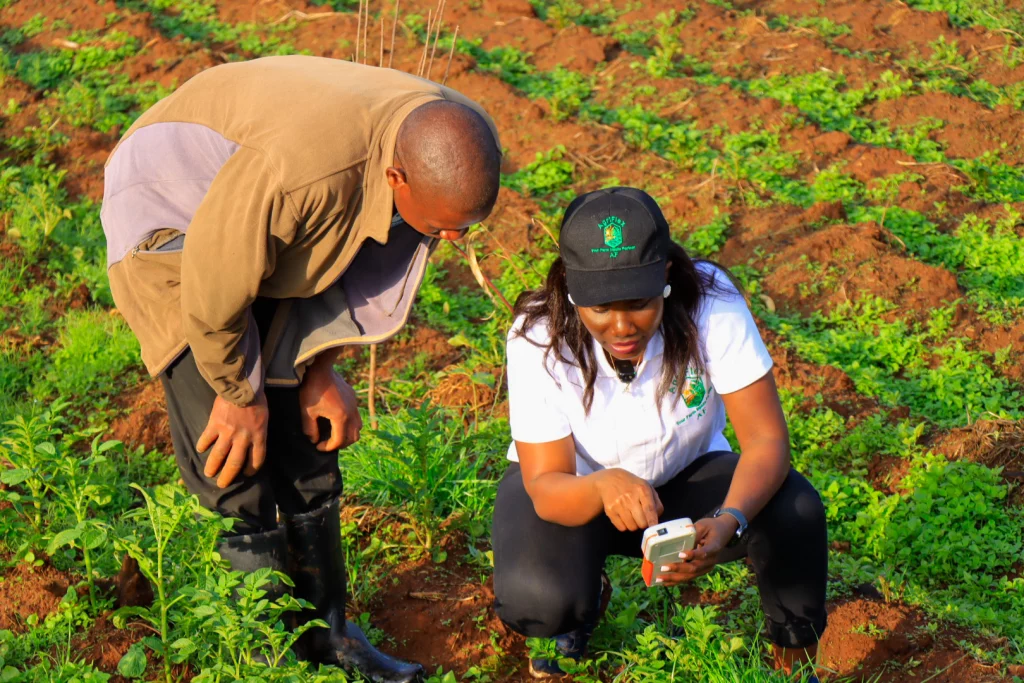
One of our products is a soil intelligence solution. We map the farm, obtain its coordinates and reference satellite data and soil maps to produce information about the soil.
We would do this in front of farmers, and some would say: “You are lying. There is no way you can walk around my farm and tell me what is in the soil.”
That surprised us. But when we paired the solution with a physical sensor, farmers trusted it more. The sensor might measure only three of the twenty or twenty-five parameters we were showing them. But as long as they could see us collecting soil and putting a sensor into it, the process was more believable.
You go in thinking you’ve built something scalable: all you need is a phone to generate a soil report. But the farmer may send you away. “You’re telling me you can walk around my farm and know what’s in my soil?”
We had a similar experience with our grain moisture meter. You insert a probe into the grain, and it gives you a moisture reading. A farmer might look at the 13% on the screen and tell you it’s wrong: “I can pick up the maize, toss it and listen to the sound to know whether it’s ready. What you’re telling me is garbage.”
Some people approach farmers with the attitude that they’ve been to university, built a product and come to teach them the right way to do things. Farmers find that insulting.
In Ghana, people talk about “home sense”. You might have book knowledge but lack practical understanding.
If you acknowledge that farmers have indigenous knowledge that has served them for generations, and explain how your solution can improve what they already do, you can work together.
You respect the farmers; they respect you back. You think they’re idiots; they’ll think you’re an idiot.
What’s something you’ve become less ambitious about as you’ve grown older, and something you’ve become far more ambitious about?
As a young entrepreneur, I was fascinated by startups raising tens or hundreds of millions of dollars and becoming billion-dollar companies. You’d see someone described as a self-made billionaire at twenty-two, and I wanted that too.
I imagined building a company, raising money and becoming wealthy. The typical Silicon Valley story was very appealing.
As I’ve grown older, my view of life has changed. I want to contribute my talents and skills in a field I enjoy, in a way that improves the lives of as many people as I can reach.
I also want to take care of myself and my family, and remember to enjoy life.
I’ve become less ambitious about personal glory and more ambitious about making people’s lives better through work that is rewarding to me and the people I care about.
Founders spend years trying to convince investors. Who do you still find yourself trying to impress?
Myself. I can be very hard on myself.
Other people will say, “You’ve done well. You built this from scratch, starting in school without much knowledge.” And I’m thinking, “Bruh, I don’t see any of that.”
Perhaps it’s less about impressing myself than becoming better every day. When I make a bad decision that I think I could have avoided, it gets to me. I think about the progress I could have made if I hadn’t done that.
I have high standards for myself, and falling short of my own expectations bothers me.
But I don’t think there’s anyone else I’m trying to impress. Everybody has their own journey. When you see someone running, you don’t necessarily see how long they spent walking before they got there. You might think they appeared overnight, but that isn’t the case.
My journey is my own. I want to be better today than I was yesterday. Five years from now, I want to look back and say, “Wow, I’ve really done well. I’ve come a long way.”
Suppose I handed you Ghana’s agriculture budget for one year, with complete political backing. What’s the first thing you’d stop funding, and what would you invest in instead?
I would stop funding imports of things we can produce in Ghana. For instance, I would stop funding poultry imports and strengthen domestic poultry production. I would do the same with grains.
I would invest heavily in irrigation so we could produce seasonal crops throughout the year, and in technology to reduce losses.
I would also develop a model that clusters and aggregates smallholder farmers. Instead of each farmer working separately on a small plot, you could have fifty farmers working together on a much larger area, with shared ownership.
Those are some of the things I think could transform our agriculture.
You’re mentoring younger entrepreneurs today. What’s the worst advice founders keep giving one another?
There is still too much emphasis on shaping a business around what investors want, rather than building a solid business that generates revenue.
Everybody wants an investor to put in $5 million for 10% of their company. But I would argue that the overwhelming majority of African businesses won’t be a good fit for the kind of investors those founders are pursuing.
You could build a solid business that never becomes a $100 million company. Perhaps it becomes a $5 million company that makes a profit, pays taxes, employs people and contributes to national development. That is valuable.
Instead, founders contort themselves to appeal to investors. There’s this idea that investors are up here and founders are down here, and we have to make ourselves small and be nice so they’ll introduce us to somebody.
I find that demeaning. You’re doing all this hard work, but you don’t recognise the value you bring. You’re trying to please somebody who may not care about you.
The conversations are always: “Have you spoken to this investor? Have you spoken to that investor?” I hear far more advice about appealing to investors than about building a solid business.
If your closest friends described you in private, what would they say that never appears in conference introductions or award citations?
They would say I’m not as serious as I come across. I’m goofy and jovial. I like doing silly things: jumping on the couch, playing video games and screaming at the top of my voice. Things a little child would enjoy.
Outside, I might appear organised, polished, very put together and serious about everything I’m doing.
But I like the simple things in life, and I try to enjoy them with the people I care about.
Complete this sentence: “The biggest myth about innovation in Africa is…”
That innovation is suddenly going to take off and transform everything.
What would make you feel your career was worthwhile: creating a billion-dollar company, changing agricultural policy, or inspiring thousands of young African inventors? And why?
Inspiring thousands of young African inventors.
If I find success but it doesn’t inspire other people to do something, the impact is limited. I might make a difference and earn good money, but it ends with me.
Now imagine that my business fails, but while it exists, it inspires a thousand people to build things and start businesses. Some succeed, employ people and change things. I think that impact would be more profound than being the only person who succeeded.
Of course, if I had a billion dollars, I could buy a yacht, get a private jet and fly around the world. I could make a nice life for myself. But what legacy would I leave?
I would love to inspire people who go on to do bigger things than I ever did. Someone might interview them one day, and they would say: “I wasn’t going to do this, but there was this guy called Isaac Sesi who inspired me to start.”
I would take that over individual glory.
True scale demands moving beyond surface-level integrations to robust execution. We’ve filtered the noise out of Moonshot 2026, optimising the conference strictly for high-calibre connections between startup founders, global financial operators, enterprise leaders and individuals rewiring Africa’s technical frameworks. Get 20% off Early Bird tickets for a limited time.