×
Tech

Six years after Stripe, Paystack is learning to keep money

How Paystack changed since Stripe bought it six years ago

In October 2020, Stripe agreed to buy Paystack, a Lagos startup that helped businesses take payments online, for $200 million, the largest acquisition of a Nigerian startup. At the time, Paystack had 60,000 customers.

Stripe said the deal would fund new products and help pull Africa’s scattered payments market together and that Paystack would keep running on its own. Shola Akinlade, its chief executive, promised more countries, more payment channels and more services.

Six years after the acquisition, he has fulfilled that promise. In 2020, Paystack made money by taking a cut each time a business collected payment online, a model that needs scale. It charges 1.5% plus ₦100 per transaction, capped at ₦2,000, so a ₦10,000 order earns it ₦250, about 19 cents.

This model earns income only when money moves; unlike a bank that holds customers’ money, it can lend or invest it at a higher rate than it pays for it, and that income keeps coming for as long as the balances stay, with or without transactions.

Brazil’s Nubank shows how well this works. It ended 2025 with $41.9 billion in deposits, paid 87% of the interbank rate to fund itself, and made $2.9 billion. Worldwide, interest made up 46% of payments revenue in 2024, according to McKinsey.

Six years on, the company Stripe bought has changed shape. It now owns a microfinance bank and a consumer app. Its path shows why African fintechs keep becoming banks and how hard the last step is.

Paystack first became bigger and more exposed

Paystack spent Stripe’s backing on reach, now serving businesses in Côte d’Ivoire, Ghana, Kenya, Nigeria, and South Africa, with approvals in Egypt and Rwanda, and it hired wherever the talent was, including an engineering hub in Dubai.

With time, reach brought more volume and costs in dollars against income in weak African currencies. By November 2023, the naira had lost more than half its value since June that year, and the Kenyan shilling had fallen almost 20% in twelve months. What Paystack earned moving money fell sharply in dollar terms even as it grew in local currencies.

In response, Paystack laid off 33 employees in Europe and the UAE.

That same year, bank transfers accounted for 34% of the company’s payments in Nigeria, its biggest market, up from 12% in 2021. Paystack added a pay-with-transfer payment method in 2020, and that growth showed customers began preferring transfers because they were cheap and reliable. 

It followed the money.

By 2023, it launched Virtual Terminal, which gives a shop a Paystack-Titan bank account for customers to transfer into. This introduced large sums in accounts carrying Paystack’s name, but the interest on those balances went to Titan Trust Bank.

Paystack team
Some members of the Paystack team at the Nigerian HQ || Image Credits: Mohini Ufeli

Brass shows Paystack the value of deposits

In May 2024, Paystack led a group that bought Brass, a business banking startup. Brass had struggled to pay out withdrawals since October 2023, and two people said it had a ₦2 billion ($1.5 million) hole in its books. The buyers stepped in because they feared a collapse would send customers running from other fintechs.

It was Paystack’s first known stake in a business that held other people’s money. While it would eventually get Brass’s business customers, it also saw what happens when deposits run short.

Ten months later, in March 2025, Paystack launched Zap, its first consumer app, with deposits held at Titan.

By the end of April, the Central Bank of Nigeria had fined Paystack ₦250 million. A person with knowledge of the matter said the regulator found Zap was being run as a wallet, which Paystack’s licence did not cover. 

Paystack only held a payments licence, which lets a company move money between other people’s accounts. Holding that money, even briefly in a balance a customer can spend from later, requires a different licence. Zap looked like a wallet, while Paystack had permission for payments.

Paystack had already decided to hold customers’ money. The fine showed it could not do so on a payments licence in the way Zap first worked. Zap later won regulatory approval, and in January 2026 Paystack bought a bank.

Paystack turns into a group

In January 2026, Paystack bought Ladder Microfinance Bank and said Paystack MFB would lend to businesses first, then to individuals. Days later, it created a holding company, The Stack Group. Paystack said its payment volume had grown more than twelvefold since 2020, and the group was profitable.

In June, Brass said it would close as a standalone business and move its customers into Paystack MFB. In August, Allawee, a card company Paystack bought quietly in 2025, told customers their accounts would close on 1 December and that they must open new ones with Paystack.

The microfinance licence lets Paystack take deposits, lend, and earn interest, so it depends less on fees. 

Compared with incumbents like Moniepoint, which says it serves more than 6 million active businesses in person, Paystack starts with a deficit. OPay and PalmPay built the same way, through agent networks that put a physical point of contact in markets, shops and streets across Nigeria. An agent signs up a trader, handles their cash, and becomes the reason that trader keeps a balance with a fintech instead of a bank.

Paystack has no comparable footprint. Its strength was always online checkout, where a business integrates once, and the relationship runs entirely online. Its card machine never matched the agency banking networks, so the daily, in-person habit that turns a payments customer into a depositor was never built.

That is why Paystack MFB has to win deposits one account at a time and why it bought Brass and Allawee. Each acquisition brings business accounts that already exist, which is faster than recruiting them.

In 2020, Stripe bought a company that moved money quickly. Paystack’s next test is how much of that money it can persuade to stay.
§

Terra Industries, the Nigerian defence technology startup, has become one of the most recognisable names in the African deep tech sector.

Terra has earned the visibility. Founded in 2024 by Nathan Nwachuku and Maxwell Maduka, the company designs and manufactures autonomous drones, sentry towers and crewless ground vehicles, all connected through its proprietary ArtemisOS platform. In August, it closed a $52 million seed round, the largest in Africa. Terra offers a glimpse of what is possible if an ecosystem can support more companies to that stage. 

The United Nations Development Programme defines deep tech as technology built on scientific discoveries, engineering innovations and advances in research, with intensive research and development at its core. It includes companies developing drones and robotics, semiconductor and computing technologies, biotechnology, medical devices and some forms of artificial intelligence. 

Businesses in Africa’s tech ecosystem are mostly built around using technology rather than developing it. A fintech company can build a payments product without manufacturing the smartphone its customers use, just as a logistics startup can build software on top of cloud infrastructure or networks developed and operated by other companies. The underlying hardware and foundational systems already exist; these startups simply apply them to market problems.

Deep tech brings that technology into the company. To turn engineering breakthroughs into commercially viable products, such companies may need to design and repeatedly test prototypes, source specialised components, work with researchers and engineers, and access laboratories or manufacturing facilities. 

Chukwuemeka Afigbo is betting on Africa's Deep Tech
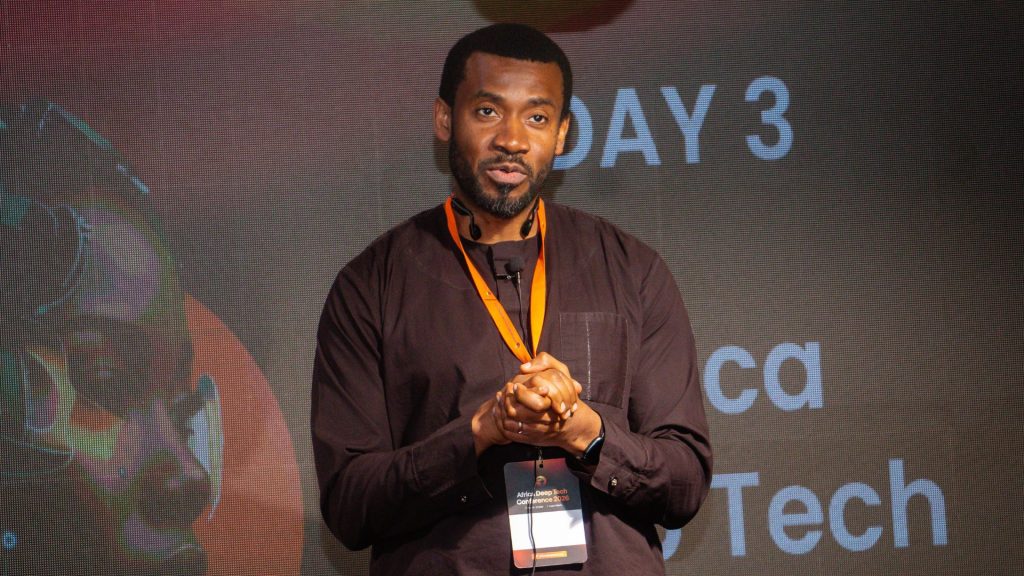
Chukwuemeka Afigbo, convener of Africa Deep Tech Foundation. Image source: Africa Deep Tech Foundation

Building deep tech is an uphill climb

For Chukwuemeka Afigbo, who convenes the Africa Deep Tech Foundation, a community focused on supporting deep tech builders and developing the ecosystem around them, hardware companies in the community have raised concerns about the cost of bringing components into the country. 

“The hardware folks would tell you there’s a lot of support they need that they haven’t necessarily seen. For example, like policies around the amount of money they pay to bring in components to build stuff in the country,” he said in a conversation with TechCabal in October. 

A 2021 baseline study commissioned by the Nigerian Communications Commission found that 84% of the hardware components used in Nigeria’s telecommunications sector are imported. Those components include printed circuit boards, semiconductors, connectors, antennas, and other electronic parts. For hardware companies building and testing products locally, components that cannot be sourced locally must be imported, exposing them to shipping costs, foreign exchange movements, customs procedures, and import duties.

Africa’s capacity to produce some of the technologies underpinning the global economy remains limited. The continent accounts for less than 1% of global semiconductor economic output, according to the African Academy of Sciences. Its position in the semiconductor industry is concentrated on design or testing.

The same constraints are becoming visible in artificial intelligence. AI is now one of the biggest technology conversations in Africa, but many of the products available are built on infrastructure developed elsewhere. Building the underlying systems requires specialised chips, data centres, engineering talent and research capacity, and Africa currently accounts for 0.6% of global data-centre capacity. 

Funding is also a constraint. In 2025, African startups raised $3.42 billion, with fintech accounting for $1.37 billion, or about 40% of the total, according to TechCabal Insights’ State of Tech in Africa report. A Briter Intelligence mapping of the sector found that African deep tech startups raised about $3 billion across 360 deals between 2013 and the first half of 2023.

The economics of building deep tech could help explain this disparity. Import costs and a thin research base can make a hardware company’s path to revenue longer and its failures more expensive than those of a software company. Capital tends to follow businesses where there is a clear route to generating returns on investments. 

Governments across Africa are paying attention to advanced technology, but AI has received a disproportionate share of that attention. Nigeria’s National Artificial Intelligence Strategy was published in September 2025; Kenya adopted a national AI strategy in 2025; Egypt updated its AI strategy; and South Africa has been developing an AI policy framework to guide the country’s approach to AI governance, development, and adoption.

The attention is understandable. AI is growing and attracting capital, but an AI-heavy policy agenda risks overshadowing the distinct, physical demands of the broader deep tech sector. As Afigbo notes, government awareness remains in its early stages. At the same time, interest and scattered initiatives exist; public policy has yet to match the capital intensity and supply-chain requirements of building hard tech on the continent. 

“Yes, there is government awareness and interest, but still relatively nascent,” he said. “A lot of good things are happening, but we need10 times more than that to happen. It’s a journey.”

Building the conditions for deep tech

The Africa Deep Tech Foundation has grown from a small online community into a network of more than 5,000 people, with a core group of about 200 deep tech practitioners across Africa and the diaspora, according to Afigbo. He said it has organised incubation programmes and rallied support for early-stage founders. Other companies are also working on pieces of the ecosystem. 

ChipMango, a semiconductor design and engineering talent development company, is training students and technical professionals in modern chip design across Africa. Signvrse uses AI-powered 3D avatars to translate speech into sign language in real time. NovFeed converts organic waste into high-protein fish feed to tackle food insecurity. Envisionit Deep AI automates radiology diagnostics in rural clinics. BasiGo and Spiro now manage large fleets of electric buses and motorcycles supported by battery-swapping networks.

For the ecosystem to support more companies on that journey, it needs to create conditions that make building deep tech easier. This could include capital, better access to manufacturing and specialised infrastructure, a deeper pool of engineering and research talent, and treating deep tech as a broader field than AI by developing policies and infrastructure that support the technologies underpinning the sector.

Terra’s success makes the possibility of a thriving deep tech sector easier to see. It shows that global investors are willing to back an African company building sophisticated physical technology. Ultimately, whether Terra remains an extraordinary outlier or becomes the vanguard of a broader movement depends on whether Africa’s tech ecosystem can evolve fast enough to meet the heavy demands of deep tech. 

True scale demands moving beyond surface-level integrations to robust execution. We’ve filtered the noise out of Moonshot 2026, optimising the conference strictly for high-calibre connections between startup founders, global financial operators, enterprise leaders and individuals rewiring Africa’s technical frameworks. Get 20% off Early Bird tickets for a limited time.

Moonshot mast head

§

Bolt, the global ride-hailing and food delivery company, launched a paid membership called Bolt Plus in Kenya on 15 October. The service offers frequent users cashback on rides, free delivery on eligible food and retail orders, priority driver matching, faster food delivery and three free ride cancellations a month for KES 280 ($2.16), with the first month free. Bolt operates in nine Kenyan cities.

The more unusual figure is the yearly price of KES 899 (7), which works out to about KES 75 ($0.58) per month and sits well below the monthly price, even under the KES 119 ($0.92) introductory rate on offer for the first six months. The discount is so steep it looks like a mistake. Asked to confirm it, Bolt said the figure was correct and gave no explanation beyond wanting people “to consider the yearly subscription for better value”.

Bolt Plus enters a market where two rivals already sell memberships. Uber One, which Uber launched in Kenya in March 2025 after a pilot the previous November, covers rides, food and groceries and costs KES 280 ($2) a month or KES 2,800 ($22) a year, while Glovo Prime connects customers with restaurants, supermarkets and shops, and costs KES 400 ($3) a month for delivery only.

Read alongside the free first month and the introductory rate, the pricing suggests that Bolt cares more about securing a long commitment than about the fee itself. This strategy clearly appeals to customers but also creates trade-offs that the company’s announcement does not address.

Why the annual price makes sense

Annual plans generally favour the seller because the money arrives up front. A customer who has paid for the year has little reason to try rival apps, so a discount deep enough to win that commitment can pay for itself in loyalty, and at KES 899 ($6.92), Bolt’s yearly plan costs less than a third of Uber One’s.

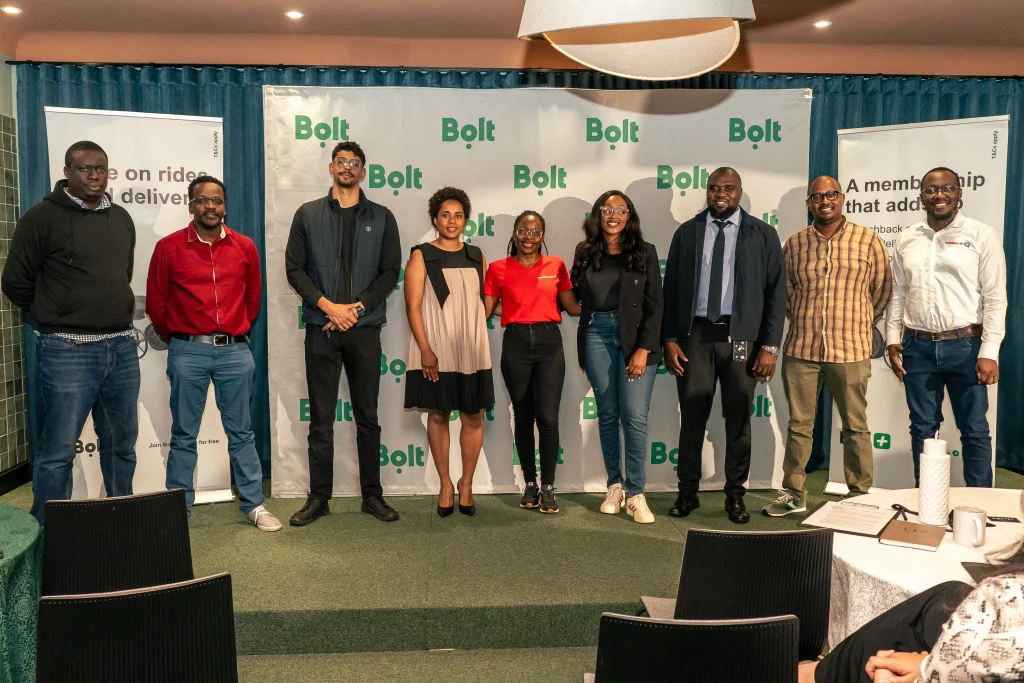
Bolt Food partners from Naivas, QuickMart, Java House, KFC and Bolt Market with Senior Management from Bolt, at the launch of Bolt Plus. Image: Bolt Kenya

The bundle adds a second layer to the logic, since Glovo Prime must recoup its fee on food and grocery orders alone, offering unlimited free delivery at participating outlets, with an average saving that Glovo puts at KES 150 ($1.15) per order. In contrast, Bolt Plus and Uber One combine rides and delivery, giving members two reasons to open the same app and the company two chances to recoup the discount cost. A customer who takes a ride to work and orders lunch through the same app is plausibly worth more than one who uses it for only one of the two.

Bolt also competes on service as well as price, adding priority driver matching, faster food delivery, and free ride cancellations, extras that don’t appear among the benefits Uber lists on its Kenya page.

The entry price also keeps the risk low for riders, because at about KES 75 ($0.58) a month, a regular user would not need to spend much on trips for the cashback to cover the fee. A single food order that earns the maximum free-delivery saving of KES 200 ($1.54) would repay nearly three months of that saving.

Where the benefits get harder to value

The size of the cashback is the first thing to pin down, because Bolt’s announcement promises 10% on every ride in its opening paragraph and in a company statement, but lists “5-10%” in its benefits section. Uber’s scheme is tiered, with 10% in credits on premium rides and 5% on economy rides. If Bolt follows a similar pattern, riders who stick to cheaper trips would earn about half as much as the headline suggests, making it harder to recoup the annual fee. The announcement does not say which rate applies.

Bolt Plus cashback stays in the app for future trips, tying its value to continued use, much like Uber’s credits, which are limited to eligible rides and orders. Bolt’s announcement doesn’t say what happens to a balance when a member cancels, a key detail for anyone who builds up credit and then wants out.

Priority matching comes with its own trade-off: faster matching during busy periods means other riders wait longer, and the announcement says nothing about how the scheme affects drivers’ earnings.

Free delivery is also more conditional than the headline suggests, applying only at outlets marked with a “+” and to orders within qualifying value ranges, with savings of “up to” KES 200 ($1.54) per order. Uber One imposes a KES 600 ($4.62) minimum at participating restaurants and non-grocery stores, so each scheme’s practical value depends on what a customer orders and how often they order.

A subscription of this kind rewards habits more than it creates them. The customers most likely to benefit are those who already use Bolt several times a month for both rides and food. At this price, the plan may end up subsidising customers who would have stayed anyway. A rider who checks several apps before booking, or orders from whichever platform has the better offer, will rarely spend enough with Bolt to make the cashback worthwhile, and Bolt is betting that its price is low enough to change that habit.

Bolt has not said whether KES 899 ($7) is a launch price or a standing price, or what a renewal will cost. At roughly KES 75 ($0.58) a month, customers risk little by signing up. What remains unexplained is Bolt’s economics, which leaves the annual plan looking more like a bet on habit than on margin.

True scale demands moving beyond surface-level integrations to robust execution. We’ve filtered the noise out of Moonshot 2026, optimising the conference strictly for high-calibre connections between startup founders, global financial operators, enterprise leaders and individuals rewiring Africa’s technical frameworks. Get 20% off Early Bird tickets for a limited time.

Web hosting by Somee.com