×
News

NGO unveils literacy programme for street-trading children

NGO unveils literacy programme for street-trading children

A non-governmental organisation, Onelife Initiative for Human Development, has launched a community-based learning programme targeting children who combine schooling with street trading in Oyo, Ekiti and Akwa Ibom states.

The project, tagged Standing School, will deliver basic literacy and numeracy lessons in community spaces such as viewing centres and television repair shops where children spend time after school.

Executive Director of the initiative, Sola Fagorusi, stated during the unveiling of the organisation’s permanent office in Ibadan, the Oyo State capital, that the intervention seeks to address learning loss among children whose families depend on their income contributions.

“Some children, despite attending school, return home to engage in street trading because their parents depend on their contributions to household survival,” Fagorusi said.
He said the project would deploy digital educational resources to strengthen reading, spoken English and basic arithmetic for such children.

Fagorusi sought public support for the programme, stating that N30,000 would support one child, adding that “The group previously relied on institutional funding,” he said.

According to him, facilities in the new office consist of a digital media production studio that would be used to develop educational materials, with an enabling environment for programme implementation, innovation, collaboration and institutional development.

Director, Social Protection Coordination, Oyo State Ministry of Budget and Economic Planning, Olanase Hadi, speaking with newsmen, said sustainable development could only be achieved through collaboration between government and civil society organisations.

He advocated greater attention to social protection, poverty reduction and social inclusion, in particular, young people, women, persons living with disabilities and other vulnerable groups.

Muyiwa Oladoja, who represented the Oyo State Agency for Youth Development, said the task of youth development should not be left to government alone, urging other NGOs to emulate Onelife’s commitment to youth-focused interventions.

In his remarks, the representative of the Oyo State Coordinator of the National Youth Service Corps, Ola Kayode, said the organisation’s activities aligned with the objectives of youth development and human capital advancement.

Onelife currently operates in Ibadan, Uyo in Akwa Ibom State and Ikole-Ekiti, in Ekiti State, with programmes in about 22 states, according to the Executive Director.

“We have reached over 6,400 in-school adolescents with sexuality education and linked over 67,000 girls and women to reproductive health services in the last 10 years,” Fagorusi said.

Present at the event were representatives of government agencies, civil society organisations and other stakeholders who called for more collaborations to address learning gaps among vulnerable children.


§

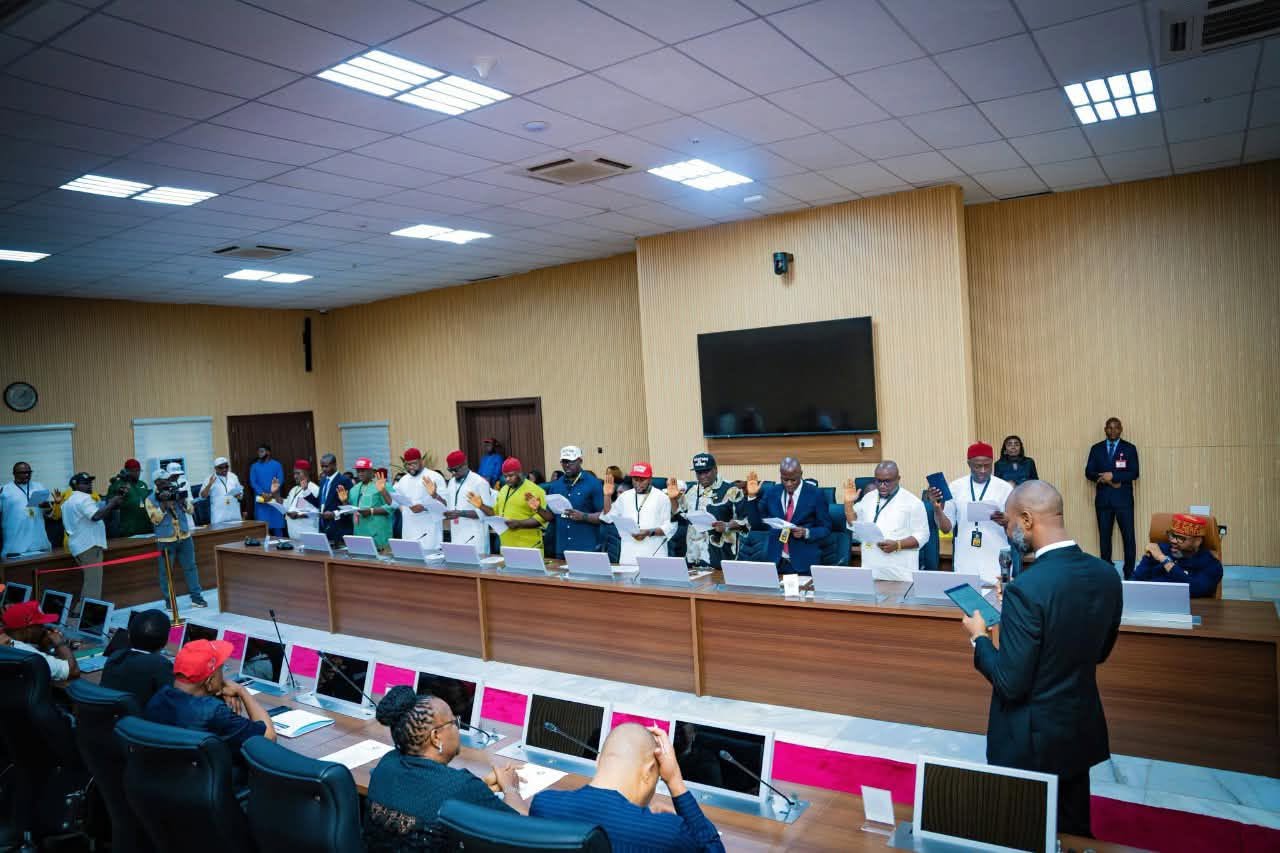
The National Assembly is set to transmit the proposed State Police Bill to President Bola Tinubu for assent after completing the authentication of approvals secured from 28 state Houses of Assembly.

The Clerk to the National Assembly, Kamoru Ogunlana, disclosed this in a statement on Tuesday, confirming that the number of state legislatures that had approved the proposed constitutional amendment exceeded the constitutionally required threshold of 24 states.

He said, “The office has also undertaken the necessary administrative verification of the reports and accompanying votes and proceedings to establish their authenticity and ensure that the records accurately reflect the decisions taken by the respective state Houses of Assembly.

“In view of the approvals secured from the required number of state Houses of Assembly, the necessary administrative processes are being undertaken to facilitate the transmission of the Bill to His Excellency, the President of the Federal Republic of Nigeria, for assent, in accordance with the Acts Authentication Act, CAP A2, (LEN) 2004.”

The authentication process is a key step towards transmitting the bill to the President for assent.

The bill seeks to amend the 1999 Constitution to provide for the establishment of State Police Services and related matters, amid renewed calls for a decentralised policing system to address Nigeria’s worsening security challenges.

According to Ogunlana, the bill was transmitted to the 36 state Houses of Assembly on September 16, 2026, for consideration and approval, with a request that their decisions be communicated to the National Assembly within 30 days.

Although the deadline expired on October 15, the clerk said his office would continue to receive reports from state legislatures until the bill was transmitted for presidential assent.

“Following the receipt and verification of the reports, the office confirms that 28 State Houses of Assembly have approved the Bill,” the statement read.

He explained that the approvals exceeded the constitutionally prescribed threshold of not less than two-thirds of the 36 state legislatures, equivalent to 24 states, as stipulated in Section 9 of the Constitution.

The clerk also clarified that Section 9 of the Constitution did not expressly prescribe a third reading for a constitutional alteration bill, unlike the procedure applicable to ordinary bills.

“It is pertinent to clarify that Section 9 of the Constitution does not expressly prescribe a third reading for a Constitution Alteration Bill, unlike the procedure applicable to ordinary Bills,” he stated.

He said the necessary administrative processes were being undertaken to facilitate the transmission of the bill to Tinubu in accordance with the Acts Authentication Act, Cap A2 (LFN) 2004.

The development marks a significant step in the long-running debate over the establishment of state police, which proponents argue would enable states to respond more effectively to local security threats, including kidnapping, banditry, terrorism and communal violence.

Nigeria currently operates a centrally controlled police system under the Nigeria Police Force, with state governments lacking independent police commands.

Supporters of decentralised policing have argued that state police would improve intelligence gathering and allow security operations to be tailored to local circumstances. However, concerns have also been raised about possible political abuse, inadequate funding and the protection of human rights under state-controlled police structures.

Ogunlana commended the state legislatures for their cooperation in considering the proposed amendment, describing it as an important step towards strengthening the country’s security architecture and deepening its federal system.

The bill’s transmission to the President would pave the way for the next stage of the constitutional amendment process.

The clerk said his office would continue to provide timely information on developments relating to the amendment.

Web hosting by Somee.com