×
Tech

Nigerians used 90% of 2025’s internet data volume in eight months

Nigeria's data consumption hits 90% of 2025 total in eight months

Nigerians consumed 11.94 million terabytes of internet data in the first eight months of 2026, around 90% of the volume recorded throughout 2025, pointing to growing demand through more intensive use of internet services.

In August alone, consumption reached 1.76 million terabytes, according to the Nigerian Communications Commission’s latest industry statistics.

The surge in internet data consumption intensifies pressure on Nigeria’s telecom operators to expand network capacity as users consume more data through existing and new connections. Operators must therefore accommodate rising traffic while maintaining service quality.

Part of the increase comes from additional internet connections. Osita Odafi, a telecom industry expert, said NCC figures showed approximately 800,000 new internet subscriptions in August alone, expanding the pool of connections generating data traffic.

But new subscriptions are only part of the explanation. Existing users are also using more data-intensive services, he said, particularly video platforms such as YouTube, TikTok, Instagram Reels and Netflix. High-definition streaming and autoplay can further increase consumption.

“The critical question is no longer just how many Nigerians are connecting to the internet, but how intensively they are using it,” Odafi told TechCabal.

He also pointed to online banking, digital payments, cloud services, remote work tools, online education, and AI applications as drivers of demand. His assessment identifies potential drivers rather than a measured breakdown of how much traffic each activity generated.

The growing adoption of 4G and 5G is also supporting more data-intensive activities. 4G’s share of mobile subscriptions rose from 54.31% in July to 54.77% in August, while 5G increased from 4.74% to 4.92%. Together, the technologies accounted for approximately 60% of mobile subscriptions.

Monthly consumption was lowest in February, at 1.26 million terabytes, before rising to 1.4 million in March and crossing 1.5 million in June. By August, it had reached 1.76 million terabytes.

Faster connections can make streaming, cloud applications and other demanding services easier to use. Their rising subscription share does not, however, establish how much of the increase in consumption came from either technology.

Nigeria recorded 197.42 million telecommunications subscriptions in August, an increase of approximately 2.31 million, or 1.18%, from July. Data consumption therefore grew faster than total telecommunications subscriptions over the month.

The two indicators measure different things. Telecommunications subscriptions include connections used for voice and other services, while data consumption measures the volume of internet traffic. Subscription figures also count connections, not unique individuals.

The more relevant comparison is with internet subscriptions, including the approximately 800,000 additional connections in August. Even then, determining consumption per connection would require a consistent comparison of internet subscription totals and traffic over time.

MTN recorded 84.56 million internet subscriptions in August, followed by Airtel with 56.94 million and Globacom with 15.76 million. MTN and Airtel accounted for most subscriptions among the three networks.

For operators, sustained growth in consumption means more traffic to accommodate, whether it comes from additional connections or heavier use of existing ones.

“Continued investment in fibre infrastructure, network capacity and spectrum will be vital to accommodating this growth while maintaining service quality,” Odafi said.

He also identified zero-rated access to educational platforms, an initiative the NCC introduced on October 1, as a potential source of further demand. Under the initiative, eligible users are qualified to receive up to 100 megabytes of free daily data allowance to access designated educational platforms.

True scale demands moving beyond surface-level integrations to robust execution. We’ve filtered the noise out of Moonshot 2026, optimising the conference strictly for high-calibre connections between startup founders, global financial operators, enterprise leaders and individuals rewiring Africa’s technical frameworks. Get 20% off Early Bird tickets for a limited time.

§

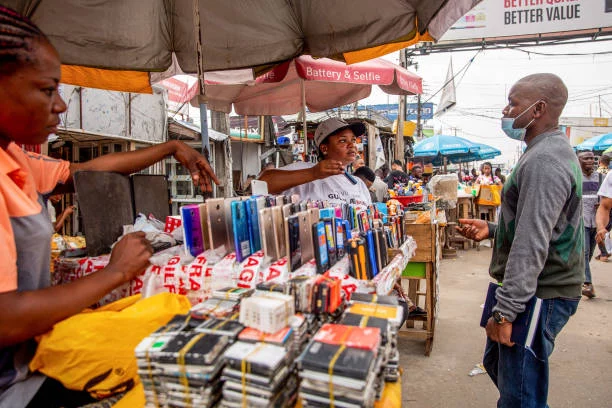
The Nigerian Communications Commission (NCC) has developed a mobile application that allows authorised industry stakeholders to scan phones’ International Mobile Equipment Identity (IMEI) numbers and upload device information to its verification platform. The regulator is stepping up efforts to enforce equipment approval requirements.

The commission announced the development at a media briefing on Thursday when it said the application is designed to simplify compliance for manufacturers, importers, distributors and phone dealers.

The app forms part of the NCC’s Device Checker initiative, which allows consumers to check whether devices have received regulatory approval before purchase. The commission says the wider platform is intended to help curb the circulation of counterfeit, cloned, unauthorised and other non-compliant devices in Nigeria.

TechCabal’sanalysis of the device verification system on October 20, 2026, had examined how the country’s complex phone distribution network could complicate enforcement. Devices move through manufacturers, major importers, regional distributors and smaller retailers before reaching consumers, making it difficult to establish responsibility when a device fails regulatory checks.

The new application provides an additional tool for collecting device information across this chain.

The Commission says its “user-friendly” Device Checker application “enables authorised stakeholders to quickly scan device IMEIs and upload information directly to the platform.”

In practice, the app is intended to improve efficiency and ease compliance forauthorised stakeholders. This gives the commission a way to collect device information from businesses across the supply chain and check compliance with its Type Approval requirements.

The regulator also reported progress in licensing and regularising phone dealers in Kano State, alongside sensitisation engagements with importers and other industry participants in Lagos and elsewhere.

The real measure is whether the app can help the regulator trace non-compliant phones back through the supply chain. 

§

Airtel Africa has appointed Goriola Bakare as Home Broadband Experience Lead for the continent, effective October 1, 2026, after he led Airtel Nigeria’s home broadband business and completed a six-month secondment to Bharti Airtel in India.

The appointment comes as Airtel Africa expands its broadband business beyond traditional mobile data services to capture rising demand for home connectivity.

According to Airtel Africa’s 2026 annual report, the company ended its 2025/26 financial year with 903,000 home broadband customers, an 86% increase from the previous year. Home broadband revenue grew by 119% in constant currency, while average monthly usage reached 195GB per customer.

“In his new role, Bakare will help shape Airtel Africa’s Group Home Broadband experience agenda, working with operating companies to strengthen customer acquisition,” the telco said. The aim is to “improve digital engagement, support customer retention and develop scalable commercial models for broadband growth.”

The figures point to a fast-growing business that is becoming more important to Airtel Africa’s growth strategy. The group is investing in fibre and 5G infrastructure, expanding sales channels and digitising customer onboarding and service delivery to attract and retain subscribers.

Nigeria is part of that expansion. In its Nigeria mobile services report, Airtel Africa said its home broadband business continued to record strong growth during the 2025/26 financial year. The company also reported that smartphone penetration in Nigeria rose to 54.9%, from 49.6% in the previous year.

“The appointment represents a further step in Bakare’s career at Airtel,” said the telecom. “Where he has held senior responsibilities spanning commercial strategy, product development, digital innovation and business performance.”

Bakare’s appointment places him in a position to help translate that growth into a more consistent customer experience across the group’s markets. His responsibilities include identifying commercial practices that can be adapted across operating companies, improving digital customer journeys and supporting a scalable home broadband operating framework.

Before his new role, Bakare served as Acting Director of Home Broadband Business at Airtel Nigeria from October 2024 to March 2026. He oversaw revenue growth, product strategy, customer acquisition and retention, customer lifecycle management and strategic partnerships.

From April to September 2026, he was seconded to Bharti Airtel in India through the company’s Talent Exchange Programme. He worked with senior leaders and cross-functional teams to study the Indian business’s broadband strategies, operating models and customer experience practices, with a view to applying relevant lessons across Airtel Africa’s markets.

Bakare joined Airtel in 2009 after working in financial services, including roles at Skye Bank and Pacific Holdings. He holds a bachelor’s degree in Banking and Finance and an MBA in Strategic Management from Babcock University, Nigeria, and is an alumnus of Airtel Africa’s inaugural India-Africa Global Accelerator Programme.

True scale demands moving beyond surface-level integrations to robust execution. We’ve filtered the noise out of Moonshot 2026, optimising the conference strictly for high-calibre connections between startup founders, global financial operators, enterprise leaders and individuals rewiring Africa’s technical frameworks. Get 20% off Early Bird tickets for a limited time.

Web hosting by Somee.com