×
Tech

If AI prompts can build your product, will African VCs still invest?

African AI startups need more than prompts to win VC money

Artificial intelligence (AI) has reshaped how the world works, and African AI startups, venture capital and tech ecosystems are no exception. The technology is evolving so fast that many investors are still working out how to evaluate AI startups, let alone how to fund them.

Over the past six months, this column has spoken to African investors across regions, sectors, and funding stages about where AI creates genuine value, where it falls short, and what merits institutional capital.

They are Babacar Seck, founder of Askya Investment Partners; Eloho Omame, partner at TLcom Capital; Emmanuel Adegboye, head of Madica; Magnifique Ishimwe, fund manager at the Development Bank of Rwanda; Husein Merchant, investment officer at Village Capital; and Benjamin Toulouze, head of corporate venture capital at AXIAN Investment.

When we asked them what makes an AI startup fundable, they mostly described something an AI model itself cannot supply. Anyone can build on the same foundational models now, so investors are paying for what sits around them: voice products that work in Wolof and isiZulu, software tied so deeply into a customer’s systems that leaving is painful, licences that take years to win, and revenue.

Voice is where they see the clearest opening. Adegboye says the opportunity lies in building on top of foundational models with local data, and above all in voice. He points to a man who speaks only Wolof: what is the easiest way for him to take part in an economy increasingly run by software?

Seck makes the same point about South Africa, where census data shows only 8.7% of citizens speak English at home.

Building software has also never been cheaper, and the number of AI startups has climbed as costs have fallen. TechCabal Insights counted 207 African AI startups across 17 countries in 2025, roughly double the 104 it tracked in 2022. Most of the newest ones work in software development, business intelligence, finance and education, the areas where off-the-shelf models lowered the barrier most.

When code is cheap, investors look for what rivals cannot copy. Eloho Omame of TLcom Capital compares this moment to the arrival of mobile technology in Africa. Once it becomes easy to build the thing, she says, companies defend themselves in other ways: brand, network effects, and the cost to a customer of pulling out software that runs their business.

The following responses are drawn from a series of interviews TechCabal conducted with investors between April and September 2026. They have been curated by theme and edited for length and clarity.
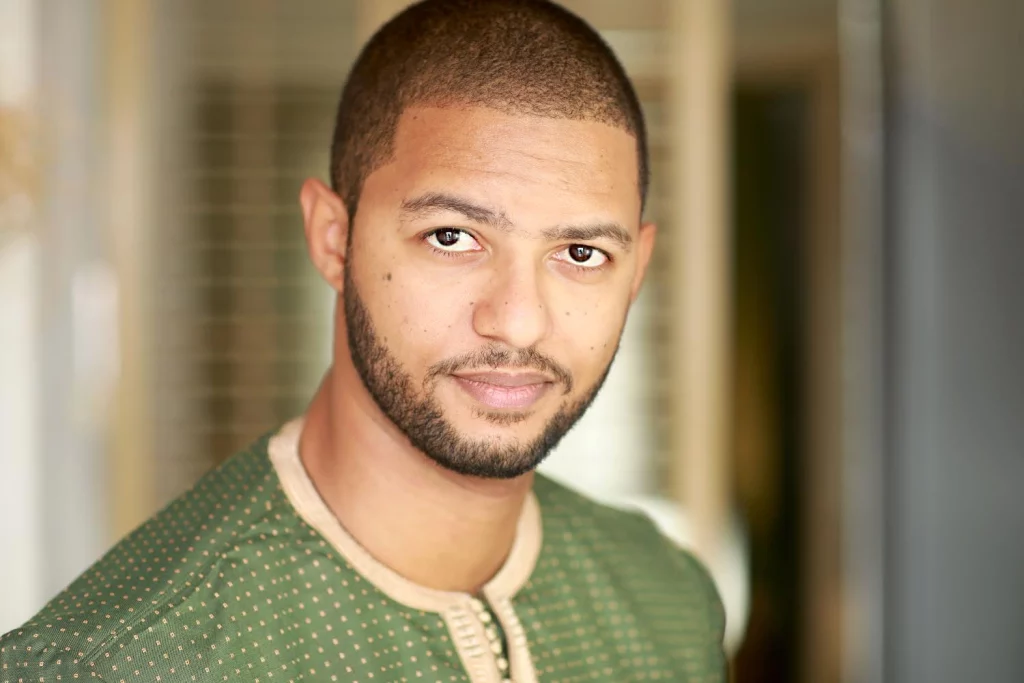
 Babacar Seck. Image Source: Askya

Why context is an advantage

Local context decides whether an AI tool works in Africa. Founders who have it can build for specific problems, as Pewbeam AI has done with software that projects Bible verses during live church services, and as YarnGPT has done with a speech model for Nigerian-accented English, Yoruba, Igbo and Hausa. They can also make something as viral as Lagos Life.

Of the 207 African AI startups TechCabal Insights counted across 17 countries in 2025, two-thirds are still early stage and only eight have reached maturity. When that many companies can plug into the same foundation models, saying a product is AI-powered proves very little.

That changes what investors ask founders. If AI keeps making software cheaper to write, software on its own protects nothing. What matters is everything around it: data nobody else holds, local knowledge, a way to reach customers, regulatory permission, and how deeply the product sits inside the work a customer already does.

Merchant of Village Capital, whose fund has not yet looked at AI as a sector, expects most of the African opportunity to sit at the application layer.

Husein Merchant (Village Capital): My personal opinion is that there is going to be a lot of opportunity on the consumer side. Given that Africa may be more of a consumer of AI technology than a creator of it, I think the investments and solutions will lean that way.

Eloho Omame (TLcom Capital): AI does not make everything cheaper to build. It is not a panacea. Some things are cheaper. Testing is cheaper, so you can experiment far more quickly with LLMs than before. Whenever a technology has driven down the cost of delivering something, the shape of defensibility has changed. A company could no longer rely on a high cost of entry. AI has lowered the cost of entry the way mobile technology lowered it before. When we look at a company, we ask how it builds defensibility if testing or delivery is now commoditised. It might be the brand. It might be network effects or switching costs.
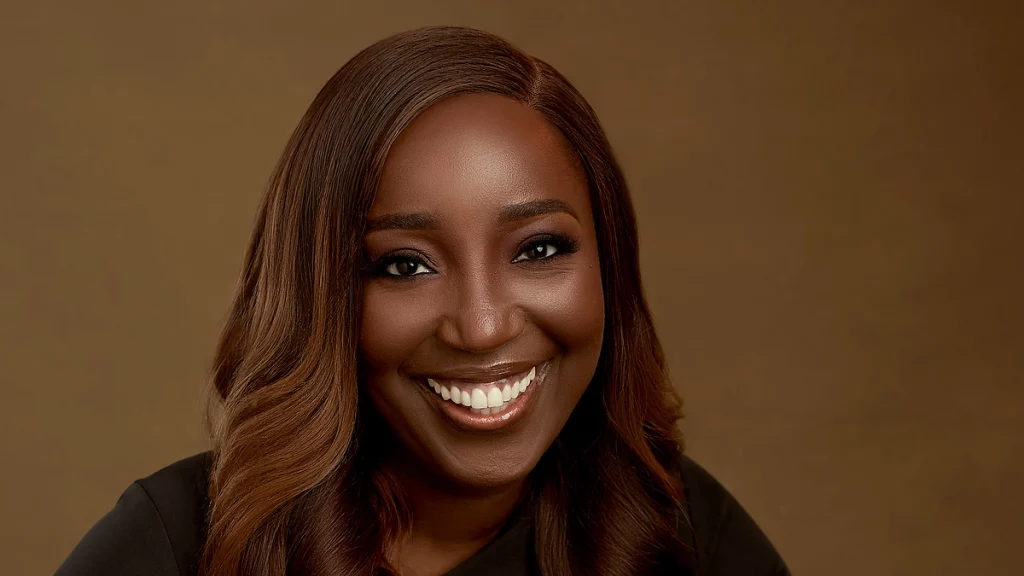
Eloho Omame. Image Source: TLCOM

Data and language 

Seck splits AI startups in two. One group builds the layers of AI itself. The other applies AI to ordinary businesses, and that is where he sees an opening for Africa.

Speech data for African languages is scarce. A company that collects it, trains on it, and builds a customer base around what it can do with it owns something rivals cannot easily copy. Caantin, a Zambian startup that replaces call-centre staff with AI voice agents for banks and fintechs, told TechCabal in June 2025 it was approaching $1 million in monthly revenue, charging by the volume of calls it handles.

No one has fully cracked it yet.

Babacar Seck (Askya Investment Partners): Wherever you have structured data at scale, you can build small AI models that improve performance. That is exciting in the African context because we are digitising in the age of AI. We are creating structured pools of data at the same time as we apply AI to them, so companies build a competitive advantage much faster as they scale. Language is the clearest case of data that is hard to copy. In South Africa, Census 2022 found that 8.7% of people speak English most often at home. IsiZulu (24.4%), isiXhosa (16.3%), Afrikaans (10.6%) and Sepedi (10%) all rank above it. A product that only works in English is built for a small slice of that market.

Babacar Seck (Askya Investment Partners): One very exciting area is voice AI in African languages. Many startups operate in that space, and none have fully cracked it. Today in Africa, most people do not speak English, French, or Portuguese at home. They speak their mother tongue, the language they are most comfortable in. The minute you have an application that lets companies talk to their customers in the customer’s own language, you bridge a divide. That applies to companies and their customers, and to governments and their citizens.

Emmanuel Adegboye (Madica): I think daily about people in rural areas. What is the easiest way to take part in the global economy if you only speak Wolof? The fastest way is to build platforms that speak Wolof or deliver information in Wolof, so you can do all of that without needing to learn English. That is why I think voice is an important long-term opportunity in AI, and it is why some of our investments have been in voice AI.
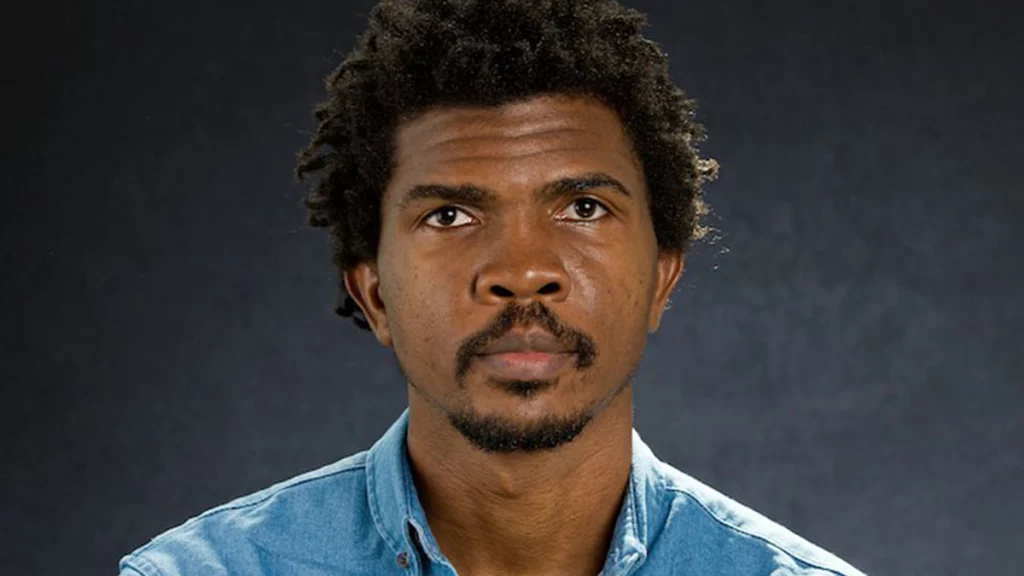
Emmanuel Adegboye, head of Madica. Image Source: Madica

Being one with the customer

Omame’s portfolio has shown her a second kind of defence: a company that sits inside a customer’s daily operations. Once its software is wired into thousands of end customers, a rival cannot easily replace it, and the margin that integration earns is protected with it.

Eloho Omame (TLcom Capital): We invested in an API infrastructure business. Its API plugs into its customers’ software and delivers a fintech product. Before, each time the customer needed the product, it made an API call. Now, because of agentic technology, the system prompts the customer when they are about to run out of the resource they lease. Revenue goes up, and the company also knows its revenue is going up. The product also costs less to deliver, because there is an agentic layer on the production side too.

In principle more people can now build what it builds, as cheaply as it can. But once our software is talking to each other and I am delivering value across thousands of your own customers, it is much harder for you to unplug from my system.

I want a clear line of sight to how AI makes the product cheaper to create, and what happens to the margin that creates. The founder can pass it all to the customer or capture it in the business as a higher margin. As an investor, I want to see it captured in the business.

Revenue comes first

Defensibility answers only half the question. The other half is whether the company earns money while investors are still willing to wait, and on this continent the wait has shortened.

An AI company that spends three years on compute before charging anyone fails that test, however good the idea.

Magnifique Ishimwe (Development Bank of Rwanda): Basic technology can always be built. I could put together an app like the one I showed you by the next morning. The fundamental question is whether you can execute.

I have done a couple of AI deals, and sometimes we cannot see when the company reaches its horizon. You can absorb two or three equity rounds, and we still do not see a path to profitability. In the United States you can be an Uber that loses money for six, eight, or ten years. In Africa, every investor asks where your revenue is, and if you do not have it, what value you have in its place.

Think of an AI company that builds a chatbot for students, but nobody is willing to pay for it. You spent a lot on compute, we helped you get credits, you paid expensive engineers, and for three years nothing came out of it. Those deals are misaligned with our instrument, because we are not an equity investor.

Some investors back AI infrastructure

Some investors do fund the deeper layers, usually for strategic reasons. AXIAN, the Madagascar-based group with telecoms and digital banking operations, frames its infrastructure bets around who controls the data.

Benjamin Toulouze (AXIAN Investment): We want to invest in AI infrastructure, and we have already done so. One example is WideBot AI, a proprietary LLM system for Arabic speakers. We invested in Nucleon Security, a Moroccan company that protects devices using zero trust, EDR, and malware tools.

We are convinced about the sovereignty issue. African countries need autonomy and control over their own data. That is one of the biggest challenges in the African market, because it is fragmented across 54 countries.

Emmanuel Adegboye (Madica): There is also an opportunity in hardware and AI. That is the bet we are making with ChipMango and chip design, and we will see how it evolves.

Madica joined ChipMango’s $1.9 million seed round, led by Atlantica Ventures, in September 2026. Even these bets follow the same logic as the rest of the column. WideBot’s edge is Arabic dialect data and a book of more than 350 government and enterprise clients. ChipMango recruits engineers through partnerships with Nigerian universities, trains them and sells chip-design work to global customers. In each case the hard thing to copy is the data, the talent pipeline or the customer list.

The cost of inaction in AI investing

If African investors back only the application layer, the deeper layers of AI will be financed, built and owned elsewhere. Global capital is already moving that way.

Capital is not the only gap. African data centres are chasing customers while the continent says it needs more of them, and universities are training AI engineers who leave for jobs abroad.

Emmanuel Adegboye (Madica): Capital is concentrating in a handful of funds and a handful of startups. Most funding globally is going to AI infrastructure companies, and only a few of those. On top of that, most of the funding coming into Africa comes from outside Africa, which exposes the continent to that risk. If I am a Silicon Valley investor who is not close to the continent, Africa is not top of mind when I invest.

Babacar Seck (Askya Investment Partners): Most data centres are chasing customers, yet we keep saying Africa does not have enough data centres. One gap is that these operators are not plugged into demand. When you speak to the global cloud players, they will tell you their biggest customers in Africa are startups, with some scale-ups spending upwards of $30 million a year on cloud.

We are training a growing number of AI engineers at Carnegie Mellon in Kigali, at the African Institute for Mathematical Sciences, and at some very good Nigerian universities, and many of them find jobs abroad because the companies on the continent are not yet large enough to keep them.

For now, the investors in this column have answered the question they can control. They will pay for the parts of an AI company that grow more valuable as the AI underneath gets cheaper. Whether the continent also builds that underlying layer is a question their capital cannot settle on its own.

True scale demands moving beyond surface-level integrations to robust execution. We’ve filtered the noise out of Moonshot 2026, optimising the conference strictly for high-calibre connections between startup founders, global financial operators, enterprise leaders and individuals rewiring Africa’s technical frameworks. Get 20% off Early Bird tickets for a limited time.


§

DPI Venture Capital, the early-stage arm of Development Partners International—a private equity firm managing more than $3 billion in assets across Africa—has reached a final close of over $112 million for its Nclude Fund. 

Ashley Lewis, managing partner and head of DPI Venture Capital, told TechCabal that virtually all the capital was committed by financial services institutions, with 93% originating from within Africa. By comparison, African investors supplied just 37% of the funding secured by the continent’s startups in the first half of 2026, according to TechCabal Insights. 

At $112 million, Nclude’s final close exceeds the combined total raised by all Africa-focused venture funds in 2025: the African Private Capital Association (AVCA) recorded just six final closes totalling $107 million that year, an 87% drop compared with 2024.

The fund is notable not only for its scale in a depressed market, but because it reverses the conventional architecture of African venture capital, where development finance institutions (DFIs) and Western limited partners typically anchor the ecosystem.

“There is a lot of discussion about how funds can move beyond the DFI-backed model to more commercial funding, and I think Nclude and DPI Venture Capital show that there are working paths to capital from unusual sources,” said Lewis. 

Nclude started in March 2022 as a fintech fund in Egypt, launched after the Central Bank of Egypt approved it. Banque Misr was the anchor investor, with National Bank of Egypt and Banque du Caire as strategic investors, and the Egyptian Banks Company, e-Finance and Mastercard joined later. Global Ventures managed the fund at first, but in 2025, after a restructuring, DPI became its adviser and launched DPI Venture Capital to run it.

When DPI assumed control, Banque Misr stated that the fund held $105 million in assets under management against an initial $150 million target. While the $112 million close settles below that original ambition, Lewis maintained that DPI did not establish a rigid cap. 

With unallocated capital already available upon takeover, the manager spent roughly 12 months curating a select group of commercial institutional investors whose strategic footprints aligned with the fund’s financial services mandate. 

The fund targets core fintechs alongside embedded finance providers—such as real estate platforms distributing mortgage products. Under DPI’s stewardship, Nclude expanded its mandate to span seed through Series C rounds, carved out a minimum 10% allocation for seed-stage bets, and began deploying outside Egypt, with up to 30% of capital permitted across broader regional markets. 

Writing equity cheques between $500,000 and $10 million, the fund has backed 15 companies over the past 18 months; Lewis expects the portfolio to mature at between 22 and 24 investments. 

Its portfolio includes Nawy, the Egyptian proptech platform that secured a $52 million Series A; Paymob, the digital payments infrastructure provider that closed a $35 million pre-Series C round led by Mubadala and the EBRD; FlapKap, a UAE-based revenue-based financing platform for SMEs that raised $34 million; Money Fellows, a digitised money circles (ROSCAs) platform that raised $13 million; Kera, a healthcare AI company operating across Senegal and Côte d’Ivoire; and Accord Partners, an accounting and corporate audit AI aggregator focused on Saudi Arabia. 

Below, Ashley Lewis discusses how DPI structured the raise, where the capital is being deployed, and the secondary and trade exit pathways the firm is prioritising in a constrained market. 

This interview has been edited lightly for clarity and length.

What was the fundraising process like?

We became advisers to the Nclude Fund in 2025, and getting there took some time. During that period we started to rethink what success would look like. The fund was championed by the Central Bank of Egypt, and all its LPs were financial services players, mostly banks. We wanted to continue in that vein. There was a special connection between the regulatory view, the financial services view, and what technology can do for the ecosystem.

Success for us meant going to a small number of LPs and keeping the base the same. The ones we brought on are, for the most part, African and regional financial services players.

That made this fundraise different from what most GPs go through, where you are looking at DFIs and global LPs. It still takes time to get LPs over the line, and we worked closely with them over about 12 months.

What target did you set?

We approached the target differently. We focused on aligned partnerships and did not set an explicit fund size target. When we became adviser, the fund still had dry powder to deploy, so we wanted investors aligned with the broader vision who were also financial services players. That is different from how most funds set a target and then go to market to maximise it.

How have you deployed capital since DPI took over?

Our first goal was to look after the existing portfolio. There were eight companies in it. Several needed follow-on investment and some were raising competitive rounds, so we put capital into those first.

Then we saw a strong opportunity in Egypt and closed several rounds there. We led a round for Money Fellows and invested in the proptech company Nawy, among others.

The other ambition was to use the international mandate, which allows 30% of the fund to go anywhere in Africa or the Middle East. That led to two deals: Kera, a health AI business in Senegal and Côte d’Ivoire, and Accord Partners, an Egyptian founder’s AI roll-up that launched first in Saudi Arabia.

What has changed since DPI took over?

Four things. We grew the team. We expanded the mandate, which ran from seed to Series B, to include Series C, because we were seeing well-priced deals at that stage. We restructured parts of the fund so at least 10% now goes to seed.

And we launched a VC academy this year, which was already in the mandate but had never been used, to train the next generation of venture capital leaders in how we invest.

Does the fund have an AI mandate?

We do not have an AI-specific mandate. But AI is clearly disrupting many technology businesses, and new founders are launching with it at the core. Our mandate remains tech, embedded finance and financial inclusion, and AI is changing how products in this space are delivered, which changes how we invest.

Our two latest companies are AI-native. Accord Partners is built around using AI to change auditing and accounting, doing roll-ups more efficiently to produce better outcomes for mid-sized firms. Kera has leadership with AI-native backgrounds and is bringing better ways of managing patients and insurance products into the health ecosystem. We still consider both fintech businesses.

AI is no longer its own vertical. It cuts across everything, and we see it in every business we screen.

What does a company outside fintech need to stand out to you?

On the surface, one might look like a proptech business, a used-car marketplace or a health company. Built into its model is a financial product that improves affordability and access for consumers and small businesses, or changes how customers engage with the business.

These companies have an unfair advantage from their data and their closeness to customers, which lets them size, price and deliver that product well. We need to see it built in before we can invest.

Nawy is the example. On the surface it brokers and sells homes, and it has also built one of the leading mortgage products in the market. That is not its main focus, and it helps make homes more affordable for buyers.

Your cheques range from $500,000 to $10 million. How do you split between stages?

This is a multi-stage fund, which gives us flexibility to adapt to the market.

We expect 10% to 20% of the portfolio to be seed stage, and right now we are closer to 20%. Later-stage cheques run upwards of $5 million, and those will be the anchor businesses.

The split is about diversification and maximising returns. We have made big bets at Series B and pre-Series C, and I am excited to explore the earlier stages too.

How much dry powder is left?

We do not want to disclose the amount. We have dry powder, we are actively deploying, and we have made a lot of investments over the last 18 months, so the portfolio is becoming quite robust.

How many more companies will you add, and in which sectors?

We have invested in 15 and expect to be closer to 22 to 24 by the end of the fund’s life. The mandate remains fintech and fintech-enabled. At the outer edges of African technology, such as deep tech or space tech, it will be very hard for us to invest unless there is a financial product built in.

Some areas keep coming up. The future of work, and how workers can be better supported in their financial lives. Health, where we have doubled down and have a handful of portfolio companies. SME lending, where I still think there is disruption to come. And what look like traditional businesses — selling cars, furniture, other goods — where the question is how to better finance the customers underneath.

What support do you give startups beyond capital?

At DPI we have a fully embedded value creation team that works with companies day to day, and as the newest part of DPI we have been able to draw on it.

One big piece of work this year is a playbook for companies outside Egypt that want to expand into the country. We use our regulatory connections, our banking connections and our understanding of the market to help them through that.

We have also helped companies through very difficult times, including raising equity and debt through our networks. We are active on governance, with board and observer seats. Different companies need different levels of support, and with some we meet every week.

What exit routes do you see?

One of the biggest benefits of sitting inside DPI is that the firm has exited many companies through different routes. Optasia listed on the Johannesburg Stock Exchange in November 2025.

Last week MNT-Halan, another of our fintech unicorns, listed on the Egyptian Exchange. We have seen IPOs in Morocco too, so we have validated the public listing route.

We have also exited to buyers in the Middle East. That matters, because several of our companies are active in Saudi Arabia, the UAE and Oman and are looking at potential acquisitions from Saudi buyers, sovereign or otherwise. We have validated sales to strategic buyers, and management buybacks.

The first three are the routes many of our early-stage companies are working towards, and they can learn directly from how our DPI colleagues did it.

What should people take from how this fund was raised?

The uniqueness of the funding sources. Nearly 100% of the funding came from financial services organisations, and 93% of the capital came from Africa. African corporates are really engaged in this space.

There is a lot of discussion about how to scale a fund and move out of the DFI-backed model into more commercial funding.

Nclude is a good case for pathways to capital from unique sources. That 93% matters: sourcing capital directly from Africa to back African founders and solutions.

True scale demands moving beyond surface-level integrations to robust execution. We’ve filtered the noise out of Moonshot 2026, optimising the conference strictly for high-calibre connections between startup founders, global financial operators, enterprise leaders and individuals rewiring Africa’s technical frameworks. Get 20% off Early Bird tickets for a limited time.

§

In April 2022, Five35 Ventures, a gender-focused venture capital firm, wrote one of its first cheques to Complete Farmer, a Ghanaian agritech company that connects smallholder farmers to buyers, inputs and financing.

In March 2026, it sold its entire stake. Five35 says the sale returned 3.5 times its money, an internal rate of return of 38% over four years, and that Complete Farmer’s valuation rose from $6 million to $49 million over the same period.

Five35 is a pan-African fund that writes pre-seed and seed cheques into tech-enabled companies, focusing on markets beyond the big four of Nigeria, Kenya, Egypt and South Africa.

“We invest in exceptional businesses first, and the gender lens helps us find overlooked ones,” said Hema Vallabh, Five35’s founding partner. “Turning that value into realised returns for our investors is the real test of our success. Over the next six to 18 months, we will write bigger cheques now that we have an anchor, invest more in secondary markets, and then move into our harvest period, where we will look harder at exits.”

Exits are rare in African venture capital and rarer in agritech, according to Briter, which calls exit routes the sector’s tightest constraint, as fragmented supply chains and heavy working capital needs make it hard for companies to scale.

Vallabh, an engineer who founded the women’s entrepreneurship platform WomHub, runs the fund with general partner Fatou Touré. Five35 was raising $30 million in 2022. When the capital winter hit, Vallabh cut the target and raised her first $1 million through cheques starting at $35,000, mostly from first-time investors. The Mastercard Foundation Africa Growth Fund came in as an anchor in late 2025, and she expects to close in the next three to six months.

The sale was partly a commercial call and partly a strategic one: a first-time manager still raising money needed to show investors it could return cash.

Vallabh explains below what Five35 means by a gender lens, why it sold its best performer early, how it raised money as a first-time manager, and what female founders face when they pitch that most investors never see.

This interview has been edited for length and clarity.

How do you invest on the continent?

We invest at pre-seed and seed in companies that are significantly tech-enabled, and we are sector agnostic. We are pan-African, with a bigger focus on sub-Saharan Africa and a small allocation for North Africa. We invest in the big four of South Africa, Nigeria, Egypt and Kenya, and we are also excited about secondary markets such as Ghana, Senegal and the DRC.

We invest with a gender lens, and for us that goes beyond female founders. Our definition is about intentionality. A company can be co-owned or co-led by women, with a woman in a real leadership role such as CEO or CTO.

It can have an intentionally female workforce, with women spread across the business and not only at the lower levels. Or it can have an intentionally female customer base. The test is how we get more women participating in economic activity, living better lives and making more money.

For the customer base, the example I use is a male founder who builds a maternal health app. He is deliberately serving women, and those women become healthier and more economically active. We are a fully gender-lens fund, and for every investment, it has to be clear why we consider it one.

Complete Farmer has a male founder. How does it fit your gender lens?

It is a good example of our thesis. Desmond is a male founder, but Complete Farmer is a B2B and B2C platform, and when we invested, about 55% to 60% of its customers were women. Women also made up about 80% of its post-harvest workforce.

Because of the platform, more female farmers were taking their produce to market more efficiently and more profitably. The model gave farmers a market before they planted, which made their income more predictable and reduced waste. The gender impact was built into what made it a commercially compelling business.

Why did you build Five35 around a gender lens?

I have worked in this space for 20 years. I am an engineer turned entrepreneur turned investor. My first organisation was a non-profit that helped get more women into engineering. I later turned it into a commercial business, WomHub, which today works across talent, incubation and acceleration, co-working spaces and capital.

Someone who starts a fintech fund usually comes from banking. Gender is my specialisation. It is the right thing to do, and it is also an overlooked market that repeatedly shows better returns. Our pipeline comes from the WomHub network and two decades of work, and our partners help us support founders in ways other funds cannot.

At pre-seed and seed, you are backing the founder more than the numbers, because the numbers are not there yet. Research shows female founders are disadvantaged at this stage because they do not fit the mould.

Pitch competitions, to put it a little facetiously, are designed for the very articulate white male American founder. A more introverted founder may not pitch as well and still be very good at building her business. That is why we need more fund managers and investment committee members who look like the founders we want to back.

You argue that gender-lens investing is commercial. On what basis?

Our name comes from data. Research shows that adding more female entrepreneurs to the African economy could lift GDP by up to 5%, and that diverse teams can deliver a 35% higher return than all-male teams when the playing field is level. Our job is to help level it.

Our investors expect competitive financial returns, as they would from any other venture fund. We compete for capital with gender-agnostic funds. We care about impact, including job creation, and we want it alongside strong financial returns.

You see this in our portfolio. We first made 16 small investments, which I call our track record builders, and Complete Farmer was one of them. After our anchor investment, we made two new investments and three follow-ons. We now have 18 investments and a zero per cent failure rate. A few are struggling, and none has folded, and we are in year four, going into year five. These are unrealised gains, and the fund overall sits at about 2x.

Agritech exits are rare. What did Complete Farmer do differently?

Part of it was deliberate, and part of it was timing. Agritech is hard to scale because supply chains are fragmented, working capital needs are different, and operations are complex.

Complete Farmer did more than build an app for farmers. It built a full commercial supply chain platform that solved real problems on both sides of the market. Connecting production to predictable demand was unusual.

It also had strong leadership and strong execution, and it showed commercial viability fairly early. I am yet to see a solution in the market as complete as theirs. They have competitors in individual verticals, and building the full platform is what sets them apart.

Why did you invest?

They met our core criteria: pan-African, tech-enabled, early-stage, and gender lens. They were solving a problem on both sides of the market, and they had a strong founder.

Desmond was not positioning itself as a gender-lens company. When we looked closely, the strong female customer base was almost incidental. We saw a way to add value by helping them make that intentional and by helping with teams and governance. We were a small investor working alongside others, so I do not claim his success is because of us. But we knew where we could help a company that was already growing strongly.

Why did you sell in March?

It was the right time, and it made commercial sense. When Complete Farmer was raising its next round, we considered doubling down, but the valuation was beyond our range. Anything we could add would have been too small to matter.

We did discuss staying in for a bigger exit later. We will never know how that would have turned out. There was also a strategic reason. Our target as a fund is at least three times the money on invested capital, and this exit exceeded it. As a first-time fund that is still fundraising and heading into its harvest period, we needed to show that we can deliver exits. Going through a real exit process was also a learning experience.

We did not sell because we lacked faith in the company. They were one of our strongest performers and still have potential. It was a commercial decision, a fundraising decision and a disciplined capital allocation decision.

Who bought your stake?

We cannot disclose the buyer because of confidentiality agreements. It was a secondary transaction, and we sold our entire position.

Which other portfolio companies are close to an exit?

We are still in our investment period, and our focus is on deploying capital and doubling down on our strongest performers. We will invest quite aggressively over the next 18 months. We keep assessing liquidity, and sometimes the market approaches us to ask whether we will sell a position, but we are not actively chasing exits. Give us two or three years, and then we will be thinking seriously about them.

What support do you give founders beyond capital?

We are entrepreneurs investing in entrepreneurs, and we have a structured value creation method. We run portfolio community sessions for peer learning. One of our companies has made two acquisitions and walked the others through how it did them. We also work with each company on what it needs at this stage, such as building teams, governance structures and systems.

Our anchor, the Mastercard Foundation Africa Growth Fund, adds a second layer of technical assistance for our portfolio, both cash and in-kind. Through us, companies such as Complete Farmer can reach support they would not otherwise get.

We also lead by example on the gender lens. One female founder told me she does not think twice about sending me a WhatsApp message at 10 pm, whereas she would worry about it being misread if she sent it to a male fund manager. The level of sexual harassment female founders face when pitching is a systemic problem that we have to talk about, and many do not feel safe in rooms where nobody looks like them.

I had a baby in the last two and a half years, and I was fundraising while pregnant. Many of our founders told me they did not know that was possible. A female founder raising while pregnant gets asked how committed she really is or whether her life will change after the baby. A male founder rarely faces those questions. We build support for these realities into how we work, before and after we invest.

What was fundraising like as a first-time manager?

Tough. Fund managers have to raise from LPs before we can invest, just as founders raise to grow. Fatou and I are both first-time fund managers.

When I conceived Five35 around 2021, the market was in its heyday, with a lot of liquidity on the continent. Then the capital winter hit. We started with ambitious targets, and we had to adapt and aim for a smaller fund.

I went to my own network first. I looked for strong women, often executives, who had made money and invested in property or stocks, or as angels, but had never considered venture capital as an asset class or invested as an LP.

Through what I call the 35 Club, we took cheques from $35,000 upwards, mostly from women, and raised our first $1 million. Small cheques from individuals would never get us to a fund of $15 million or $20 million, and they let us make our first investments and build a track record. When we approached institutions, we could answer the question every first-time manager gets: what is your track record?

That led to our anchor investment from the Mastercard Foundation Africa Growth Fund, and other investors came in around it. We are now in what we call the final circle, with a small allocation is left, and we hope to close in the next three to six months. Would I have liked to raise more? Yes. The market has not allowed it yet.

How do you structure your investments?

We are a pure equity fund and do not do debt. Our preferred early-stage instrument is a SAFE, and that is how we first invested in Complete Farmer and most of our other companies.

True scale demands moving beyond surface-level integrations to robust execution. We’ve filtered the noise out of Moonshot 2026, optimising the conference strictly for high-calibre connections between startup founders, global financial operators, enterprise leaders and individuals rewiring Africa’s technical frameworks. Get 20% off Early Bird tickets for a limited time.

Web hosting by Somee.com