×
Tech

Interswitch says more banks are ready for tap-to-pay, but consumers need convincing

Interswitch wants Nigerians to trust tap-to-pay

Interswitch, a Nigerian payments technology company, says consumer education is the biggest hurdle to making tap-to-pay a mainstream payment method in Nigeria, even as banks and merchants prepare to support it. Speaking at Moonshot 2026 in Lagos on Thursday, Tomi Ogunlesi, divisional head of brands, communication, content and CSR at Interswitch, said the industry must convince consumers that tapping their cards or phones to pay is secure and convenient.

“The banks are ready,” Ogunlesi said. “Where more of the work needs to be done now, from our perspective as an industry, is on the merchant side and on the consumer side, but most on the consumer side.”

His comments come after Mastercard and Interswitch announced the launch of Google Pay in Nigeria, allowing eligible Mastercard holders to add their cards to Google Wallet and pay with compatible Android phones at contactless-enabled terminals. Interswitch’ said that it was working with five Nigerian banks, including GTBank, Wema Bank, ProvidusUnity Bank, Zenith Bank, and FirstBank, to expand tokenised tap-to-pay transactions. The company said it is also working to bring more merchants into the network, including supermarket chain, Spar, had shown interest. 

Contactless payments are not new to Nigeria. In 2015, Unified Payments launched PayAttitude, an NFC-based payment service, with several Nigerian banks. It used a chip-enabled tag attached to a mobile phone or another surface to make payments at compatible terminals. 

A decade later, Access Bank partnered with Visa in March 2025 to launch Tap to Phone, which turns an NFC-enabled Android smartphone into a payment terminal for merchants accepting contactless card payments.  In October, CashAfrica, a Nigerian contactless payments infrastructure startup, also partnered with Chicken Republic to bring mobile tap-to-pay to more than 350 outlets.

Despite these attempts, tap-to-pay has yet to become a mainstream payment method in Nigeria. Infrastructure gaps and limited consumer awareness have made it difficult for contactless payments to gain widespread adoption. Interswitch has now taken up the challenge to persuade consumers to use the technology.

Ogunlesi said Interswitch had anticipated the shift towards tokenised payments by making most of the cards it issued over the past two to three years compatible with the technology. However, he acknowledged that the simplicity of tap-to-pay could itself make some Nigerians suspicious. Ogunlesi said consumer education must explain how tokenisation protects payment details.

“At its core, tokenisation means your card details have gone through a process where the token that is replacing your card number in a tap-to-pay transaction is not your card number,” he said. “It’s more like a one-time token that is being used to mask your card number.”

Interswitch plans to support sensitisation efforts with a 15-minute documentary titled ‘Are You Tapping?,‘ which explores the evolution of payments in Nigeria and explains why tokenisation matters.

In a separate conversation at Moonshot, Ogunlesi said Nigeria embraced card payments earlier than some other African markets, where mobile money services helped drive the growth of digital payments. He pointed to Interswitch’s experience in 2009, when the Central Bank of Nigeria ordered the shutdown of magnetic-stripe cards amid fraud concerns. It forced the industry to transition towards EMV chip cards, creating an opportunity for Verve, Interswitch’s domestic card scheme. 

He also argued that cards retain an advantage in areas such as international commerce and dispute resolution, where established card networks have developed processes for handling failed transactions and recovering funds. Bank transfers may work well for domestic payments, but resolving disputes involving cross-border transactions can be more complicated. He expects the physical form of cards to change as payments become digital, but believes the underlying infrastructure will remain important.

“Cards are what everybody is trying to disrupt,” he said. “But the interesting thing is that even the things that are going to disrupt cards run with the DNA of cards.”

Ogunlesi identified card rails, non-card rails such as instant bank transfers, and digital-asset rails as three broad areas of payment infrastructure that could support faster or cheaper cross-border transfers. He said Interswitch was exploring how digital-asset infrastructure could be developed in ways that are trusted and compatible with regulatory requirements. However, the company’s immediate priority is getting more Nigerians comfortable with tapping to pay.
§

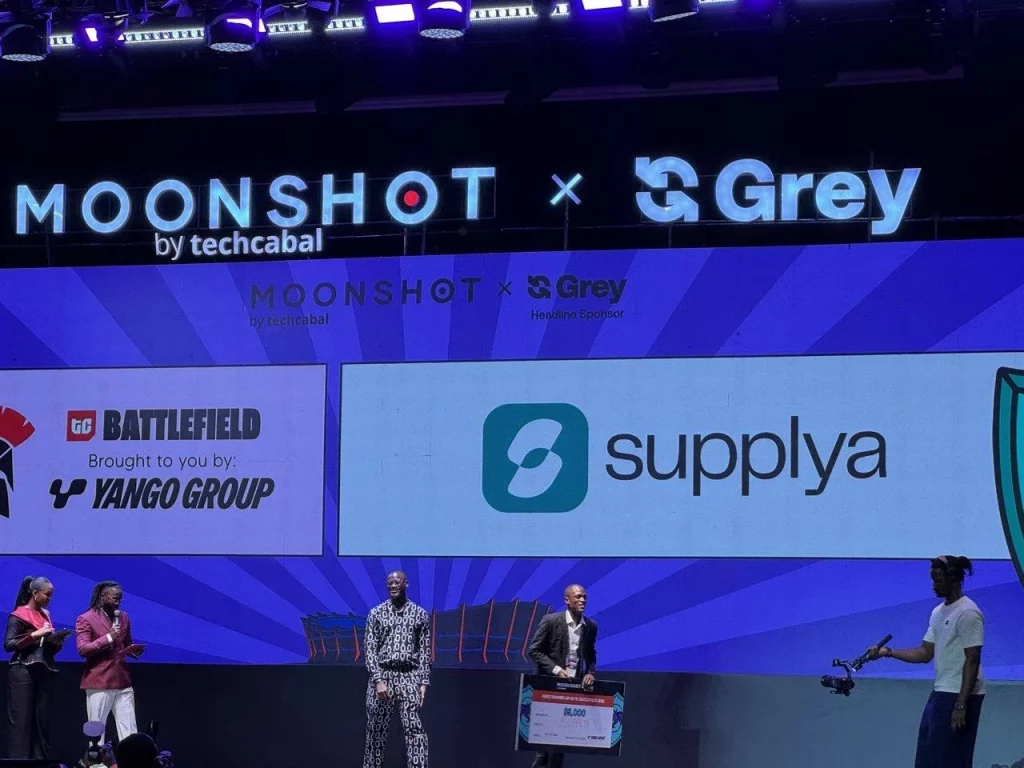
Acecore, a Nigerian startup that builds home energy storage systems, won TC Battlefield 2026 at Moonshot by TechCabal in Lagos on Thursday, October 29, taking home the $10,000 grand prize.

Supplya, which gives informal retailers stock on credit, came second and won $5,000. Navidyn, a maritime robotics startup, came third with $2,500.

Caleb Iwuoha, Acecore’s founder and chief executive, told the judges at Wednesday’s final that the system’s casing and battery management software were “all built here in Nigeria by our very own hands.”

Acecore sells a home battery system and a smart socket that lets users control their appliances. It says its system costs more than 20% less than comparable products, and a partner bank lets customers pay in instalments

The startup is building locally in a market that imports most of its power hardware. Nigeria imported 1,721 megawatts of solar panels from China in the 12 months to June 2025, making it Africa’s second-largest importer after South Africa, according to the energy think tank Ember.

Supplya receives the first runner-up prize. Image source: Chukwuebuka Mgbojikwe/TechCabal

The three winners were chosen from 10 finalists that also included Growwr, Kuraway, Fertitude, Lena, QiqiFarms, Riwe and Swiftway Shippers. The judges were Folakemi Osho, general manager of HoaQ; Elijah Shokenu, head of ventures at SWIT; Kosen Kenta, principal at Antler; and Adeniyi Adebayo, chief business officer of Yango Group, which sponsored the competition.

Acecore faced the toughest questions on price. One judge pointed out that imported Chinese systems land in Nigeria at a price similar to Acecore’s, which starts at about $5,250, and pressed Iwuoha on his unit economics. He said the company runs a 62% margin.

Navidyn, which builds underwater robots to inspect offshore oil and gas sites, made the broader case for hardware. “So far, Africa has invested in fintech, logtech, agritech, edtech. Now it’s time to invest in advanced AI and robotics,” its co-founders told the judges. The startup says a Sahara Group representative brought it a $5,000 inspection job before its product was ready.

Supplya, the runner-up, says it has extended more than $150,000 in credit to small shops since October 2024, and that 98% has been repaid.

Navidyn and Supplya, along with the women’s health app Fertitude, also won places in Antler’s residency programme, where they can raise up to $250,000 in pre-seed investment.

Two of this year’s three podium spots went to startups building physical products in Nigeria, a slower and costlier path than software. If Acecore and Navidyn can hold their margins against imports, they will show investors that hardware made in Nigeria can compete on price as well as on story.

§

Obiex says Nigeria’s stablecoin market is far more efficient than it was in 2018 and 2019, when the gap between buying and selling a dollar of crypto in naira ran as wide as ₦20 to ₦30. Demand has scaled since, but the supply behind it is still spread across many small sellers.

That’s the current state of Nigeria’s stablecoin market, according to Temitayo Sadique, managing director of Obiex Business, the business arm of Nigerian crypto exchange Obiex.

“Because of the exceptional need for stablecoins from cross-border trade and remittances, and crypto exchanges cropping up every day, we’ve seen demand scale,” Sadique said at Moonshot by TechCabal. “But supply, on the other hand, has remained scattered.”

Sadique said $19 billion in stablecoins came into Nigeria in 2025. The country has taken about 60% of sub-Saharan Africa’s stablecoin inflows since 2019, according to a June report by the International Monetary Fund.

Scattered supply makes that volume expensive to move. A company filling a $1 million order might deal with 10 peer-to-peer (P2P) traders, Sadique said, each selling a slice at a slightly higher rate: ₦1,400 per dollar, then ₦1,402, then ₦1,403. By the end, its average price is worse than the first quote. As volumes grow, he argued, platforms that can fill large orders at one price will set the terms for everyone else.

Obiex has built its business on that bet. It began in 2016 as Paylot, a crypto payment gateway, before shifting to converting crypto into naira when it saw that was what users wanted. It has never raised venture funding.

Sadique said 105,000 merchants in Nigeria, Ghana and Cameroon now trade on Obiex, alongside more than 100 businesses, from exchanges and remittance companies to fintechs. By his count, $1 of every $10 in stablecoins that moved through Nigeria last year went through Obiex.

For Sadique, liquidity means delivering money on time. Promising someone $100 next week means little if the money isn’t there when the week comes, he said. “It’s kind of like a supply-chain question, where you’re answering: can I fulfil this obligation now, when the customer needs it?” Obiex’s answer includes credit that lets clients take liquidity today and settle tomorrow, and price locks while crypto deposits are still confirming.

For large trades, Obiex offers a quote system that fixes the rate on orders of $1 million to $10 million. “We don’t just give you an average price to execute your transaction; we give you a quote and lock in that price for you,” Sadique said.

Regulation is already pushing the market toward bigger players. Since January, Nigeria’s Securities and Exchange Commission has required crypto exchanges and custodians to hold ₦2 billion in minimum capital, up from ₦500 million, a bar many smaller platforms will struggle to clear.

In Sadique’s view, an efficient stablecoin market is one where a $1 million order clears at a single price, and that depends on who can supply liquidity when it is needed.

Web hosting by Somee.com