Business
Inspired By a Girls’ Weekend, She Started a ‘Celebratory’ Side Hustle. It Hit $250K Fast and Is a No. 1 Seller at Total Wine.
Reading in data-saving mode. Read full article from Entrepreneur website.
Published 10/29/2026 8:00:00 AM
Her 'Celebratory' Side Hustle Hit $250K, Then 8 Figures: Mingle
Key Takeaways
- After enjoying mocktails with friends in the Poconos, Taylor wanted to develop her own brand.
- She started work on Mingle Mocktails in 2017; sales hit $250,000 within 18 months.
- Now, Mingle is an eight-figure brand available in more than 15,000 retail doors.
This Side Hustle Spotlight Q&A features Laura Taylor, 55, an entrepreneur based in Philadelphia, Pennsylvania.Taylor started Mingle Mocktails as a side hustle in 2017 while working full-time in corporate tech sales. She left that role in 2019 to focus on the business. Mingle Mocktails brought in $250,000 in its first 18 months and now is an eight-figure brand with national distribution in more than 15,000 retail doors. Responses have been edited for length and clarity.

When did you start your side hustle, and where did you find the inspiration for it?
I started Mingle in February of 2017. I’d given up alcohol the year prior and found it difficult to go to work events and social occasions, only to be stuck with boring soda or water. The real spark came while planning a girls’ weekend in the Poconos. I knew there’d be a little drinking, so I decided to craft and bring my own mocktail. When I sat down with my girlfriends, mocktail in hand, I was overcome with the warm feeling of social connection. It was so strong that I knew I had to do something about it. When I got home from the trip, instead of going in to see my family, I went straight to my home office and started a business plan. I incorporated the business two weeks later.
What were some of the first steps you took to get your side hustle off the ground? How much money did it take to launch?
I did an incredible amount of research on why beverage companies succeed and why they fail. I even tracked down the founder of a failed mocktail company and spoke with her about what went wrong. Because nonalcoholic cocktails weren’t yet a category, I networked with people across the beverage industry to get their perspective on the concept. I spoke with about 30 people, from executives at Coca-Cola to one of the founders of FitAid. Ultimately, I hired a small incubation firm that helped me ramp up quickly. Our initial investment was around $125,000.
Learning from BevNET and other women founders
Are there any free or paid resources that have been especially helpful for you in starting and running this business?
There’s a wealth of business information available through AI today, but for industry-specific support, BevNET has been invaluable for staying on top of the commercial side of beverage. For community, I’ve found tremendous support as a female entrepreneur through the Tory Burch Foundation, where I was a 2019 fellow, and the Female Founder Collective. Both have connected me with incredible women founders I still lean on today.
If you could go back in your business journey and change one process or approach, what would it be, and how do you wish you’d done it differently?
I would have been more confident. Those first few years, I second-guessed every decision, from the balance of flavors to the graphic design. I felt sure about a few things, like the brand name, but I wish I’d shelved my fear of failure and trusted my gut sooner. All that indecision burned a lot of unnecessary energy that could have gone into building the business.
Facing dismal success rates, working over 60 hours a week
When it comes to this specific business, what is something you’ve found particularly challenging and/or surprising that people who get into this type of work should be prepared for, but likely aren’t?
I was warned it would be hard. In those early days, most of the people I spoke with told me not to go into beverage at all because the success rates are so dismal. What still surprises me is the sheer volume of work it takes to build a brand. I was working over 60 hours a week, and it was all-consuming. Luckily, I was and still am deeply passionate about Mingle, but when I look back, I’m in awe of how much I poured into the brand in those first years. Anyone starting out should be ready for that level of commitment.
Can you recall a specific instance when something went very wrong — how did you fix it?
We had just launched three flavors of Mingle in 750ml bottles in 100 Whole Foods stores. I had designed the labels myself. Then I got a call from Whole Foods, and my heart sank. I had accidentally copied the Cranberry Cosmopolitan UPC barcode onto the Cucumber Melon Mojito label, so every time a bottle of Mojito was scanned at the register, it rang up as a Cranberry Cosmo.
Luckily, it was fixable. I bought a roll of small barcode stickers and personally applied the correct barcode to every single 750ml bottle of Mojito in our warehouse. We had at least seven pallets of Mojito, which meant re-stickering over 5,000 individual bottles by hand over a few days. The lesson I took away: Always have a second set of eyes review your work, especially nutrition panels and barcodes.

$250,000 in sales, then an 8-figure brand
How long did it take you to see consistent monthly revenue? How much did the side hustle earn?
It took about 18 months to reach consistent monthly revenue. Sales started coming in around month six, and over the following 12 months, we brought in around $250,000.
What does growth and revenue look like now?
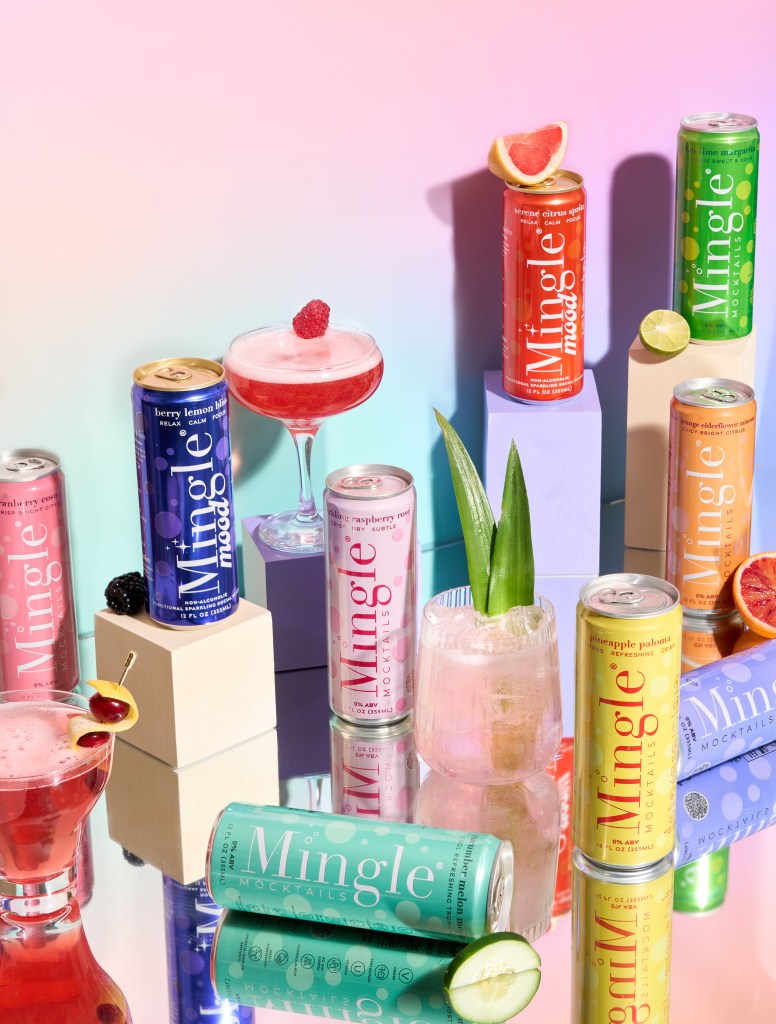
We’ve grown from that first $250,000 into an eight-figure brand. Mingle is now the No. 1 nonalcoholic ready-to-drink cocktail brand in the U.S., with national distribution in more than 15,000 retail doors and over 500 bars and restaurants. We’re Total Wine’s No. 1 brand across the entire nonalcoholic category by revenue. We’re the official nonalcoholic beverage of the Academy of Country Music Awards. We also launched Mingle Mood, so we’re now the only brand with both alcohol-free cocktails and functional beverages. This month, we also launched a limited-edition Espresso Martini. And we’re just getting started.
Fostering social connection across every occasion
What do you enjoy most about running this business?
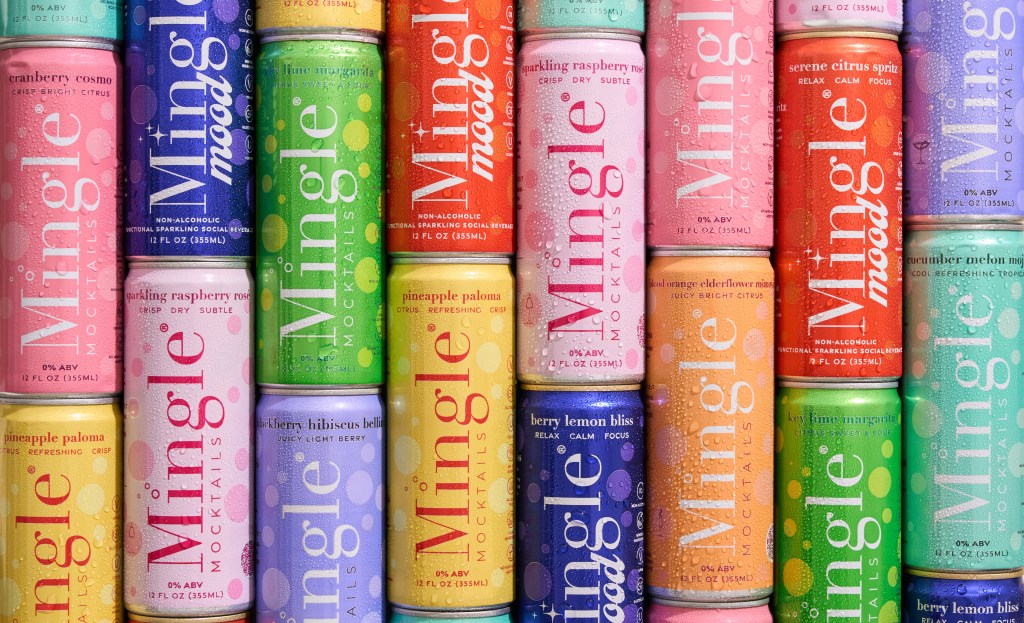
No two days are the same, and I learn something new every single day. But what I love most is knowing I’m having a positive impact on so many people who didn’t have a choice before and now do. That choice can mean so much: feeling socially connected, feeling part of the group or simply feeling celebratory. My mission is to make sure everyone feels part of the party. Our cans may look playful, but that mission runs deep in me. As someone who has been sober for 11 years, I want to offer that choice to anyone who decides not to drink, whether it’s for one night or as a lifestyle. I want Mingle to be there for every occasion.
What is your best piece of specific, actionable business advice?
Know your why. Before you launch, ask yourself exactly why you’re starting this business, and write the answer down somewhere you’ll see it every day. This matters because you will find yourself burning the candle at both ends, and you need to be 100% committed. When it comes down to it, if your why means that much to you, it will power you through every challenge you inevitably face.
Key Takeaways
- After enjoying mocktails with friends in the Poconos, Taylor wanted to develop her own brand.
- She started work on Mingle Mocktails in 2017; sales hit $250,000 within 18 months.
- Now, Mingle is an eight-figure brand available in more than 15,000 retail doors.
This Side Hustle Spotlight Q&A features Laura Taylor, 55, an entrepreneur based in Philadelphia, Pennsylvania.Taylor started Mingle Mocktails as a side hustle in 2017 while working full-time in corporate tech sales. She left that role in 2019 to focus on the business. Mingle Mocktails brought in $250,000 in its first 18 months and now is an eight-figure brand with national distribution in more than 15,000 retail doors. Responses have been edited for length and clarity.
When did you start your side hustle, and where did you find the inspiration for it?
I started Mingle in February of 2017. I’d given up alcohol the year prior and found it difficult to go to work events and social occasions, only to be stuck with boring soda or water. The real spark came while planning a girls’ weekend in the Poconos. I knew there’d be a little drinking, so I decided to craft and bring my own mocktail. When I sat down with my girlfriends, mocktail in hand, I was overcome with the warm feeling of social connection. It was so strong that I knew I had to do something about it. When I got home from the trip, instead of going in to see my family, I went straight to my home office and started a business plan. I incorporated the business two weeks later.
What were some of the first steps you took to get your side hustle off the ground? How much money did it take to launch?
I did an incredible amount of research on why beverage companies succeed and why they fail. I even tracked down the founder of a failed mocktail company and spoke with her about what went wrong. Because nonalcoholic cocktails weren’t yet a category, I networked with people across the beverage industry to get their perspective on the concept. I spoke with about 30 people, from executives at Coca-Cola to one of the founders of FitAid. Ultimately, I hired a small incubation firm that helped me ramp up quickly. Our initial investment was around $125,000.
§
Opinions expressed by Entrepreneur contributors are their own.
Key Takeaways
- Identify the one problem your buyers care about most. Ask what prompted them to start looking for a solution, what problem they were most eager to solve and why solving it became a priority.
- Ask what happened before they adopted your solution. How long did they spend on the problem? What mistakes occurred? What opportunities did they miss? What happened when they delayed fixing it?
- Ask customers to walk you through how they handled the problem before finding your solution and what changed afterward. Then build your messaging around those specific improvements.
- Interview customers about the concerns they had before purchasing. Ask what nearly stopped them, what reassured them and what information would have made their decision easier.
Your homepage has one of the most important jobs in marketing: convincing the right visitors that your solution is worth exploring.
Yet many companies struggle to turn website traffic into demos, trials or purchases. They invest in SEO, advertising and content to attract visitors, only to watch most of them leave without taking action.
Having spent more than a decade helping B2B companies improve their messaging as a product marketing executive and consultant, I’ve learned that the problem often starts with a misunderstanding of what buyers need to hear before they’re willing to take the next step.
Companies often explain their products from their own perspective. They highlight what they’ve built, everything their product can do and the benefits they assume customers care about. It often results in messaging like “The AI-native GTM platform powering Precision GTM at scale.”
But buyers have their own priorities, frustrations and concerns. If your homepage doesn’t address those, even a great product can struggle to convert.
Here are four common messaging mistakes and how to fix them.
1. You haven’t identified the one problem your buyers care about most
Many companies want their homepage to communicate everything their product can do. They try to capture multiple use cases, features and benefits in a single headline, hoping to appeal to as many potential customers as possible.
The result is often vague messaging that promises to “streamline operations,” “boost productivity,” “help your business grow,” or vague slogans like “We’ll take care of your accounting so you can focus on your business.”
These statements may have some truth, but they’re unlikely to resonate with someone facing a specific, urgent problem. When you try to communicate everything, you risk saying nothing compelling enough to make a buyer act.
Consider a project management platform for marketing agencies. Its homepage might promise to “streamline projects and improve team productivity” or some version of that. But customer interviews could reveal that agency owners are particularly frustrated by missed deadlines that damage client relationships.
Now the company has a more specific message to lead with: “Deliver every client project on time, without constantly chasing your team for updates.”
That message is more likely to capture the attention of an agency owner who’s tired of apologizing to clients for late work. It connects with a problem they’re experiencing and have a reason to solve.
In my customer research work, I often find that what companies think customers value most differs from what actually motivates them to look for a solution.
To find your strongest message, interview recent customers or prospects. Ask what prompted them to start looking for a solution, what problem they were most eager to solve and why solving it became a priority.
Look for the single problem or desired outcome that most consistently motivates your ideal customers to act. Lead with that message on your homepage. You can use the rest of the page to communicate everything else your product offers.
2. You haven’t shown buyers what they’re losing by doing nothing
Your biggest competitor isn’t always another company. Often, it’s the way your prospective customers already do things.
They might recognize the problem your product solves but have learned to live with it. Unless the cost of continuing becomes clear, they have little reason to make a change.
Imagine a software product that automates invoicing for agencies. Its homepage might say, “Automate invoicing and save time.” That’s a reasonable benefit, but it doesn’t fully communicate why the problem deserves attention.
Now consider the agency owner’s existing workflow. Project managers finish work, someone manually checks billable hours, invoices are created at the end of the month, and the finance team follows up on unpaid balances.
The consequences might include delayed invoices, missed billable work, slower payments and unnecessary administrative costs. These are much more compelling reasons to change.
Instead of simply promising automation, the homepage could explain how manual billing creates revenue leakage and cash flow problems.
To make the status quo feel costly, make its consequences visible.
Ask customers what happened before they adopted your solution. How much time did they spend on the problem? What mistakes occurred? What opportunities did they miss? What happened when they delayed fixing it?
Use their answers to communicate the business and emotional impact of the problem. Wherever possible, include real numbers, concrete examples and real-life anecdotes.
3. You’re highlighting the wrong benefits or making your solution hard to imagine
Even when visitors recognize the problem, they still need to understand how your solution will improve their situation.
Many homepages fall short here because they emphasize generic benefits or product capabilities without explaining how the product fits into the buyer’s actual workflow.
For example, an AI-powered customer support platform might highlight advanced language models, intelligent routing and automated workflows. But customer research might reveal that support managers primarily want to reduce the number of repetitive tickets their agents handle without compromising customer satisfaction.
They want to know which questions AI can resolve, when a human agent takes over and how the platform will connect with their existing help desk. The homepage should answer those deeper questions or help the reader easily find that guidance elsewhere on the website.
Rather than simply stating that the product “improves support efficiency,” it could walk visitors through a familiar scenario: A customer asks about an order, AI retrieves the relevant information, and the issue gets resolved without an agent getting involved.
A simple workflow illustration can make the value immediately understandable.
I’ve found that understanding a customer’s existing process is one of the most useful parts of customer interviews. It reveals not only which benefits matter but also which details buyers need to see before they can imagine using a product.
Ask customers to walk you through how they handled the problem before finding your solution and what changed afterward. Then build your messaging around those specific improvements.
4. You haven’t done enough to reduce the perceived risk of buying
Even when buyers see the value, they might hesitate because they’re uncertain about what happens next.
Will the product work for their business? Will implementation be difficult? Will their team actually use it? Can they trust your company to deliver? These concerns can prevent otherwise interested visitors from converting.
I frequently see websites use customer logos and testimonials as their main form of reassurance. Those elements help, but they don’t necessarily answer the specific questions making buyers hesitate.
A small business considering a new accounting platform, for example, might be far more concerned about migrating its financial data than whether the software has won an industry award.
Showing how migration works, explaining the support available and featuring a customer who successfully made the switch could do more to increase conversions.
The most effective reassurance addresses the risks your buyers actually perceive.
Interview customers about the concerns they had before purchasing. Ask what nearly stopped them, what reassured them and what information would have made their decision easier.
Use those insights to select the right customer stories, product demonstrations, guarantees, implementation details and FAQs for your homepage.
Your customers can tell you what your homepage is missing
Improving homepage conversions doesn’t always require a complete redesign, more persuasive copywriting or another round of A/B testing. Sometimes, the most valuable starting point is a handful of conversations with recent buyers.
Ask what problem made them look for a solution, why they couldn’t continue with their existing approach, what convinced them your product was right and what almost prevented them from buying.
Their answers can help you build a homepage that speaks to a real priority, makes the cost of inaction clear, demonstrates relevant value and gives visitors the confidence to take the next step.
That’s a much stronger foundation for conversion than guessing which headline or call to action might perform better.