
With rising petrol and diesel costs continuing to put pressure on household budgets and business operating expenses, solar energy providers are exploring ways to make alternative power solutions more accessible and financially viable for Nigerians.
At the Nigeria Energy 2026 exhibition in Lagos, DYQUE Energy showcased a range of solar and inverter technologies while engaging visitors on the economics of switching from conventional power sources to solar.
Speaking during the three-day exhibition, the company highlighted the potential for solar installations to significantly reduce generator dependence, particularly among businesses with substantial monthly expenditure on diesel and petrol.
According to DYQUE’s National Sales Director, Samson Akejelu, appropriately designed solar installations could help customers reduce their dependence on generators.
“Our solutions, for example, help businesses cut between 70 and 80 per cent, depending on their electricity consumption, available installation space and system configuration.”
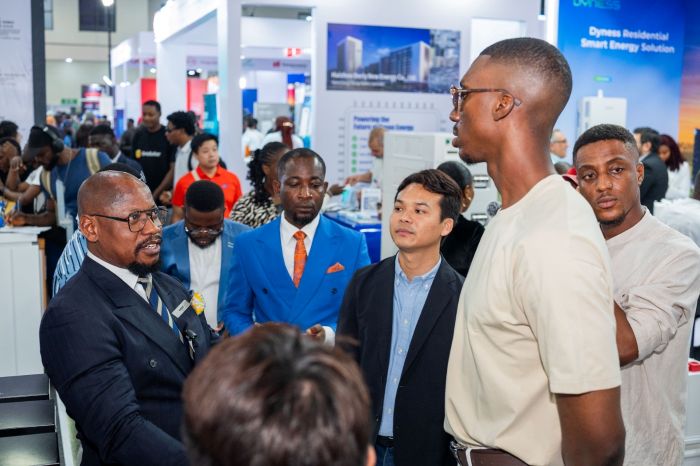
The company used the exhibition to showcase several products, including its All-in-One CUBE Series, D1 Residential, D1 Commercial and DYQUE C&I solutions.
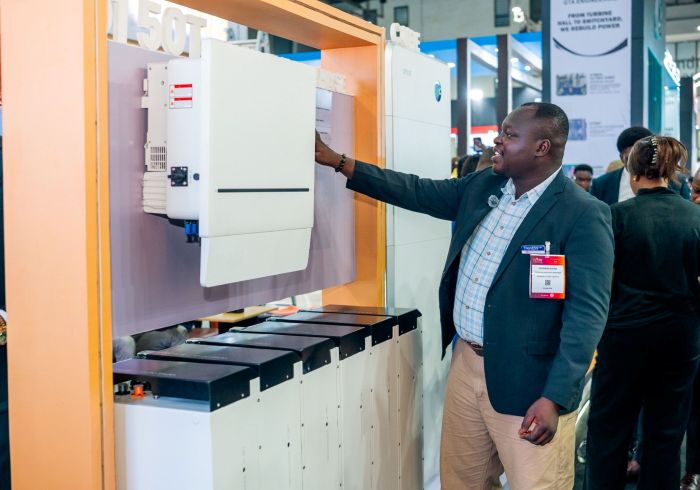
Among the products on display was the D1 Series, which includes residential and commercial models. The D1 Commercial range offers capacities from 3kW to 50kW, with the D1 50T featuring four Maximum Power Point Trackers (MPPTs), high-voltage compatibility and expandable battery storage.
The Technical Support Manager, Jeremiah Samdi, explained that its modular battery configuration allows customers to increase storage capacity as their electricity requirements grow.
“The series also has AI-powered energy management and supports up to 200 per cent PV input, with the 50kW model accommodating up to 100kW of solar PV input. Also, our C&I range, 125kW by 241kWh, is designed for larger facilities with higher electricity demands.”
Despite the potential savings associated with solar adoption, the initial cost of installation remains a major consideration for many Nigerian households and businesses.
DYQUE acknowledged this challenge, explaining that it works with financing partners to provide customers with more flexible payment arrangements.
On customer support, DYQUE said it provides lifetime technical assistance and a five-year replacement warranty.
The company also stated that where a reported fault cannot be resolved within 24 hours, it provides a replacement, subject to the applicable product configuration.
DYQUE’s participation at Nigeria Energy 2026 comes amid growing interest in alternative energy sources as households and businesses reassess the cost of relying on petrol, diesel and grid electricity.
As more Nigerians explore alternatives to conventional power sources, financing options, appropriate system sizing and reliable after-sales support are likely to remain important factors influencing solar adoption.