×
News

Barau bags award for sponsoring 49 bills

Barau bags award for sponsoring 49 bills

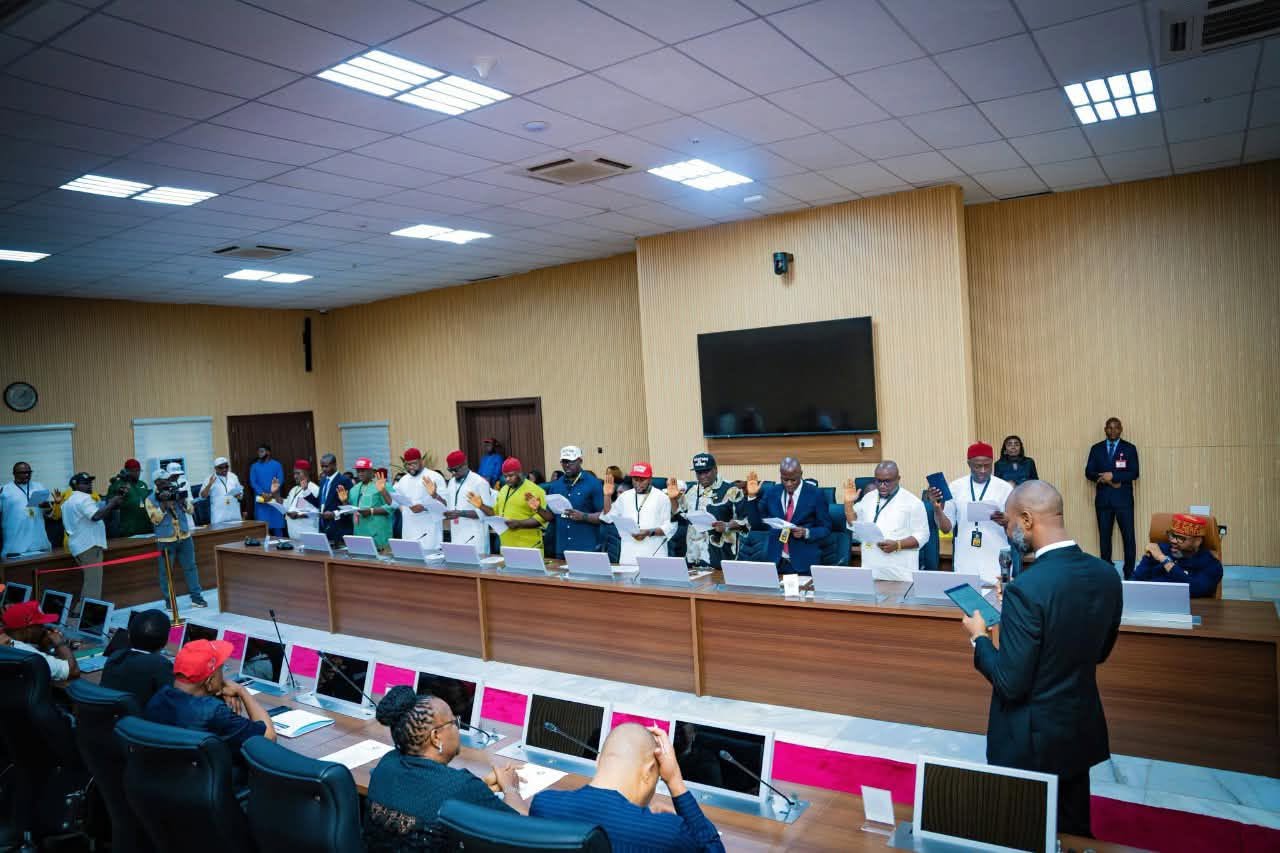
The Senate Press Corps has voted the Deputy President of the Senate, Barau Jibrin, as the most outstanding occupant of the position since 1999, citing his sponsorship of 49 bills in the first 40 months of the 10th National Assembly.

The award, presented on Tuesday, was based on Barau’s legislative output, with five of the 49 bills already passed by the National Assembly and assented to by the President.

The corps, comprising journalists who have covered the National Assembly since June 1999, also cited Barau’s experience as chairman of the Appropriations Committee in both the House of Representatives and the Senate at different times.

It noted that among the five Nigerians who had occupied the position since 1999, Barau was the only one to have served in that capacity in both chambers of the National Assembly.
His position as Deputy Speaker of the ECOWAS Parliament was another factor that distinguished him from his predecessors.

According to the citation read at the award presentation, Barau facilitated the establishment of the North-West Development Commission, the Federal University of Science and Technology, Kabo, and the Federal Medical Centre, Gwarzo, Kano State, through his bill sponsorship.

The recognition comes amid his record of legislative activity since the inauguration of the 10th National Assembly on June 13, 2023.

In June 2026, The PUNCH reported that Barau had sponsored 42 bills in the first three years of the Senate, with five receiving presidential assent.

The bills covered areas including governance, education, healthcare, energy, the digital economy and constitutional amendments.

A breakdown of the figures published in The Parliamentarian Magazine, a publication of the Deputy Senate President’s media office, showed that he sponsored 13 bills in 2023, nine in 2024, 17 in 2025 and three in 2026 within the period under review.

The five bills that had received presidential assent included the North-West Development Commission Bill, the National Identity Management Commission (Repeal and Enactment) Bill, the Agricultural Research Council (Amendment) Bill, the Federal Medical Centre, Gwarzo Establishment Bill and the Federal University of Science and Technology, Kabo Establishment Bill.

Reacting to the award presentation, Barau expressed appreciation to the Senate Press Corps, saying the recognition would motivate him to do more for his constituents, the Senate and Nigerians.

He said, “I am truly grateful and deeply appreciate this gesture. This recognition will serve as a propeller, motivating me to do even more. As the popular saying goes, to whom much is given, much is expected.

“By conferring this honour on me, you are not only acknowledging what I have done but also challenging me to do more.

“I want to assure you that I will not let you down. I will not let the Senate down, I will not let the National Assembly down, and I will not let the entire legislature or our country down.

“I promise to continue doing more for the development of the legislature and, indeed, for the advancement and overall development of our country.”


§

The National Assembly is set to transmit the proposed State Police Bill to President Bola Tinubu for assent after completing the authentication of approvals secured from 28 state Houses of Assembly.

The Clerk to the National Assembly, Kamoru Ogunlana, disclosed this in a statement on Tuesday, confirming that the number of state legislatures that had approved the proposed constitutional amendment exceeded the constitutionally required threshold of 24 states.

He said, “The office has also undertaken the necessary administrative verification of the reports and accompanying votes and proceedings to establish their authenticity and ensure that the records accurately reflect the decisions taken by the respective state Houses of Assembly.

“In view of the approvals secured from the required number of state Houses of Assembly, the necessary administrative processes are being undertaken to facilitate the transmission of the Bill to His Excellency, the President of the Federal Republic of Nigeria, for assent, in accordance with the Acts Authentication Act, CAP A2, (LEN) 2004.”

The authentication process is a key step towards transmitting the bill to the President for assent.

The bill seeks to amend the 1999 Constitution to provide for the establishment of State Police Services and related matters, amid renewed calls for a decentralised policing system to address Nigeria’s worsening security challenges.

According to Ogunlana, the bill was transmitted to the 36 state Houses of Assembly on September 16, 2026, for consideration and approval, with a request that their decisions be communicated to the National Assembly within 30 days.

Although the deadline expired on October 15, the clerk said his office would continue to receive reports from state legislatures until the bill was transmitted for presidential assent.

“Following the receipt and verification of the reports, the office confirms that 28 State Houses of Assembly have approved the Bill,” the statement read.

He explained that the approvals exceeded the constitutionally prescribed threshold of not less than two-thirds of the 36 state legislatures, equivalent to 24 states, as stipulated in Section 9 of the Constitution.

The clerk also clarified that Section 9 of the Constitution did not expressly prescribe a third reading for a constitutional alteration bill, unlike the procedure applicable to ordinary bills.

“It is pertinent to clarify that Section 9 of the Constitution does not expressly prescribe a third reading for a Constitution Alteration Bill, unlike the procedure applicable to ordinary Bills,” he stated.

He said the necessary administrative processes were being undertaken to facilitate the transmission of the bill to Tinubu in accordance with the Acts Authentication Act, Cap A2 (LFN) 2004.

The development marks a significant step in the long-running debate over the establishment of state police, which proponents argue would enable states to respond more effectively to local security threats, including kidnapping, banditry, terrorism and communal violence.

Nigeria currently operates a centrally controlled police system under the Nigeria Police Force, with state governments lacking independent police commands.

Supporters of decentralised policing have argued that state police would improve intelligence gathering and allow security operations to be tailored to local circumstances. However, concerns have also been raised about possible political abuse, inadequate funding and the protection of human rights under state-controlled police structures.

Ogunlana commended the state legislatures for their cooperation in considering the proposed amendment, describing it as an important step towards strengthening the country’s security architecture and deepening its federal system.

The bill’s transmission to the President would pave the way for the next stage of the constitutional amendment process.

The clerk said his office would continue to provide timely information on developments relating to the amendment.

Web hosting by Somee.com