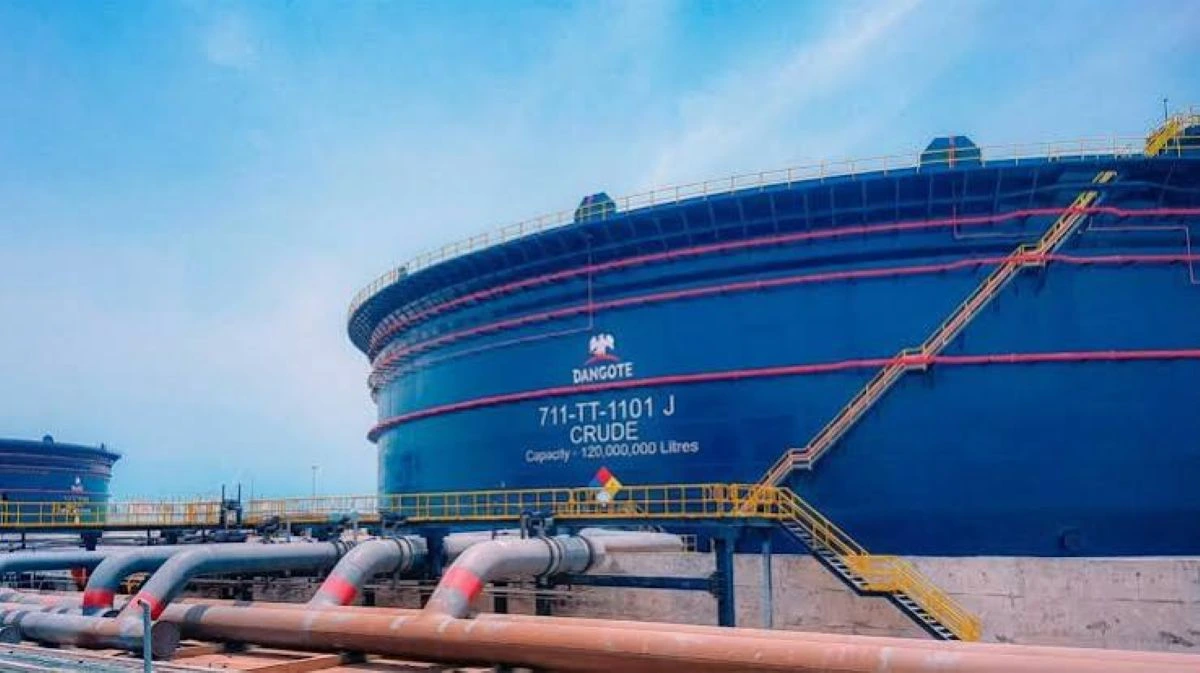
Higher crude oil output could strengthen foreign exchange inflows, support external reserves and improve macroeconomic stability, but sustained gains will depend on production security and wider economic reforms.
Nigeria’s efforts to sustain foreign-exchange stability and strengthen economic growth will depend partly on its ability to increase crude oil production, protect oil assets and translate export earnings into stronger external reserves and improved dollar inflows.
For the banking and finance sector, a sustained recovery in oil production could support foreign-exchange market stability, improve confidence in the naira and create a more predictable operating environment for businesses that depend on imported inputs and foreign-currency transactions.
Crude oil remains a major source of Nigeria’s foreign-exchange earnings, making production volumes and export receipts important to the country’s external position and capacity to meet foreign-currency obligations.
The link between oil production and financial stability is particularly important as Nigeria seeks to move from macroeconomic stabilisation towards stronger private-sector investment, improved household welfare and more inclusive economic growth.
According to PwC Nigeria’s report, “Unlocking Nigeria’s reform dividend: From macroeconomic stabilisation to inclusive growth,” the country entered the second half of 2026 from a stronger macroeconomic position, supported by greater foreign-exchange stability, moderating inflation, stronger external reserves, higher revenue mobilisation and increased capital inflows.
The report stated that Nigeria’s real Gross Domestic Product grew by 3.89 percent year-on-year in the first quarter of 2026, supported by information and communications technology, finance and insurance, construction and agriculture.
Headline inflation moderated to 15.91 percent in June, while the naira remained broadly stable at N1,379.68 per dollar. Gross foreign reserves rose by 38.3 percent year-on-year to $51.46 billion in June, providing a stronger external buffer and supporting confidence in the foreign-exchange market.
Despite these improvements, PwC noted that household affordability remained under pressure, private-sector financing conditions were still tight, and economic growth remained concentrated in a relatively narrow group of sectors.
These challenges underline the importance of sustaining foreign-exchange stability and improving financing conditions for businesses seeking to expand production, invest in infrastructure and create jobs.
Oil production and foreign-exchange stability
Nigeria’s dependence on crude oil exports for a significant share of its foreign-exchange earnings makes oil production an important factor in the performance of the naira and the accumulation of external reserves.
Higher production could increase export receipts, provided the additional volumes are sold and the proceeds are realised. This could strengthen dollar inflows and support the external position, particularly when international oil prices remain favourable.
For businesses and financial institutions, a more stable foreign-exchange environment could improve confidence in the market and make it easier to plan transactions involving imported goods, equipment and other foreign-currency payments.
However, the impact of higher production will depend on several factors, including international oil prices, production costs, export volumes and the extent to which additional earnings translate into foreign-exchange inflows.
PwC warned that the naira would remain exposed to movements in oil prices, capital flows and domestic foreign-exchange demand, despite the improvement in external buffers and ongoing market reforms.
This suggests that sustaining foreign-exchange stability will require more than higher oil output. Consistent reforms and effective management of external earnings will also be important.
Implications for banks and private-sector financing
Foreign-exchange stability is relevant to the banking sector because businesses operating in Nigeria rely on predictable currency conditions to manage costs, meet payment obligations and plan investments.
When foreign-exchange conditions improve, businesses may find it easier to plan transactions involving imported raw materials, equipment and other inputs. This could support business activity and investment, particularly in sectors that depend on imports.
Conversely, persistent currency uncertainty can complicate business planning and place pressure on companies facing higher import costs.
PwC identified tight private-sector financing conditions as one of the challenges confronting Nigeria’s economy despite improvements in macroeconomic indicators.
The report argued that the next phase of the reform process should focus on translating macroeconomic gains into stronger household incomes, higher productivity, more jobs and broader-based economic growth.
For banks, this highlights the importance of an operating environment in which businesses can access finance and use it productively. Improved foreign-exchange stability could support this process, although the report does not establish a direct link between higher oil production and lower bank lending risks.
Monetary policy, inflation, fiscal pressures and the availability and cost of credit will continue to influence financing conditions.
PwC expects monetary policy to remain relatively tight, with room for gradual interest-rate reductions if the decline in inflation is sustained. It also noted that government financing requirements and continued spending needs could maintain fiscal pressures.
Consequently, higher oil production could support the broader macroeconomic environment, but it would not automatically guarantee lower lending rates or wider access to credit.
Oil asset protection remains critical
The ability to sustain higher production depends partly on protecting oil infrastructure, reducing theft and preventing disruptions to production and transportation.
Tantita Security Services Nigeria Limited has been involved in pipeline surveillance and oil asset protection in the Niger Delta since 2022, working alongside other security outfits to secure oil facilities and address illegal activities.
The company has said its operations have contributed to improved pipeline security, reduced oil theft and increased economic activity in oil-producing communities.
Speaking on the sidelines of an award presented to Tantita by Blueprint Newspapers, the company’s Media Consultant, Paul Bebenimibo, said the company remained committed to supporting efforts to increase Nigeria’s crude oil production to 2.5 million barrels per day.
He attributed the company’s progress partly to the leadership and knowledge of the Niger Delta terrain possessed by its chairman, Government Ekpemupolo, popularly known as Tompolo.
Bebenimibo also disclosed that Tantita had deployed drones to monitor activities in the creeks and detect illegal operations.
Beyond surveillance, he said the company had employed more than 60,000 youths, paid monthly, and introduced skills acquisition programmes and other empowerment initiatives for members of host communities.
According to him, the combination of employment, skills development and community support had contributed to reducing criminal activities in parts of the Niger Delta.
The company has maintained that protecting oil infrastructure and creating economic opportunities in host communities are important to sustaining production and supporting national development.
For Nigeria’s financial system, the broader economic significance of these efforts lies in their potential to help sustain oil output and the foreign-exchange earnings associated with exports.
However, the extent of the financial benefits will depend on actual production performance, export receipts and the management of the resulting revenues.
Production targets and economic growth
The Petroleum and Natural Gas Senior Staff Association of Nigeria has also pledged to work with the Nigerian Upstream Petroleum Regulatory Commission to increase crude oil production to three million barrels per day by 2030.
The commitment was disclosed by the union’s new president, Bosun Olabiyi-Agoro, during a visit to the commission’s corporate headquarters.
According to a statement signed by Eniola Akinkuotu, head of media and corporate communications at NUPRC, the union also raised issues concerning workers’ rights to associate freely and contract staffing.
The production ambition comes as Nigeria seeks to strengthen economic growth and improve the contribution of the oil sector to national revenue and foreign-exchange earnings.
The Federal Government’s 2026 real GDP growth target ranges between 4.1 percent and seven percent in the supplied material, although forecasts differ among institutions.
The World Bank projects growth of 4.4 percent, while the International Monetary Fund forecasts 4.1 percent. PwC Nigeria estimates growth of 4.2 percent, while the Federal Government targets approximately 4.68 percent. The Lagos Chamber of Commerce and Industry has expressed a more ambitious outlook of up to seven percent.
These projections highlight the uncertainty surrounding the growth outlook and the importance of sustaining performance across major sectors, including oil.
Higher crude production could support economic activity through export earnings and government revenue. However, achieving stronger and more inclusive growth will also require improvements in productivity, infrastructure, access to finance and the performance of non-oil sectors.
Beyond oil production
While oil production remains important to Nigeria’s external position, PwC noted that the country faces domestic and external risks that could influence its economic performance in the second half of 2026.
These include food-price pressures, potential supply-side shocks, pre-election spending, geopolitical tensions, energy-market volatility and weaker global growth.
The report also emphasised the importance of improving domestic energy supply and distribution to ease cost pressures on households and businesses.
In April 2026, energy prices rose year-on-year, led by diesel at 43.67 percent and kerosene at 34.12 percent. Premium Motor Spirit prices increased by 23.69 percent, while liquefied petroleum gas rose by 10.43 percent.
PwC said higher diesel and petrol prices increase transport, logistics and business operating costs, while rising kerosene and cooking gas prices put pressure on household energy spending.
Expanding domestic refined-product supply, reducing distribution bottlenecks and sustaining foreign-exchange stability could help moderate some of these pressures.
For banks, improved macroeconomic conditions would be more beneficial if they translated into stronger business activity, more predictable operating costs and improved financing opportunities across productive sectors.

Hope Moses-Ashike is an Associate Editor, Banking and Finance, with more than a decade of experience reporting on Nigeria’s financial system and broader economy. She closely tracks market movements, monetary policy decisions, company disclosures, regulatory actions, economic indicators, and global developments, and interprets what they mean for businesses, investors, policymakers, and households. Her reporting helps readers understand complex issues such as inflation trends, foreign exchange market dynamics, interest rate decisions, bank performance, and investment risks. She also covers major international events and periodically travels to Washington, D.C., to report on the World Bank/IMF Spring and Annual Meetings. Her dedication to financial journalism has earned her multiple recognitions and invitations to high-level professional development programmes. She is an alumna of the International Visitors Leadership Programme (IVLP) in the United States and holds an Advanced Financial Journalism Certificate from the Press Association Training in London, UK. Her other notable achievements include completing the Lagos Business School CMC Programme, the Bloomberg Media Africa Initiative Programme, and a Master Class in Journalism at Rhodes University in South Africa.