African enterprises are being strangled by short-term dollar debt, over-leveraged balance sheets, and administrative red tape, threatening the continent’s ability to generate employment for its fast-growing youth population.
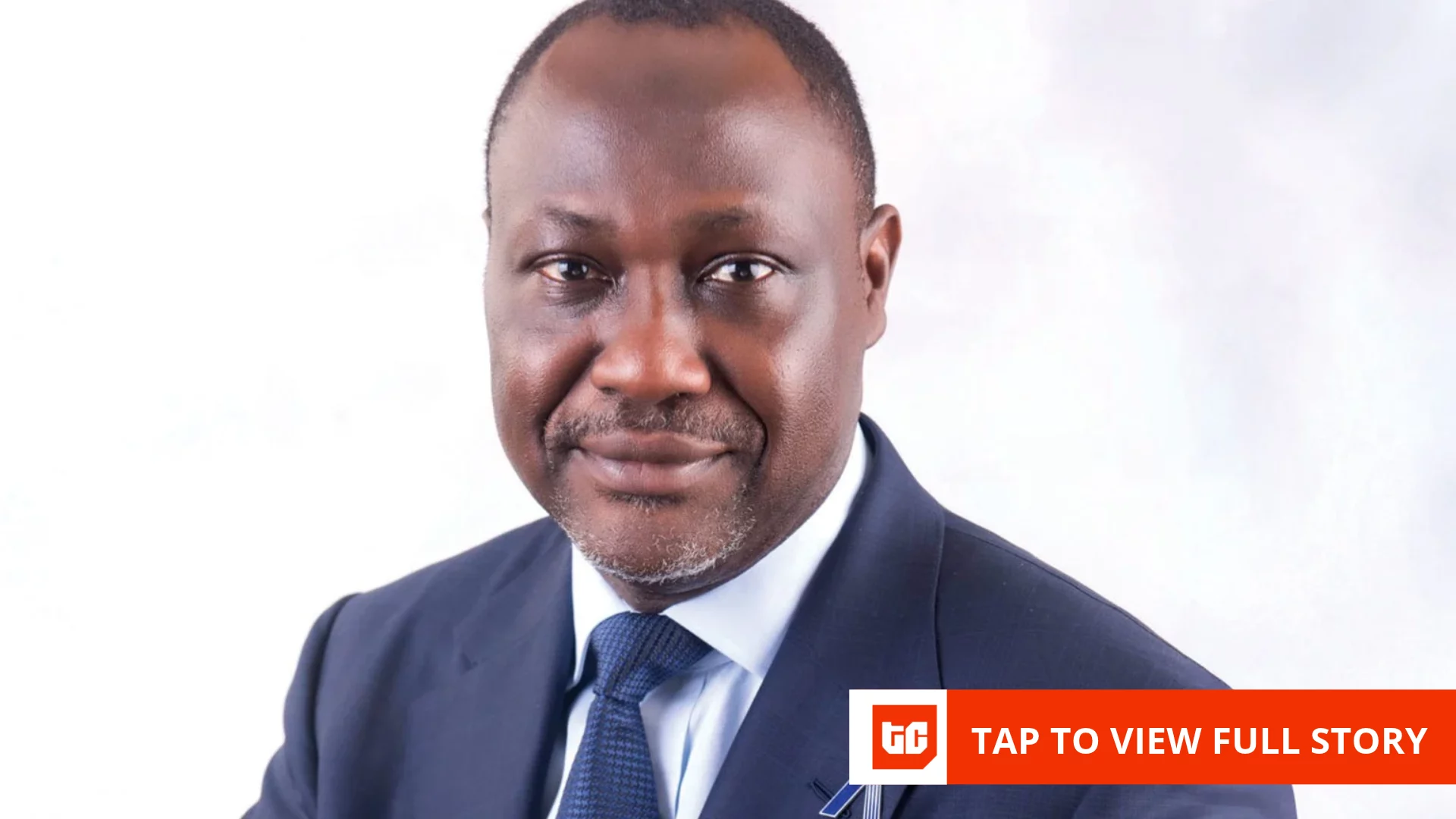
Delivering his address at the Africa Financial Summit (AFIS) in Luanda on Tuesday, Makhtar Diop, Managing Director of the International Finance Corporation (IFC), issued a blunt assessment of Africa’s structural capital mismatch.
Addressing central bank governors, finance ministers, and commercial bank executives, Diop argued that while the continent’s projected 4.5% economic growth is notable amid global headwinds, it remains insufficient to absorb millions of young entrants into the labour market.
With advanced economies cutting foreign aid budgets and domestic fiscal space severely constrained by inflation and public debt, Diop warned that Africa can no longer depend on external development assistance. Instead, domestic and international savings must be mobilised into productive enterprise through local-currency credit, long-term debt, and equity.
“When we talk to leaders across the continent, they all raise the same challenge: how can we create jobs for our very young population?” Diop said. “If we do not create those jobs, we risk the kind of situation we are already seeing today, fueled by anxiety over climate change, geopolitics, mental health, regional and global pandemics, and other pressures. These challenges weigh heavily on young people, who may take to the streets and demand change. So we need to focus totally and utterly on job creation.”
The real-sector capital mismatch
According to Diop, the fundamental barrier to African competitiveness is not a shortage of domestic savings, but the absence of viable financial instruments to intermediate those funds.
Drawing from consultations with private sector operators across the continent, Diop identified five structural distortions handicapping African businesses:
African firms are ‘forced’ to finance long-term capital investments with short-term bank facilities, undermining corporate durability. Enterprises across the continent are excessively leveraged because risk capital remains scarce at scale. “You can lend to a company, but you build a company with equity,” Diop noted.
Companies continue to incur debt in US dollars while generating revenues in depreciating domestic currencies. Subdued corporate bond issuance prevents local institutional capital, including pension funds, from backing domestic firms. Diop dismissed the narrative that domestic investors lack an appetite for African risk, noting that quality issuances are consistently oversubscribed.
Unpredictable regulatory changes continue to deter multi-year capital deployment. Beyond financial mechanics, Diop called for an administrative overhaul of African civil services, arguing that public bureaucracies often view the private sector with suspicion rather than as an engine of job creation.
“In many countries, public administrations still do not see themselves as being there to serve the private sector,” Diop said. “The feeling among the private sector in many countries is that businesses still have to struggle to make civil servants understand that they are there to serve the country and help create jobs. So, there is a cultural revolution that still needs to happen.”
To bridge the gap between statutory legislation and real-world implementation, Diop proposed establishing permanent national “Private Sector Councils.” These bodies would provide heads of state and finance ministries with a real-time feedback loop on how commercial laws are applied on the ground and recommend rapid corrective interventions.
Ditching collateral for cash flow and fintech
A core pillar of the IFC’s African agenda, Diop stressed, involves dismantling traditional collateral constraints for micro, small, and medium-sized enterprises (MSMEs). Historically, African commercial banks have rationed credit based on immovable assets such as real estate, thereby automatically excluding the majority of informal and emerging businesses.
Diop stated that the IFC is actively shifting its focus toward non-bank financial intermediaries, deploying fintech platforms and digital telematics to underwrite borrowers based on observable revenue rather than fixed property.
“We want to move from lending based on collateral towards lending based on cash flow,” Diop said. “Data is the new gold. That is why the fintech agenda is so important for IFC. By using new technologies and the fintech architecture, we will be able to reach many more MSMEs.”
To shield borrowers from exchange rate volatility, the IFC is also expanding its local-currency exposure. Around 35% of the corporation’s continental commitments are currently disbursed in local currencies, with internal targets to increase that share substantially.
Mobilisation targets
Under its “IFC 2030 Strategy,” the World Bank Group’s private-sector lending arm has re-engineered its balance sheet to act as a catalyst for private co-investment.
Five years ago, the institution managed roughly $33 billion in combined financing, mobilising $0.90 of commercial capital for every $1 of its own funds. Today, annual commitments have exceeded $100 billion, with a global mobilisation ratio of 3.4-to-1.
Africa accounts for approximately 25% of the IFC’s total global portfolio. While the corporation’s African mobilisation ratio has climbed from $0.60 to $1.50 per dollar deployed, Diop set a target to scale that ratio to 5-to-1 in the coming years.
To unlock offshore institutional liquidity, the IFC is reallocating personnel directly into major financial capitals, including London, New York, Tokyo, Frankfurt, and Sydney.
Dedicated investor-relations teams are tasked with channelling international sovereign wealth funds and institutional asset managers into African equity funds, infrastructure corridors, and clean energy projects.
Simultaneously, the Multilateral Investment Guarantee Agency (MIGA), the political risk insurance arm of the World Bank Group, has met its $25 billion guarantee target years ahead of its 2030 deadline, providing risk-mitigation instruments to reassure private investors entering volatile markets.
Deepening continental partnerships
Domestically, the IFC is backing the consolidation of African commercial banking under its Local Champions Initiative, helping indigenous and regional lenders fill the space vacated by multinational European and American banks that have exited the continent over the past decade.
In the host country, Angola, where the government has curbed public debt and brought inflation down to 8.43%, Diop confirmed he will sign two major direct-financing agreements with domestic agricultural companies this week to advance food security and reduce reliance on imports.
Regionally, the institution is collaborating with African multilateral partners. Diop noted that Ethiopis Tafara, IFC’s Vice President for Africa, is leading a joint initiative with Dr Sidi Ould Tah, President of the African Development Bank (AfDB), to coordinate with domestic sovereign wealth funds and institutional asset managers to mobilise internal long-term capital for trade and regional transport corridors.
As global liquidity tightens, the strategic direction outlined in Luanda signals an end to the reliance on traditional concessionary aid. For the IFC and its institutional partners, Africa’s economic future depends on structuring investable, local-currency instruments that convert domestic savings into real-economy employment.