…lists 4 approaches to fix power woes
…MAN launches Industrial Energy Cost Reduction Programme
The Federal Government will connect stranded power generation to industrial clusters such as Agbara through dedicated transmission lines, as part of efforts to cut energy costs for manufacturers.
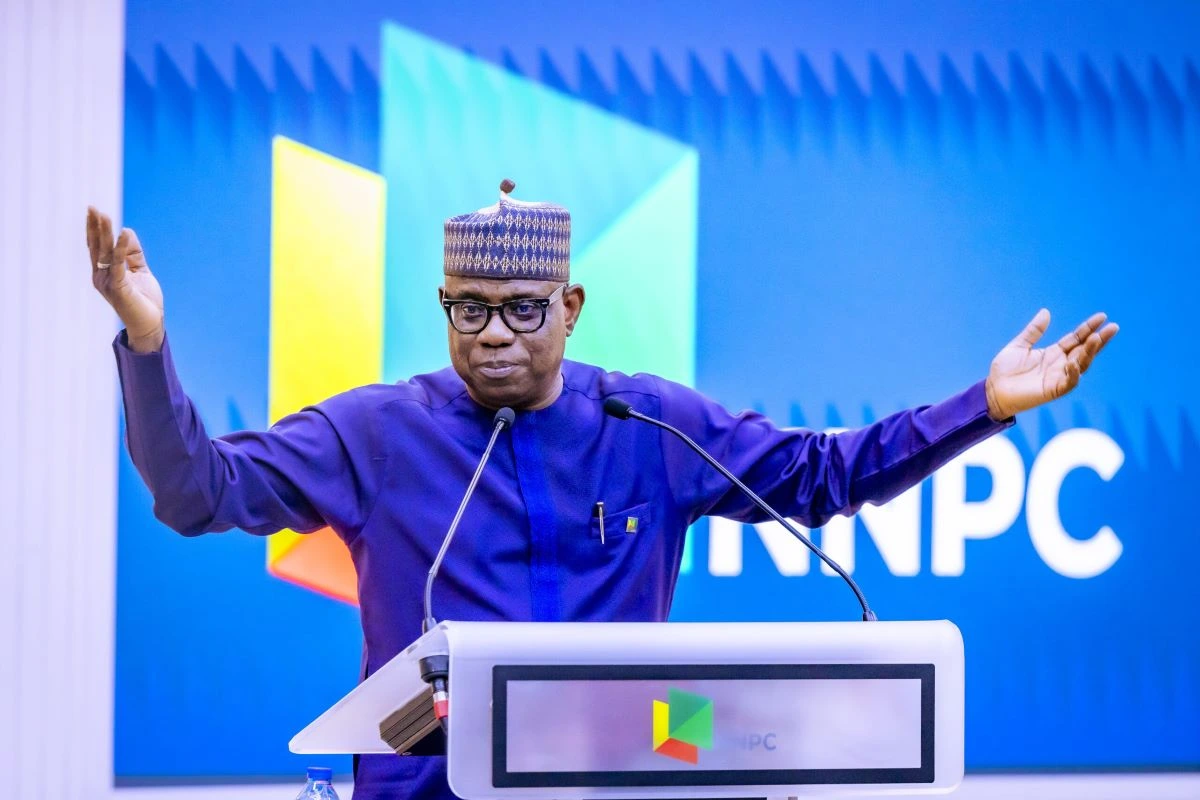
The plan is central to the asset optimisation pillar of its 4-pronged strategy to fix electricity supply, Joseph Tegbe, Minister of Power, said on Tuesday at the 2026 Manufacturers Energy Security and Energy Efficiency Summit in Lagos.
“We will continue to work with you to ensure that corridors where you play are served,” he said.
“This asset optimisation is how to use stranded power, for instance in Alaoji, and use an effective power transmission line to connect Agbara. That model is being worked out,” Tegbe added.
He listed the other three pillars as enhancing energy zones, strengthening sector liquidity and sustainability, and expanding infrastructure to meet future demand.
On energy zones, he said government has prioritised three economic corridors — Lagos-Ogun, Benin-Enugu-Port Harcourt and Abuja-Kaduna-Kano — to align generation, transmission and distribution with industrial demand.
On liquidity, he said the government has paid N1.23 trillion out of N3.3 trillion in legacy debts owed to generation companies through bonds, to stabilise the sector.
On infrastructure expansion, the minister said eight substations have been commissioned in the last two months, including Bokso, Agata, Mashi, Dan Aguki, Agapa, Ilorin, Birnin Kebbi and Walambe, adding 1,300 MVA, while a technical audit is underway to identify constraints and guide investment towards industrial clusters.
In his opening remarks, Ifeanyi Okoye, MAN president, said energy remains the oxygen of manufacturing, but high tariffs, erratic supply and heavy reliance on fossil fuels have made production exceptionally difficult.
“When energy expenses claim nearly half of a factory’s operating budget, competitiveness evaporates, retail prices skyrocket, and jobs are placed on the line,” Okoye said, noting that members have kept factories open against all odds but resilience should have limits.
He said MAN is moving beyond advocacy into implementation with the unveiling of the Industrial Energy Cost Reduction and Adoption Programme through its strategic vehicle, Manufacturers Power Development Company Limited (MPDCL), in partnership with GIZ and the Nigerian Energy Support Programme (NESP).
The programme, he said, will drive factory-roof solarization, battery energy storage systems (BESS), captive natural gas options and smart energy management networks to cut overheads.
Okoye added that the summit will focus on unlocking structured financing through long-tenured, low-interest capital instruments, climate funds, green investors and carbon credit pathways, stressing that 21st century transition cannot be financed with 30-day commercial loans.
He also called on regulators to sanction distribution companies that fail to meet the 20-hour obligation under Band A and to compensate affected factories, while optimizing net-metering and protecting self-generation.
John Aluya, chairman of MPDCL, said energy cost gobbles over 40 percent of operational expenditure for manufacturers who spend trillions on self-generation, shrinking margins and testing global competitiveness.
“It is the single most critical determinant of whether Nigerian industry thrives or vanishes under the African Continental Free Trade Area.” “This summit is designed to shift the paradigm from endless lamentation to aggressive, pragmatic execution.”
He said MPDCL was established to end energy poverty for manufacturers by engineering reliable, sustainable and affordable power solutions, adding that the summit will interrogate practical frameworks from rooftop solar PV and BESS to captive gas-to-power, smart networks and carbon monetization, with heavy emphasis on unlocking long-term debt and climate finance.

Josephine Okojie-Okeiyi is a journalist with over five years’ reporting experience. She writes on industry, agriculture, commodities, climate change, and environmental issues. She is fellow of Thomson Reuters Foundation and Bloomberg Media Initiative for Africa.