News
Nigerians can work in Germany without degrees — Envoy
Reading in data-saving mode. Read full article from Punch website.
Published 11/4/2026 12:48:56 AM
Nigerians can work in Germany without degrees — Envoy
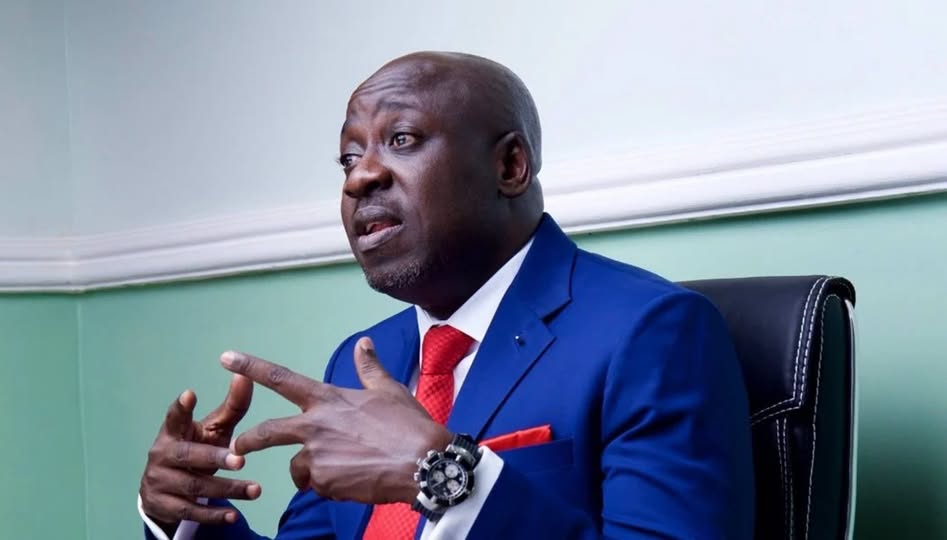
Nigeria’s Ambassador to Germany, Senator Ita Enang, has said Nigerians do not necessarily need university degrees to secure employment in Germany.
He noted that people with vocational and technical skills are also eligible for job opportunities in the European country.
Enang said skills in driving, hospitality, woodworking, welding and construction, among other fields, could qualify Nigerians for employment.
He urged prospective applicants not to limit their opportunities by assuming that only people with higher academic qualifications could work in Germany.
He stated this during an interview on Arise TV on Tuesday.
The ambassador said many Nigerians seeking employment in Germany were unaware of the opportunities available to people without university degrees because of their perception that extensive academic qualifications were compulsory.
“It’s not only graduates that are entitled to employment in Germany or in Europe. If you are proficient in driving and you’ve been driving there for a long time, you are proceeding even in the hospitality industry, even in any field, in the woodworks, in welding, in the construction, the vocational, all the vocationals,” he said.
He added, “This is what many Nigerians or many persons who take job there did not know, because they think that you must have a long, big certificate.”
Enang, however, identified visa requirements, professional qualifications and proficiency in the German language as some of the challenges facing Nigerians seeking employment in the country.
He said one of the issues he had encountered since assuming office was the relatively low number of Nigerians working in the German system, although those who had secured positions were occupying senior positions.
“This is the one that has engaged me more because one of the things I found was that we don’t have many Nigerians working in that system. But those who are working, are working at the highest class. And part of the problem is having visa to go and work there,” he said.
He explained that securing employment also required prospective workers to understand the German language and possess the necessary professional qualifications.
“Having visa to go and work there, you also must learn and know the language. If you learn and know the language, you must have the profession, not be in part of their profession,” he added.
The ambassador disclosed that he was personally learning German, saying he believed the language was important in understanding and integrating into the country’s system.
“I am really learning German. I’m really learning German language, the Dutch language,” he said.
Enang also commended Germans for their attachment to their language and called on Nigerians to preserve their indigenous languages, warning that some could become extinct without deliberate efforts to protect them.
He said, “They are very jealous of their language, which is correct. And I want Nigerians to, I want the Igbo man are not very jealous of their language. The Yoruba man are very jealous of their language.
“The Hausa’s are very jealous of their language. I want people like the Ibibio people, the Igbira, the Thieves, to be jealous and envious and guard their language, otherwise they will extinct. So I love the Germans for the respect and honour they give to their language.”
On efforts to create more employment pathways for Nigerians, Enang said he had been engaging with the German Africa Skilled Mobility Foundation and other relevant institutions to explore opportunities for Nigerian workers.
He said the engagements were aimed at identifying different routes through which Nigerians could access employment in Germany’s economy.
“And there is an agency that is called the German Africa Skilled Mobility Foundation. You know, I work with them to enable me work through the different pathways that we can have Nigerians able to work in that, be able to come in and work in that economy,” he said.
Enang also spoke about Germany’s changing immigration climate, acknowledging concerns over the growing electoral influence of anti-immigration political parties.
He said Germany needed to balance its immigration policies with its demand for workers, particularly as Nigeria and other African countries had growing populations of young people who could contribute to Europe’s labour market.
The ambassador disclosed that he had engaged German officials on the possibility of establishing a labour migration agreement with Nigeria, similar to arrangements the country had reached with India and Kenya.
He said the agreements provided structured pathways for citizens of those countries to take up employment in Germany.
“I asked them, how did you get the Indians to sign circular migration agreement, which allows them to have a certain number of their citizens employed in the economy? How did Kenyans have them sign the immigration agreement, the labour migration agreement, which allows them to have a certain number of people employed from their country into your economy?” he said.
Enang said he had obtained information on the arrangements and was exploring how Nigeria could benefit from similar opportunities.
He added that his most recent engagement on the matter was with Germany’s Ambassador for Migration Cooperation, Dr Ludwig Jung.
The envoy also said he had obtained the English version of Germany’s immigration and labour laws to better understand the legal requirements for Nigerians seeking employment.
He explained that his research extended beyond German legislation to include relevant European Union laws governing immigration and labour migration.
“So what I’ve done is look at, in addition to what I have, I gather from the institutions, I also take the law and read myself. And the laws are not just laws of Germany. There are laws of the European community, because immigration law and the labour laws mostly are European,” he said.
Enang said he was also working with the German Academic Exchange Service, known as DAAD, and several universities to examine their curricula and identify areas where Nigerian students and graduates could acquire skills relevant to Germany’s labour market.
According to him, the initiative would help Nigeria identify institutions offering relevant courses and explore ways to align its educational system with Germany’s, making it easier for Nigerians to pursue further training.
“What I’m doing with the DAAD now is working and examining their school and universities curricula in the different areas in which they need skills, which schools are teaching different skills in which areas,” he said.
He added that Nigerian graduates and undergraduates could benefit from opportunities to further their education in German universities and improve their professional qualifications.
“Which, if we modify our educational system and if we want to take our graduates and undergraduates or postgraduates into the schools, into their system, they can go into these universities, improve themselves and then there will be an easy transition,” he said.
The ambassador also advised Nigerians interested in working in Germany to consider learning the German language and applying for admission into institutions in the country as an alternative pathway.
He said qualifications obtained from German institutions would be assessed and compared with the country’s educational and professional standards.
“I’m coming to tell Nigerians that, look, you don’t need to come through all those routes. Just go learn the German language, seek admission, study in Germany, bring out whatever you learned. Don’t know the certificate, whatever certificate you bring out, it will be scaled and weighed and compared according to their education or qualification,” Enang said.
He stressed that his plans were not limited to facilitating the movement of Nigerian workers to Germany, but also included helping them acquire skills that could be transferred back home.
“I’m not only working on taking Nigerians to be able to go and work there, I want them to be able to acquire skills and also bring them down here,” he added.