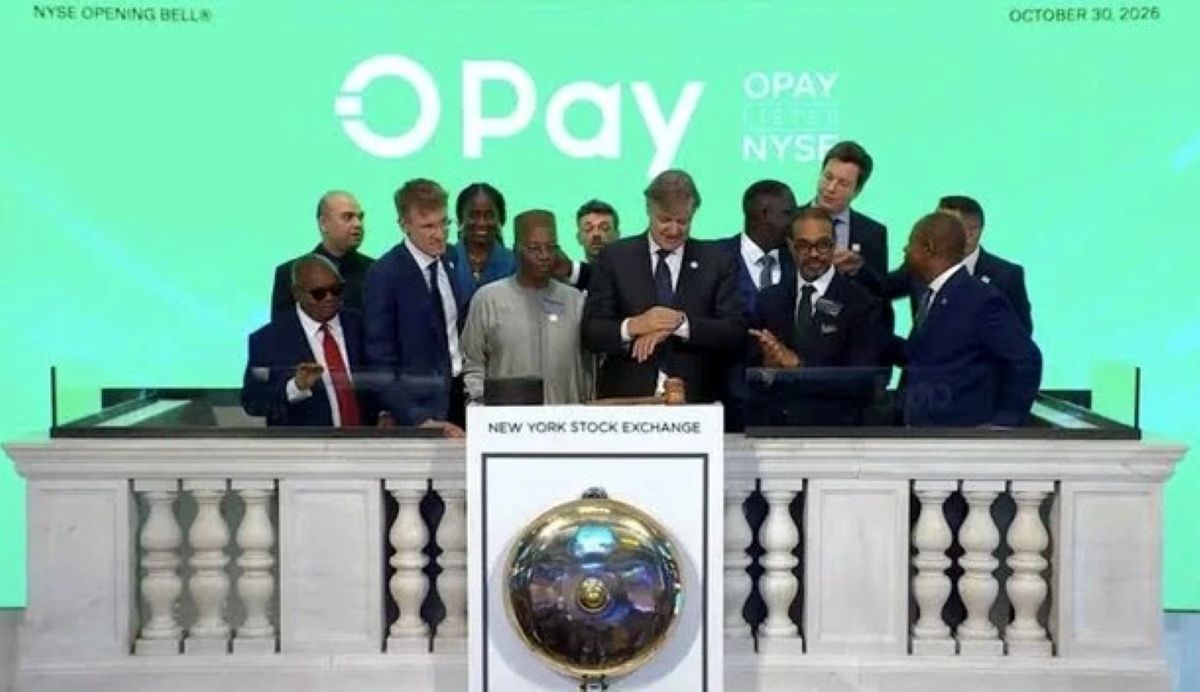
When OPay Limited announced it was terminating its underwriting agreement and shelving its planned New York Stock Exchange (NYSE) initial public offering (IPO), the company was careful with its language.
A regulatory inquiry in a jurisdiction “immaterial” to its core business had arisen.
Management expressed confidence the matter would be resolved satisfactorily in the near future.
After discussions with underwriters, the most prudent course, it said, was not to proceed at this time.
Read also: Exclusive: OPay halts $304m NYSE IPO over regulatory inquiry
The American Depositary Shares would not commence trading as scheduled. Operations in Nigeria and other markets remained unaffected, and the company’s long-term commitment to Nigeria was “unwavering.”
The statement answered the immediate question of why the much-anticipated $4 billion-valuation Wall Street debut had stalled.
It did not answer the deeper ones now circulating among investors, regulators and capital-market practitioners in Lagos: What really happened beyond the carefully worded press release?
Why did a company whose revenues, users and growth story are overwhelmingly Nigerian choose a primary foreign listing first?
And why does that choice look increasingly out of step with the dual-listing path successfully walked by Seplat Energy Plc, Airtel Africa Plc and Guaranty Trust Holding Company Plc?
Those three companies form the clearest modern playbook for Nigerian businesses seeking global capital without severing local roots. Their experiences raise uncomfortable questions about whether OPay’s original strategy and the sudden pause, reflects commercial prudence or a more complicated calculation about ownership, perception and market alignment.
The established path
In April 2014, Seplat Energy (then Seplat Petroleum Development Company) became the first Nigerian company to dual-list ordinary shares simultaneously on the Nigerian Exchange Limited (NGX) and the London Stock Exchange (LSE). The IPO raised approximately $535 million and valued the company at about $1.9 billion.
A decade later, at a 10-year anniversary event, Temi Popoola, NGX Group chief executive described the transaction as one of the market’s major landmarks. “If we were to look back to our market and tried to find landmarks, the last major landmark you will find in the last ten years is this transaction that we are celebrating today,” he said.
Seplat’s shares have delivered substantial returns to both Nigerian and international investors, and the company has repeatedly highlighted improved liquidity, brand credibility and access to capital as direct benefits of the dual structure.
Read also: OPay strengthens fight against digital fraud with AI, smart security tools
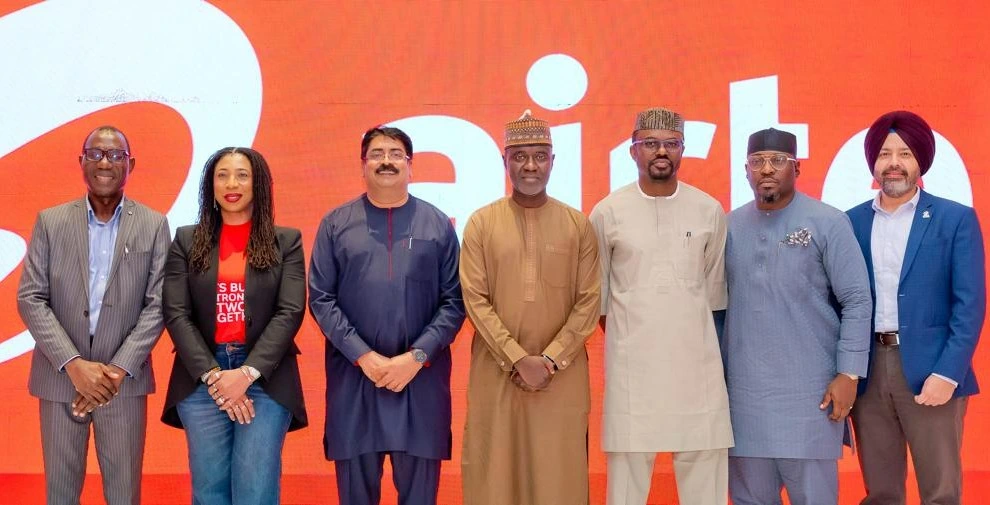
Airtel Africa took a sequential approach. It completed its primary IPO on the London Stock Exchange in June 2019, raising about $750 million, then listed on the NGX weeks later. The Nigerian listing turned the pan-African telecoms group into one of the exchange’s largest stocks by market capitalisation.
The dual presence gave global investors a familiar London venue while allowing Nigerian institutions and retail investors to participate directly in a business for which Nigeria is a critical market.
GTCO followed in July 2025, becoming the first West African financial institution to list ordinary shares simultaneously on both the NGX and the LSE main market. The transaction included an international capital raise of roughly $105 million and cancelled earlier global depositary receipts (GDR). It signalled that even large Nigerian banks now view dual listing of ordinary shares, not just depositary receipts, as viable and advantageous.
In each case, the companies retained meaningful local ownership pathways, satisfied domestic regulators and policymakers, and still accessed deeper international pools of capital. The dual structure also mitigated some of the currency-translation and emerging-market discount risks that pure foreign listings can amplify.
OPay’s different calculation
OPay’s original plan, disclosed in its Form F-1 registration statement filed with the U.S. Securities and Exchange Commission, was different. It sought a primary listing of ADSs on the NYSE under the ticker OPAY, targeting a valuation in the region of $4 billion.
Board and shareholder approval had been obtained for a secondary listing on the NGX only after the U.S. listing was completed, and only subject to market conditions and Nigerian regulatory clearances. The company explicitly warned that shares on the two markets might not be immediately fungible, potentially fragmenting liquidity and creating price differentials.
Read also: MOFI’s case for a Nigerian fintech listing now faces the OPay test
That sequencing global first, local later, drew quiet criticism even before the latest regulatory hiccup. Nearly 90 percent of OPay’s revenue in the first half of 2026 was generated in Nigeria. Its agent network, customer base of tens of millions and brand recognition are Nigerian. Yet the primary listing venue chosen was New York, with the domestic opportunity treated as secondary and conditional.
David Adonri, vice chairman of Highcap Securities, has been among the most direct voices on this point. “The Nigerian capital market has attained a level of depth and sophistication where companies with strong domestic fundamentals can successfully raise capital locally. For a company like OPay, whose operations, customer base and revenue are substantially rooted in Nigeria, a domestic listing would provide stronger alignment between the business and the investors who best understand its market realities,” he said.
Adonri’s argument is not merely patriotic. Nigerian institutional investors like pension funds, insurance companies and asset managers, understand the agency-banking model, USSD transactions, naira cash flows and the competitive dynamics with rivals such as Moniepoint and PalmPay in ways that many Wall Street analysts do not.
A local primary or concurrent listing would also allow ordinary Nigerians who use the platform daily to become shareholders, potentially reducing churn and strengthening the social licence to operate.
The questions the pause intensifies
OPay’s decision to terminate the underwriting agreement has sharpened those questions rather than resolved them. The company insists the regulatory inquiry is confined to an immaterial foreign jurisdiction and has no bearing on its Nigerian operations, financial condition or regulatory standing.
Market participants are less easily reassured. OPay’s ownership structure, founded by Chinese billionaire Zhou Yahui and backed by SoftBank, has long attracted extra scrutiny in Western markets sensitive to data privacy, governance and capital flows involving Chinese-linked entities.
Read also: Standard Bank eyes stake in OPay ahead of $4bn US IPO
Whether the current inquiry is related to those sensitivities remains unconfirmed, precisely because the company has provided limited detail.
What is clear is that a pure or primary foreign listing exposes Nigerian-rooted companies to geopolitical and regulatory risks that dual-listed peers have partly diversified.
Seplat, Airtel Africa and GTCO maintain continuous engagement with both Nigerian and international regulators and investor bases. Their dual status also sends a political signal of commitment that pure offshore listings can struggle to match.
NGX Group leadership has been explicit about this dimension. In engagements with the Presidency earlier in 2026, Popoola specifically cited OPay and other fintechs as companies whose domestic or dual listings would broaden investment opportunities for Nigerians and keep more of the value created in the local economy inside the domestic capital market. “While we encourage free and open markets, let’s make sure our locals can also benefit. As they list abroad, they should also list in our country,” he has said in related contexts.
The pause now creates an unexpected window. With the NYSE process suspended, OPay could, in theory, revisit sequencing. A primary or concurrent NGX listing, followed by an international secondary listing once the regulatory matter is cleared, would align more closely with the Seplat-Airtel-GTCO playbook.
It would also address the perception problem that a company built on Nigerian consumers, infrastructure and regulatory accommodation is delivering its primary public-market upside first to foreign investors.
Read also: OPay: Nigerian listing plans echo NGX Group’s call for homegrown giants to list locally
What history suggests
History offers few clean precedents for major Nigerian operating companies achieving lasting success through pure foreign listings without a meaningful domestic presence.
Jumia, often cited as an African tech success on the NYSE, was never a pure Nigerian corporate and has not dual-listed on the NGX.
IHS Towers listed in New York with heavy Nigerian exposure but similarly remained outside the local exchange.
The companies that have sustained investor confidence across cycles while retaining strong Nigerian identities have almost all chosen some form of dual structure.
OPay’s management continues to emphasise that the current development should not be misconstrued as a reflection on its business performance or integrity. That may prove true.
Regulatory inquiries can be resolved. Markets can reopen. Yet the episode has already illustrated the risks of a strategy that prioritises foreign capital and visibility while treating the home market as an afterthought.
Read also: OPay IPO, MNT-Halan listing put Africa’s start-up exits in focus
The dual-listing playbook refined by Seplat in 2014, extended by Airtel Africa in 2019 and reinforced by GTCO in 2025 remains available.
Whether OPay ultimately follows it, or continues to treat the NGX as a secondary consideration, will say as much about its long-term view of Nigeria as any press statement about unwavering commitment.
For now, the hard questions remain unanswered and the silence beyond the official statement is growing louder.

Royal Ibeh is a senior journalist with years of experience reporting on Nigeria’s technology and health sectors. She currently covers the Technology and Health beats for BusinessDay newspaper, where she writes in-depth stories on digital innovation, telecom infrastructure, healthcare systems, and public health policies.