itel Energy has cautioned Nigerian consumers against improper solar installations and incorrect equipment configuration, warning that avoidable technical errors could lead to system faults, additional costs and unreliable power supply for households and businesses.
The warning was issued during Nigeria Energy Week in Lagos, where the company showcased its products and outlined its installation requirements and after-sales support process.
Emmanuel Kumuyi, itel Energy’s Country Technical Support Manager, identified overloading, inadequate protection systems, installation mistakes and incorrect matching of solar panels, inverters and batteries as common causes of equipment problems.
He advised consumers to engage qualified engineers and ensure their systems are properly configured before installation.
“The way to avoid this is to ensure that you get a good brand, get the right configuration for your installation and, at the same time, what is important is to get a brand that has the right after-sales service support that can guide you even before you carry out this installation,” Kumuyi said.
The cost of getting solar installation wrong
For households and businesses investing in alternative power, installation errors can turn an already significant purchase into an additional financial burden. Choosing incompatible components or exceeding a system’s capacity can compromise performance and potentially result in repair or replacement costs.
Itel Energy said customers can report faults through its complaint-handling process. Call-centre agents document complaints and refer them to online engineers for assessment. If the issue cannot be resolved remotely, a field engineer is assigned to determine the appropriate corrective action.
The company said repairs or replacements depend on the warranty applicable to the product. It has also committed to resolving reported faults with its solar energy products within 48 hours through repair or replacement under its after-sales service offering.
Lucky Ovenseri, itel Energy’s National Distributor Manager, said the company has distribution coverage across all 36 states, with showrooms in Lagos, Port Harcourt and Abuja, as well as dedicated energy after-sales centres.
He added that the company operates a replacement policy under which customers may receive another unit while their faulty equipment is being worked on.
Why distributors depend on after-sales support
Rotimi Thomas, Chief Executive Officer and Co-Founder of SunFi, a distributor of itel Energy products, said after-sales service plays an important role in maintaining trust between distributors and customers.
“The 48-hour resolution commitment from itel Energy is very important for us as a distribution platform because we don’t make the product. When a consumer buys a product through SunFi, they’re actually buying a trusted service,” Thomas said.
He explained that the ability to repair or replace faulty equipment promptly gives customers greater confidence when making the switch from petrol and diesel generators to solar power.
Thomas advised buyers to consider more than a product’s warranty duration. They should also understand the manufacturer’s complaint-handling process, the terms governing repairs and replacements, and the support available when a problem occurs.
Financing options could widen access
Affordability remains another challenge for prospective solar users. Thomas said high interest rates and rising prices have made it difficult for some households and businesses to pay the full cost of solar and energy-storage systems upfront.
SunFi offers payment plans that allow customers to make an initial payment and spread the outstanding balance over periods ranging from three to 24 months or longer.
Thomas estimated that between 30 and 40 per cent of customers still seek payment plans, underscoring the potential importance of financing options in making solar solutions more accessible.
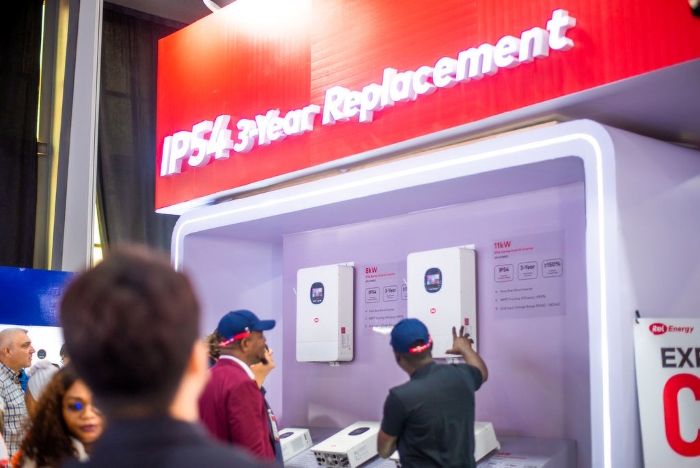
At Nigeria Energy Week, itel Energy showcased its newly launched PowerTank 1000 and IP54 11kW Hybrid Inverter for residential and commercial applications.
As more consumers evaluate alternatives to conventional generators, the company’s message highlights three considerations for solar investment: selecting compatible equipment, ensuring professional installation and understanding the support available after purchase.