
I went to Cuba for the salsa, the cigars, the rum and those gorgeous vintage cars. I never imagined that, somewhere between admiring the colourful streets and enjoying the Caribbean sunshine, I would receive an unexpected lesson in money management. Looking back, I can laugh about my experience. But at the time, discovering how much I might have been overpaying left me wondering how much my ignorance had already cost me.
Cuba had a way of making me feel as though I had stepped into a film. Imagine standing in a sun-drenched plaza, a Cuban cigar in your hand, the warm Caribbean breeze brushing against your skin, and music floating through the air. Around you, buildings painted in faded yellows, dusty pinks and weathered blues stand proudly, their grand colonial facades and ornate balconies carrying stories from another century.

Then comes the rumble of an engine. You turn to see a cherry-red vintage car gliding past, followed by a bubblegum-pink beauty that seems to have driven straight out of the 1950s. Everywhere you look, vibrant colours, rich history and lively movement bring the streets to life
And the cars! Oh, the cars!

Later, I would find myself riding in a neon-green convertible along the coast, the wind whipping through my hair as the blue Caribbean Sea stretched beside me. I felt wonderfully alive. Cuba was giving me everything I had hoped for: beauty, music, history and the thrill of discovering somewhere different.
I was so captivated by everything that I paid little attention to the money in my purse.
I visited Cuba in 2019, when the country had two official currencies: the Cuban convertible peso, known as the CUC, and the Cuban peso, known as the CUP. To an unsuspecting tourist like me, this arrangement was a recipe for confusion.
I was carrying CUC notes, commonly used by visitors because that is what the banks give you in exchange for your USD notes. The CUC notes looked different from the CUP notes I would later encounter. CUC notes featured monuments, while CUP notes carried the faces of Cuban national heroes, including José Martí and Camilo Cienfuegos. But at the time, I barely noticed the distinction. Money was money, or so I thought.
Whenever I needed to pay for something, I reached into my purse, brought out my CUC notes and settled the bill. I was enjoying my holiday and had no reason to suspect my wallet was quietly making it more expensive than necessary.
Then, one time, I was given change in a currency different from the familiar CUC. I looked at the notes in my hand and immediately felt that something was wrong. These were not the notes I was accustomed to using. I did not recognise them, and I was not about to walk away with money I did not understand. So, I rejected the change. Imagine my surprise when the cashier and another customer explained to me that the notes were perfectly valid Cuban money!
That was when I got my crash course in Cuban economics. The country had two official currencies: the Cuban convertible peso (CUC), and the Cuban peso (CUP). I was carrying CUC notes, commonly used by visitors. The notes I had just rejected were CUP notes, used by the locals.
I was relieved, slightly embarrassed and suddenly very curious. How had I been in Cuba for four days without understanding something so fundamental to paying for things?
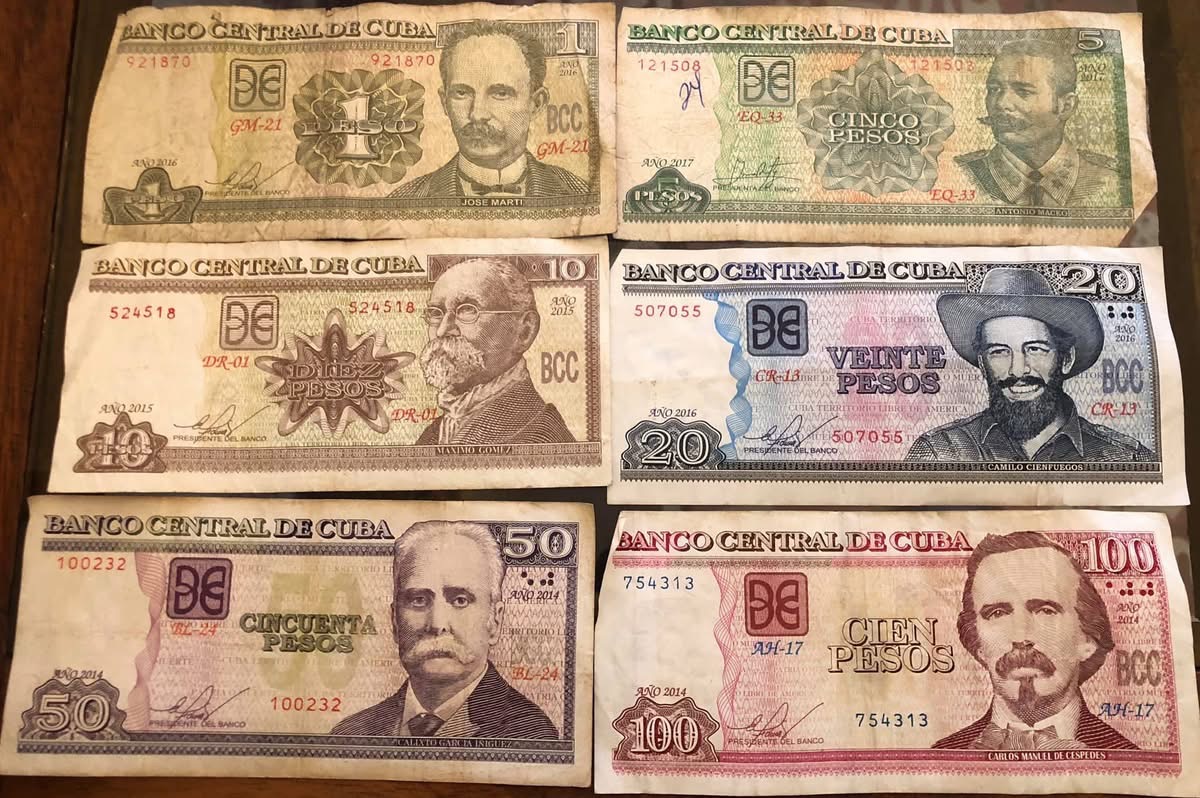
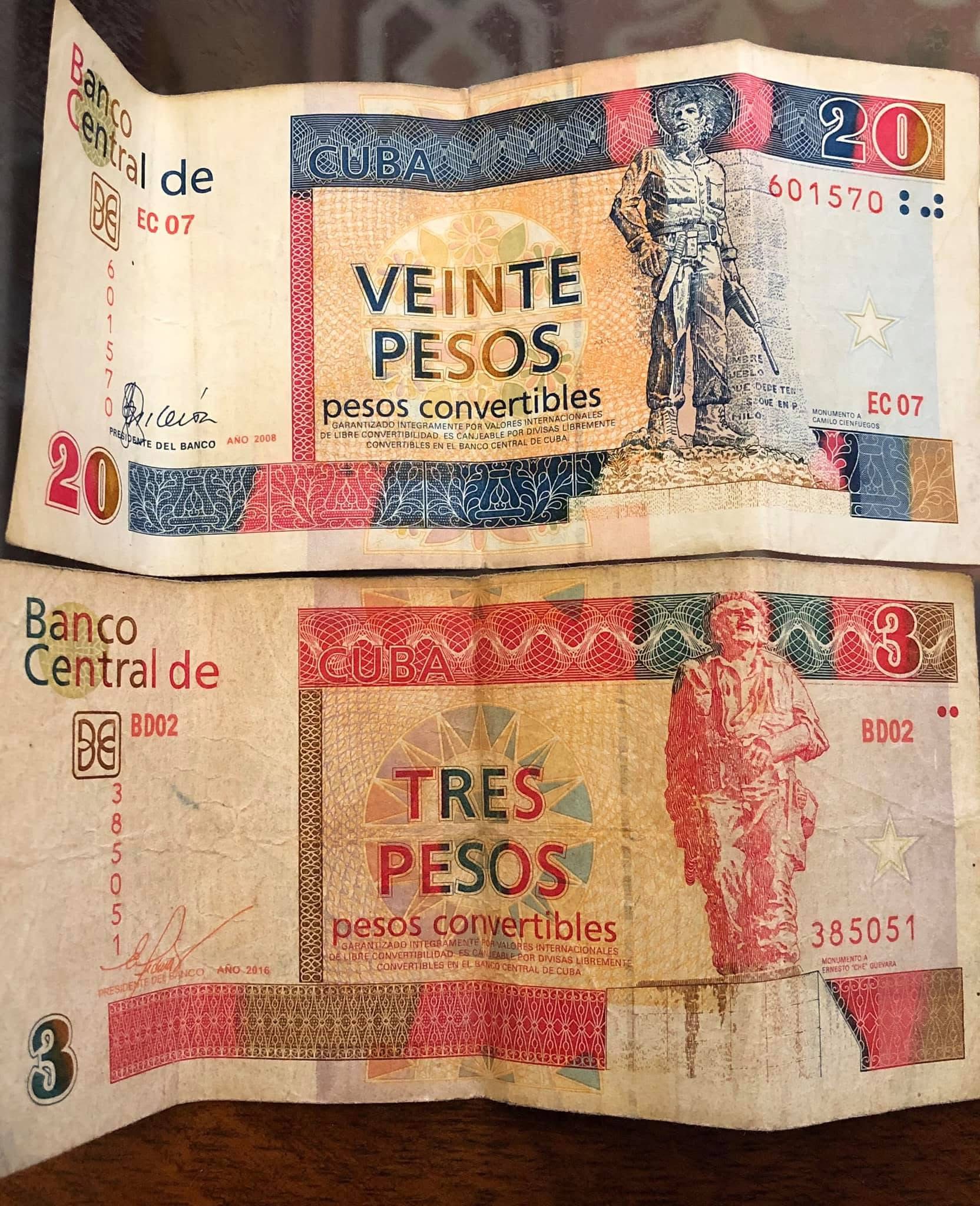
The top notes (CUC) have monuments and are for tourists. The bottom notes (CUP) have national heroes and are for locals.
Suddenly, I began wondering how much I had already spent and how I had been paying far more than necessary. I recalled tipping a tour guide 10 CUC. He had been delighted, even asking me whether I was sure I wanted to give him that much. At the time, I thought I was simply being generous. But after learning that the commonly used conversion was around 25 CUP to 1 CUC, I understood why he might have been so pleased. My tip was equivalent to about 250 CUP. I did not regret rewarding someone for good service, but I was beginning to understand how easily a visitor could spend money without appreciating its value.
Then came the experience that really opened my eyes. I had been eating at a particular local food joint and paying 5 CUC for my meal because the menu read $5. I always enjoyed the food and always handed over 5 CUC because 1 USD was equivalent to 1 CUC. But now that I knew about CUP, curiosity got the better of me.
On my next visit, I decided to observe before ordering. A local customer arrived ahead of me. I waited and watched what he ordered, how much he paid and which notes he handed to the cashier.
Five CUP.
Five CUP?
I watched him complete his transaction and leave. Then I stepped forward and ordered the same meal.
When the time came to pay, I brought out my newly acquired CUP notes and handed over 5 CUP. The cashier raised an eyebrow. I pointed to the menu and explained that I had just watched the customer before me order the same meal and pay the same amount. I was not guessing. I got my meal for 5 CUP as against the 5 CUC I had always paid.
At the commonly used conversion rate of 25 CUP to 1 CUC, my previous payment of 5 CUC was equivalent to 125 CUP. I had been paying 125 CUP for a meal that I had just watched a local buy for a mere 5 CUP
Twenty-five times the price!
I was stunned. Part of me wanted to laugh at the absurdity of it all; another part wondered how many other times I had paid without understanding the difference. I had been so confident, so comfortable reaching into my purse and handing over my money. Yet I had missed a detail that could make a significant difference to my spending. That local joint visit became one of my most memorable Cuban experiences. Not because of the food, but because of the lesson I had been taught.
Of course, my story is about Cuba in 2019. The currency system has since changed. On 1 January 2021, Cuba discontinued the CUC as part of a currency reform, leaving the Cuban peso (CUP) as the sole official currency. The two-currency arrangement that caught me off guard belongs to that chapter of the country’s history.
What remains with me, however, is not just the currency confusion. I remember Cuba’s faded pastel buildings, the vintage cars gleaming beneath the sun, the music in the streets and the thrill of driving along the coast in that neon-green convertible. The country was vibrant, beautiful and full of contrasts.
But whenever I travel somewhere new, I remind myself to ask questions, understand the local currency, and never assume I know how things work.