×
Tech

Airtel Nigeria puts its network map in subscribers’ hands

Airtel Nigeria's open network to show nearby 4G, 5G sites

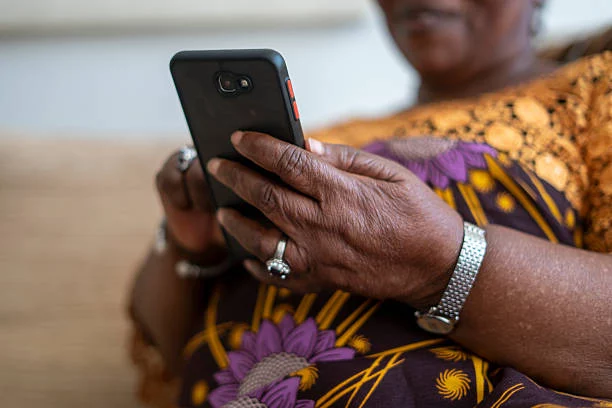
Airtel Nigeria, the country’s second-largest network operator, now lets subscribers see nearby 4G and 5G network sites, including those undergoing upgrades and planned installations, through a new feature on the My Airtel Africa app. 

The feature, called Airtel Open Network, also allows customers to report poor network experiences directly to the telecom operator. Launched in Lagos on October 30, 2026, the platform displays network sites within a 500-metre radius of a subscriber’s location. It uses visual indicators to distinguish active sites, those being upgraded, and locations where new sites are planned.

Nigeria is the first of Airtel Africa’s 14 operating markets to introduce the feature. By combining network visibility with customer feedback, Airtel hopes to identify coverage gaps and direct engineering attention to areas where subscribers experience poor connectivity.

The move tackles a persistent problem in Nigeria’s telecoms market: network coverage does not always translate to reliable connectivity. Airtel hopes greater network visibility and direct customer feedback will help identify coverage gaps and improve service quality.

A Nigerian Communications Commission (NCC) assessment reported by TechCabal found that 78% of major roads had mobile signals, but only about 42% offered stable, high-speed 4G or 5G connectivity. The report also identified more than 120 critical black spots where mobile signals were completely unavailable.
Speaking at the launch, Dinesh Balsingh, Airtel Nigeria’s CEO, said the platform was designed to make network information more accessible while giving customers a direct channel to communicate service problems.

Trust, he says, grows when customers can see what is happening and know that their concerns are being heard. “With Open Network, we are giving customers greater visibility into our network and a more direct way to tell us where their experience falls short,” Balsingh said.

Airtel said it would use feedback submitted through the platform alongside its infrastructure investments to guide network upgrades. This could help its engineering teams identify locations requiring improvements in coverage, capacity and reliability.

The initiative also gives subscribers a way to report localised problems that may not be apparent in broader network performance assessments.

In his remarks, NCC Executive Vice Chairman, Aminu Maida, said accessible network information could complement the regulator’s efforts to improve service quality.

“The Commission’s assessment of service quality will continue to be guided by evidence and the standards that apply across the industry,” Maida said.

Maida wants operators to continue improving their services beyond minimum regulatory requirements, particularly by addressing persistent connectivity challenges.

However, seeing a nearby mast does not guarantee reliable reception. Airtel acknowledged that indoor coverage, building structures, handset specifications, and network congestion can affect individual subscribers’ experience.

The NCC’s network quality assessment framework also considers factors such as dropped calls, network congestion, availability and data speeds, showing why the number of nearby sites alone cannot determine service quality.

Airtel said Open Network would not automatically resolve network problems but would make it easier for customers to understand available infrastructure and report service gaps. The company plans to roll out demonstrations and user guides across digital, retail, and traditional media channels in the coming weeks.


§

Airtel Nigeria generated $1.01 billion in revenue between April and September 2026, crossing the $1 billion mark for the first time since the same period in 2022, when it recorded $1.04 billion, according to the company’s financial statements.

Its mobile money subsidiary, SmartCash PSB, also recorded its highest-ever half-year revenue of $10 million, as efforts to grow its banking business through a zero-fee model and a 15% annual interest rate on savings deposits begin to gain traction.

The results show Airtel Nigeria, with 61.7 million subscribers, recovering from the currency volatility that weighed on its earnings after the naira was devalued in 2023. Since 2025, improved macroeconomic conditions, including a more stable naira and regulatory approval for market-reflective telecom tariffs, have supported revenue growth across the sector. MTN Nigeria, for instance, reported a 23.6% jump in nine-month revenue to ₦4.61 trillion ($3.42 billion) in 2025.

“Higher reported currency growth compared to constant currency growth was due to the appreciation in the Nigerian naira from a weighted average NGN/USD rate of 1,553 in prior period to NGN/USD 1,360 in current period,” Airtel Africa said about its Nigerian unit.  

Airtel Nigeria’s revenue growth of 44.62% helped push its average revenue per user up by 27.27%.

Beyond currency growth, data consumption also supported the growth. Airtel Nigeria’s smartphone penetration reached 56.8%, while monthly smartphone data usage per customer increased to 16.7GB from 12.7GB in the corresponding period.

The improved performance in Nigeria contributed to Airtel Africa’s overall revenue, which rose by 28.20% to $3.82 billion. The group’s profit for the period also increased by 20.21% to $452 million.

“Reported currency revenue growth was higher than constant currency growth reflecting currency appreciation in Nigeria and Zambia,” Airtel Africa said.

However, rising operating costs are beginning to weigh on margins. Airtel Africa said recent geopolitical developments, which have resulted in a doubling of fuel prices in Nigeria, are putting pressure on its earnings.

“Our cost efficiency programme mitigated these pressures, limiting the sequential margin decline to approximately 130 bps, from 58.8% in Q1’27 to 57.5% in Q2’27. Operating free cash flow increased by 28.2% to $409m driven by strong underlying EBITDA growth, despite significantly higher capex during the period,” the company said.

SmartCash PSB, Airtel Nigeria’s mobile money subsidiary, saw its customer base increase by 110% to 4.2 million, while revenue grew by 150% to $10 million during the six-month period.

Despite the growth, SmartCash remains the smallest of Airtel Africa’s mobile money operations, contributing just 1.19% of the group’s revenue. Its latest performance, however, suggests that Airtel Nigeria’s efforts to build a more competitive mobile money business are beginning to produce results.

In March 2026, SmartCash said it had crossed nearly three million active users as it doubled down on a zero-fee banking model and a 15% annual interest rate on savings deposits.

SmartCash generated just $6 million in revenue as of December 2025, according to Airtel Africa’s nine-month financial statements. Its latest $10 million revenue represents a 66.67% increase over that figure.

The growth comes as Nigerian telecom operators seek to strengthen their mobile money businesses and capture a larger share of the country’s digital financial services market.

In August 2026, MoMo PSB, MTN Nigeria’s mobile money subsidiary, migrated to a new platform powered by Alipay+, upgrading its fintech infrastructure. Revenue from its core mobile money business subsequently increased by 102.2%, while wallet balances more than quadrupled to ₦43.8 billion ($32.54 million).

But SmartCash still has considerable ground to cover to catch up with established players. OPay, Nigeria’s mobile money market leader, generated $467.06 million in revenue in the first half of 2026.

Web hosting by Somee.com