…faces N400bn revival cost
When the Federal Government initiated the Abuja Millennium Tower project in 2005, it envisioned a landmark cultural complex that would showcase African heritage, attract international visitors and position the capital as a major destination for tourism and entertainment.
The project was slated to be completed by 2009, however, twenty-one years after the contract award, the ambitious tourism and cultural complex remains unfinished, with construction reportedly stalled at about 40 percent, leaving a costly public project incomplete despite successive government spending.
Findings by BusinessDay showed that funding shortages, repeated contract revisions, foreign exchange exposure and gaps in publicly available expenditure records have contributed to the project’s prolonged delay and escalating completion costs.
In a month-long investigation, BusinessDay traced the financial history of the project, tracking government spending, budget implementation records, contract details, and open-source materials to establish the expenditure on the Tower.
While cross-checking these records, our correspondents identified approximately N36.77 billion in payments traceable to the project.
This comprises N35.75 billion, which Salini Nigeria Limited said it had received by December 2015, and another N1.02 billion in three transactions recorded between December 2018 and March 2022.
Despite this payment, the contractor raised issues relating to exchange-rate differences, imported materials, customs duties, price variations and delays.
It was gathered that successive contract revisions have driven up project costs and outstanding liabilities as well as the latest completion estimate.

BusinessDay’s visit to the site also revealed how little progress had been made on the project. Few workers were present, alongside security personnel. The basement car park, designed to accommodate more than 1,000 vehicles, was being used by the Central Bank of Nigeria, while the project manager was reportedly supervising another project in Niger State.
In July, FCT Minister Nyesom Wike appealed to President Bola Tinubu to intervene in completing the tower. He said reviving the project would cost between N300 billion and N400 billion.
How N53bn project now costs N400bn
Former President Olusegun Obasanjo awarded the contract to Salini Nigeria Limited on November 17, 2005, at an initial cost of about N53.12 billion, with completion scheduled for April 2009.
The contract was subsequently revised to N69.35 billion, with the completion date extended to October 2014.
A government project record sighted by BusinessDay attributed the increase partly to an expansion of the parking provision from 600 to 1,200 spaces and changes to the tower base and structure.
Read also: NDDC officials inspect 600m bridge project in Bayelsa
Designed by Italian architect Manfredi Nicoletti, the complex is located in Abuja’s Central Business District. It comprises a 170-metre tower supported by three converging concrete pillars, with 72 rooms, a revolving restaurant and an observation deck about 110 metres above ground.
An eight-storey steel-and-glass pyramid was also planned to accommodate an African art museum, an auditorium with seating capacity of between 1,200 and 2,000, exhibition halls, conference facilities and a public library.
Other proposed facilities include shops, gymnasiums, an indoor swimming pool, sports facilities and underground parking. The complex was also designed to include a national square and a connecting underground commercial tunnel with shops on both sides.
The project’s financial and physical progress, however, fell behind its original timetable.
What the records show about money paid
BusinessDay analysed budget implementation reports covering 2011, 2012, 2013 and 2015, alongside project documents prepared by Salini Nigeria Limited and payment entries on GovSpend.
The 2011 budget implementation report recorded that N1.4 billion was released and utilised for the project, bringing cumulative financial commitment to N28.38 billion. The report put physical completion at 25 percent.
In 2012, N2.5 billion was appropriated, released and utilised, taking cumulative financial commitment to N33.13 billion and reported completion to 32 percent.
The 2013 budget implementation report recorded N1.48 billion released and utilised from the N2 billion appropriated. By the end of that year, cumulative financial commitment had risen to N34.61 billion, while reported physical progress stood at 37.1 percent.
A subsequent 2015 budget implementation report stated that N600 million was appropriated, released and utilised that year. It put cumulative financial commitment at N35.75 billion and project completion at 40 percent. The report also said work had stopped because of funding difficulties.
Read also: Abandoned $857m loan-funded projects cast shadow on Tinubu’s $21.7bn borrowing plan
In a document reviewed by BusinessDay, N35.75 billion had been disbursed to the contractor, with the last payment dated December 2015, and outstanding payments of N529.42 million.
GovSpend records analysed by BusinessDay show three other payments made to Salini, N452.38 million in December 2018, N26.32 million on March 24, 2022, and N536.93 million, also dated March 24, 2022.
Contractors demand additional cost
A letter dated December 19, 2023, addressed to the executive secretary of the Federal Capital Development Authority (FCDA) and sighted by BusinessDay, refers to a Bureau of Public Procurement (BPP) certificate of no objection issued on December 13, 2021, for Revised Estimated Total Cost No. 3 (RETC No. 3).
The revision increased the contract sum to N114.5 billion. However, funding shortages prevented FCTA from securing Federal Executive Council approval for the revised contract and facilitating the resumption of work.
The December 2023 letter stated, “Due to several factors, particularly the lack of funds for the project in subsequent budgets, the FCTA could not process the Certificate of No Objection to the Federal Executive Council for approval of the RETC No. 3 and facilitate the resumption of the works.”
The October 17, 2011, agreement provided for payments in naira, with 70 percent of the contract sum subject to adjustments for exchange-rate movements.
The euro reference rate increased from N351.78 to N956.89 by December 2023, significantly raising the naira cost of foreign-sourced materials and equipment.
The remaining 30 percent was subject to adjustments for increases in local material and labour costs, alongside customs reimbursements and additional preliminary costs arising from extensions to the project timeline.
Salini, the contractor, subsequently sought another review of the contract, citing subsidy removal, exchange-rate liberalisation, imported finishing materials and foreign-currency sourcing costs.
Read also: We’re going beyond project completion to measuring their economic impact – LASG
The contractor argued that the naira-denominated payment arrangement exposed it to additional foreign-exchange risks.
“With the revised contract sum and all payments wholly denominated in naira, Salini Nigeria Limited bears the additional risk of sourcing the required foreign currency from a highly unstable window, with attendant additional bank charges,” the company said.
It also rejected the FCTA’s proposed 50:50 foreign-to-local currency payment ratio, arguing that outstanding works required approximately 85:15, compared with the contractual 70:30 arrangement.
Salini said it had identified original equipment manufacturers and begun preparations to remobilise workers and resources locally and abroad, but required financially viable terms to proceed.
The FCTA subsequently proposed another contract review through an FCDA letter dated December 12, 2023, with reference number DPB/PJ/1775/95.
The stalled complex reflects a wider problem of abandoned public infrastructure across Nigeria, including Abuja’s unfinished National Library and other projects whose completion costs have risen under successive administrations.
For the Millennium Tower, the N400 billion now being sought represents a proposed revival funding requirement, not an independently established final contract value or expenditure already incurred by the government.
Ownership controversy
An official of the Federal Ministry of Art, Culture, Tourism and the Creative Economy, who requested anonymity, said plans by the ministry to take over the project had triggered a disagreement with Nyesom Wike, the FCT minister.
The official said the ministry inspected the site in August and intended to complete the project before Wike sought N400 billion through a supplementary budget proposal to the Federal Executive Council.
Read also: FG in talks with 19 Northern govs to revive Mambilla power project
According to the official, the president directed the FCTA to complete the project before handing it over.
BusinessDay could not independently verify this account. Calls and text messages to the minister, as well as a Freedom of Information request sent through Lere Olayinka, his media aide, received no response.
Bawa Mokwa, spokesman for the Office of the Accountant-General of the Federation, referred BusinessDay’s enquiries about project expenditure to the FCTA.
“We are only responsible for MDAs operating under the Treasury Single Account. The FCT operates as a state, and they handle their records independently,” Mokwa said.
The government reportedly owed the contractor about N5 billion in 2017, but BusinessDay could not establish the current outstanding liability.
Experts call for PPP to revive project
Adetokunbo Kayode, a former minister of culture and tourism, urged the government to concession the facility to credible private investors, arguing that fiscal constraints made sole government financing increasingly difficult.
Kayode, who recalled leading efforts to develop a tourism master plan in 2008, said the complex’s location in the centre of Abuja offered opportunities to attract visitors throughout the year through a commercially viable public-private partnership (PPP).
He cited the Central Bank of Nigeria’s intervention in the National Theatre as an example of how private-sector participation could help revive public infrastructure.
He also suggested that experienced international developers, including Chinese investors, or Nigerian businesspeople such as Aliko Dangote, Femi Otedola and Tony Elumelu could be approached.
Read also: Power audit to stop spending on wrong projects – minister of power
The complex’s hotel accommodation and revolving restaurant, he said, offered opportunities to generate commercial returns.
“It is a huge real estate, with 72-room hotel suites, and it can be turned around. It has a revolving restaurant that can be expanded. So, it must be commercially driven, which the private sector must come in to develop,” he said.
Shola Ilupeju, a tourism expert, described the facility as “an abandoned gold mine”, recalling repeated appeals by the National Association of Tourism Practitioners for the project to be completed.
“That project was initiated by former President Obasanjo, long before the Burj Khalifa, which has become a major global tourism attraction that takes millions to Dubai every year. When you are at the top, you can see the whole of Abuja,” Ilupeju said.
He blamed the project’s abandonment on the administration of former President Muhammadu Buhari.
Weak National Assembly oversight fuels waste
Vahyala Kwaga, country director for Nigeria at BudgIT, said the project reflected a disconnect between public spending, project implementation and accountability, with weak legislative oversight allowing government investments to remain unfinished.
“The implications for our budgetary process is that it indicates how disconnected public projects are from the budgeting and oversight process,” Kwaga said.
“If public projects were adequately conceptualised, properly defended during the budget defence process, insightfully evaluated as they are being implemented and rightly evaluated via an audit process, none of this would be happening.”
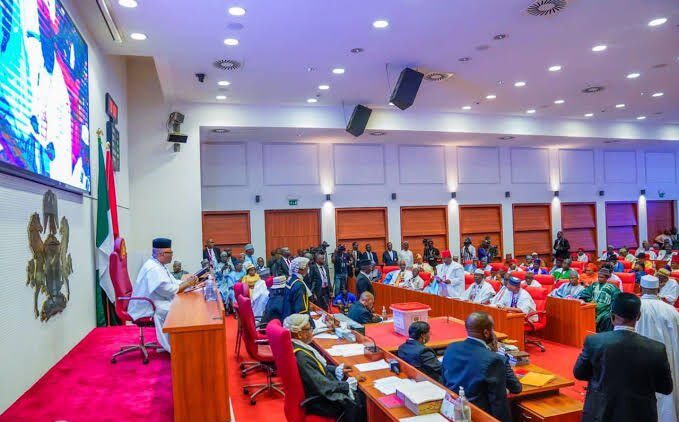
He said the National Assembly should independently evaluate the performance of the executive rather than leave implementing authorities to monitor their own projects.
Read also: Kano commissions two roads, seeks more federal infrastructure projects
“The National Assembly should be the body to evaluate. Unfortunately, they have abandoned their core mandate,” he said.
Kwaga said abandoned projects also divert public funds from more productive uses and deny the economy the services, tourism earnings and other benefits that completed infrastructure could generate.
He added, “The concept of opportunity cost is critical here. If these monies could have been used elsewhere in a manner that would increase, enhance or improve productivity and the monies are not, it means the economy is not operating optimally.
“These abandoned projects serve as sinkholes for inputs. Every single abandoned building or infrastructure is sand, cement, wires, plumbing, electrical work, woodwork that was never optimised.”
He attributed the problem to poor project planning, inadequate fiscal scrutiny and public investments that are disconnected from medium- and long-term development priorities.
Kwaga also alleged that procurement interests sometimes take precedence over the public-service objectives of government projects.
“What should be a solemn process of delivering value to Nigerians turns into a bargain for contracts, kickbacks and deals,” he said.
He urged the Federal Government to strengthen the Office of the Auditor-General for the Federation and empower it to investigate abandoned projects from conception and approval through implementation, identify those responsible and publish its findings.
He also called on the Economic and Financial Crimes Commission and the Independent Corrupt Practices and Other Related Offences Commission to investigate suspected wrongdoing, recover public funds where appropriate and prosecute those against whom sufficient evidence of criminal conduct is established.